
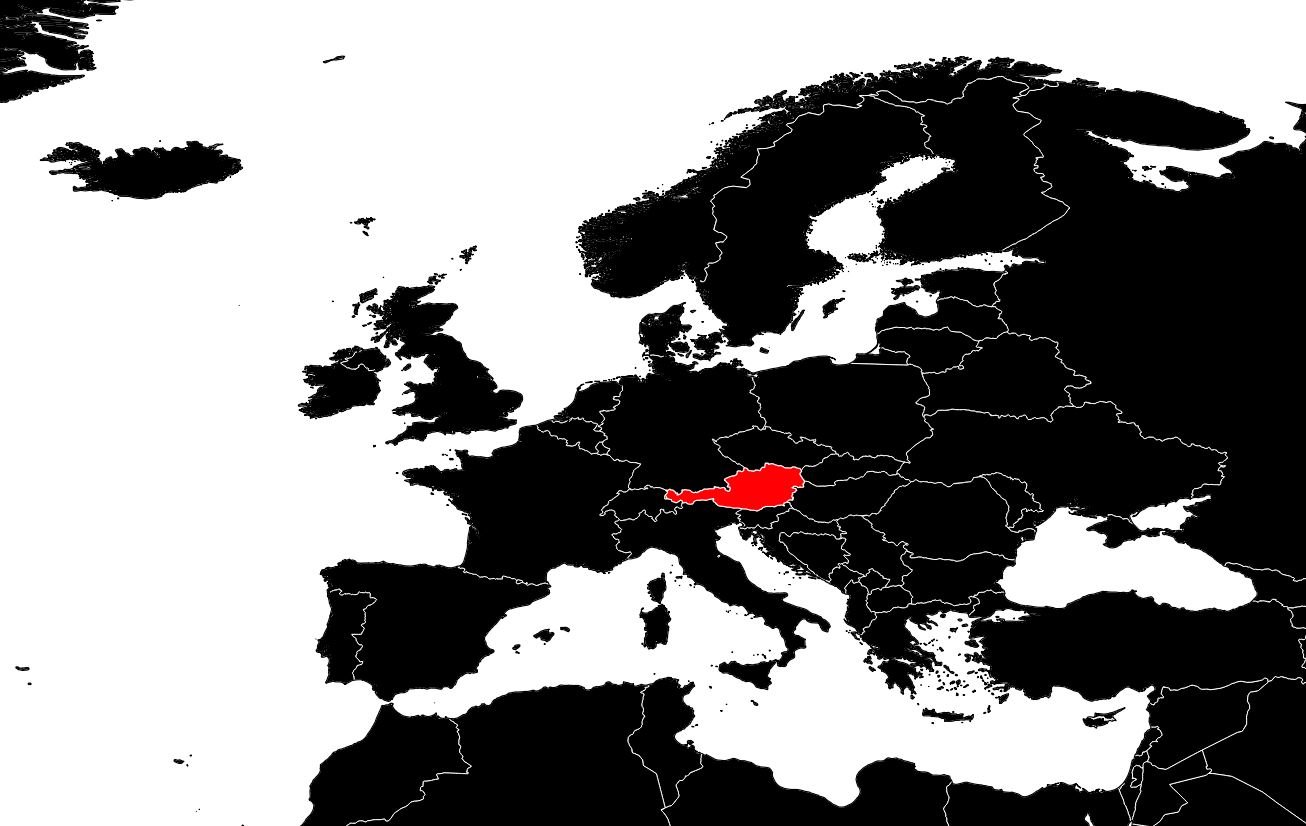
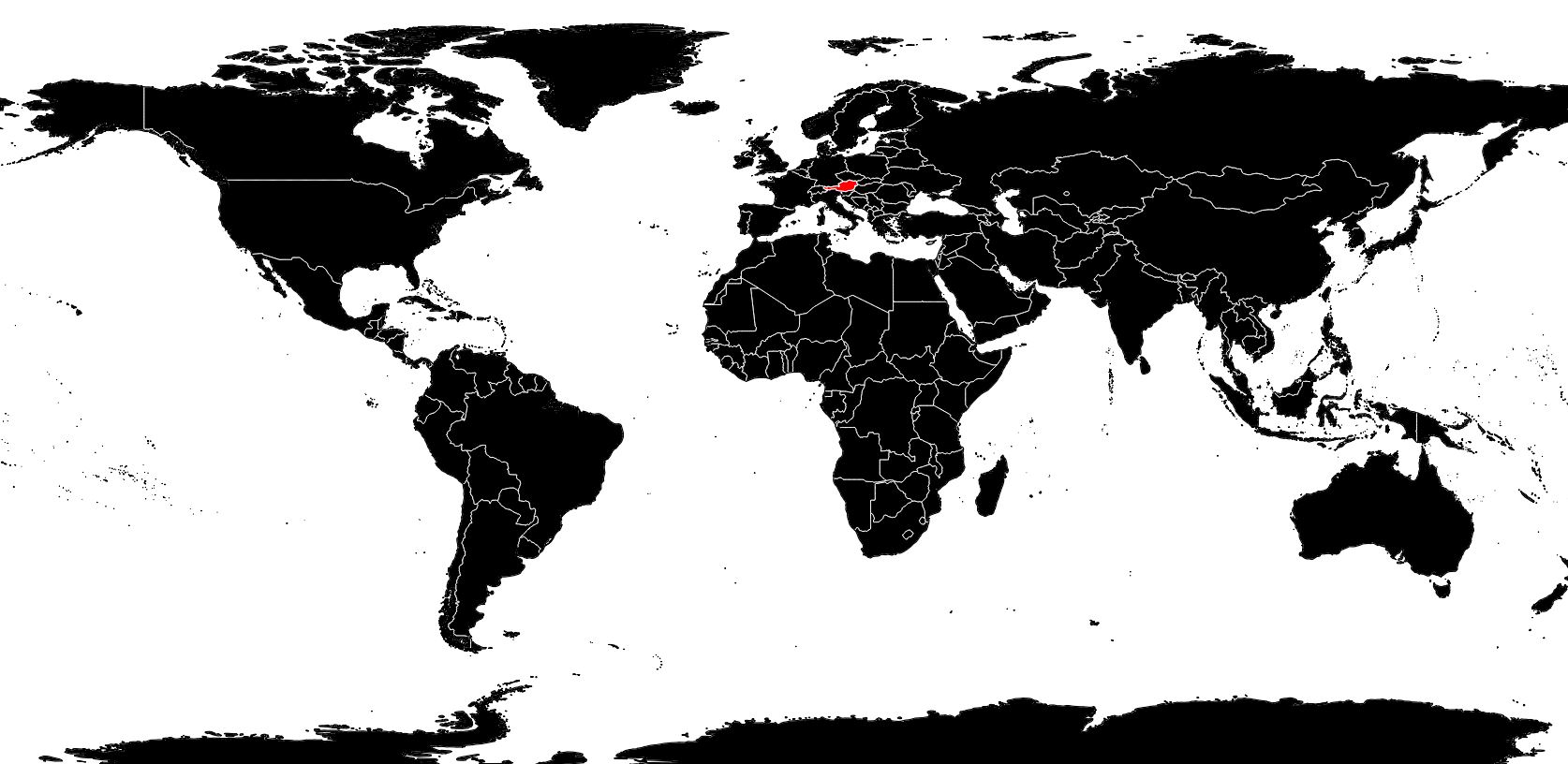
Discover one or more maps of Austria. The country is a small mountainous state in Central Europe. Austria was once one of the great powers of Europe. It stood at the heart of a vast empire and its geographical position allowed it to become a commercial and cultural crossroads.
Austria lies to the east of the Alpine mountain range.
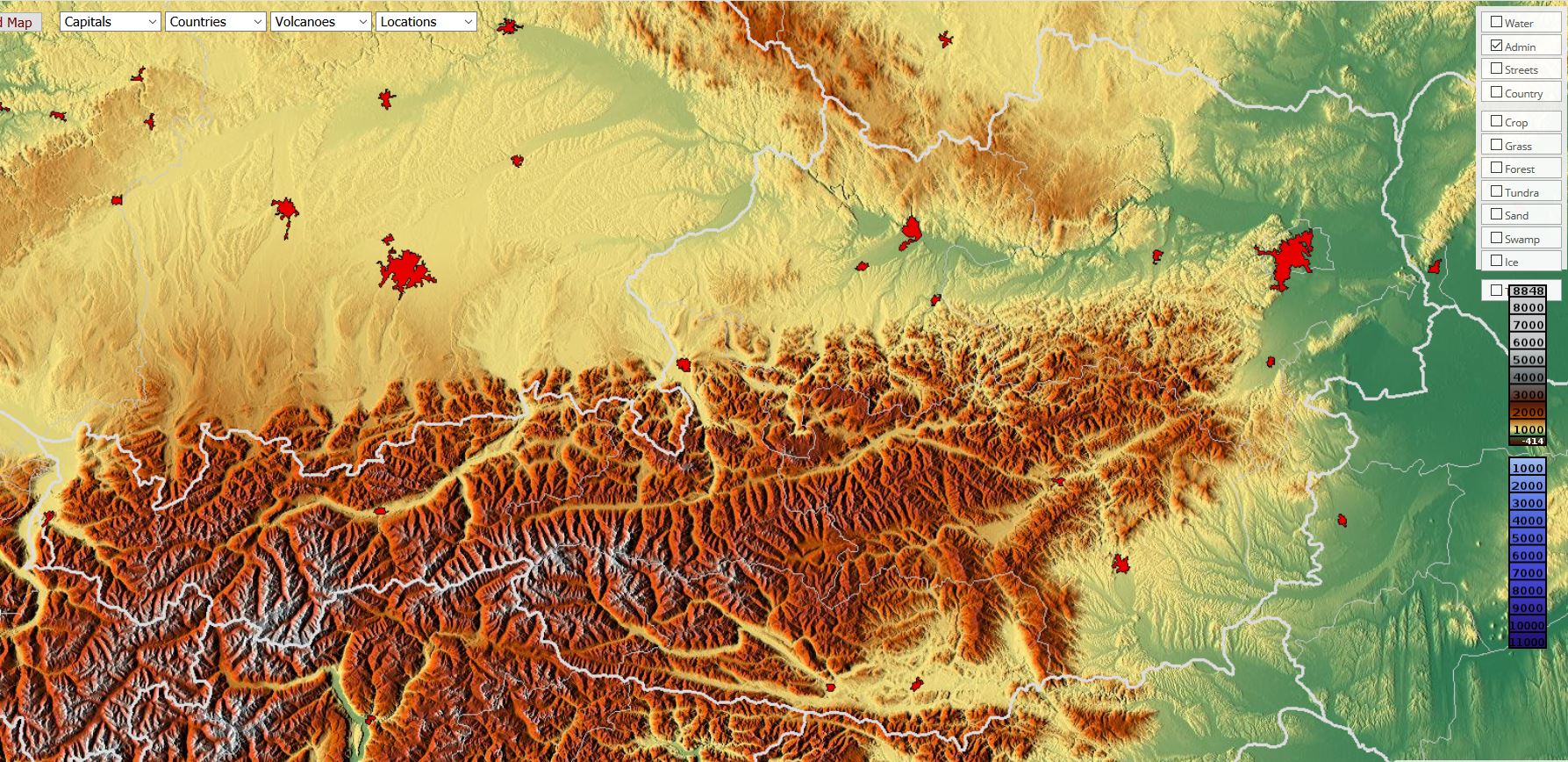
Map of Austria: relief and major cities
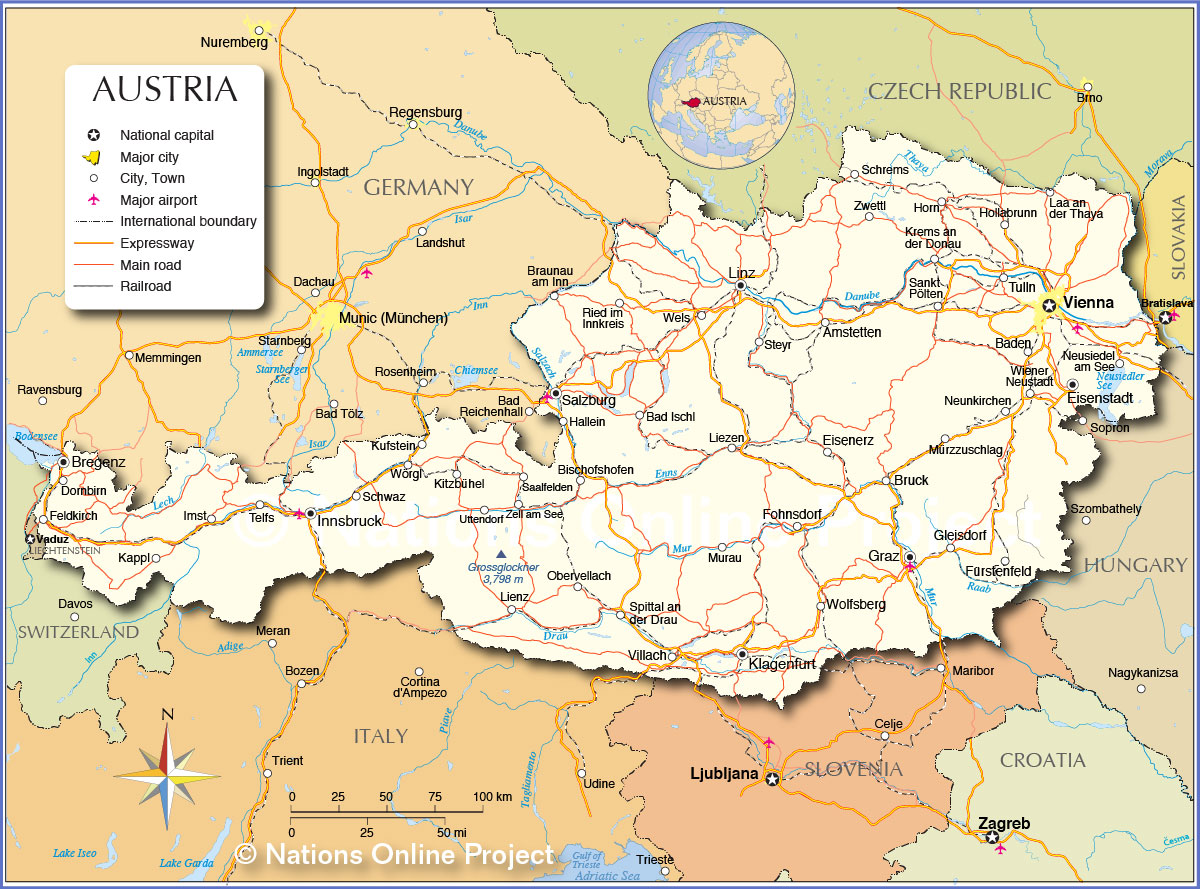
Austria is located to the east of the Alps. The highest peaks are found in the west and center of Austria. The mountain range is crossed by river valleys. The highest point in Austria is Grossglockner (3,797 meters) in the Hohe Tauern range.
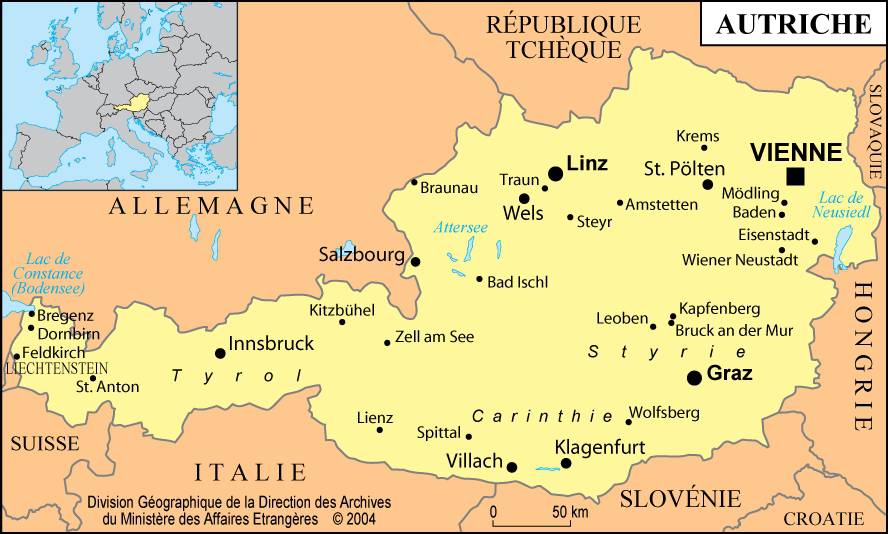
As can be seen on the map of Austria, the largest plains are located in the north and east of the country. The Danube Valley stretches across northern Austria. Vienna, the capital, is located in the eastern part of this plain, where the Danube emerges from the mountains. Other plains extend south of Vienna to the border with Slovenia, representing about 20% of the country’s total area. The hills north of the Danube are an extension of the southern mountain chain of the Czech Republic.
On the map of Austria, you can also observe the rivers Enns, Inn, Drava, Ill, Salzach and Mur, which flow through the inner valleys of the Alps. These valleys offer favorable conditions for agriculture and urban development. The Brenner Pass allows passage from Austria to Italy, and the city of Innsbruck, in the Inn Valley, owes its growth to it. The Semmering Pass south of Vienna provides access to the Adriatic Sea. Austria’s largest lake is Lake Neusiedl, south of Vienna. At the western end of the country, Lake Constance borders Austria, Switzerland and Germany.
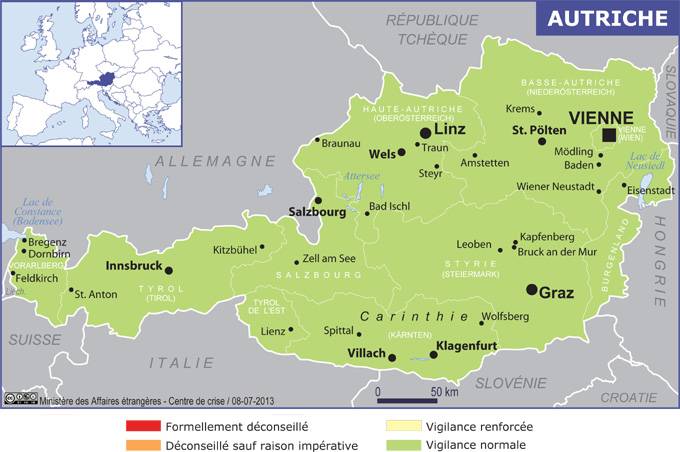
Other maps of Austria:
Find one or more maps of Austria, covering several topics presenting the country:

Other information: languages
This section is not essential for understanding the map of Austria. It simply helps to better understand the country. The majority of Austrians speak German (96%). Some Czech, Croatian, Slovenian and Hungarian minorities also live in Austria. The Catholic religion, like the German language and culture, largely dominates society. Lutherans (5.6%) and Austrian Jews (about 70,000) live mainly in the Vienna region.
Austrian culture is recognized worldwide. Great composers such as Mozart, Beethoven, Schubert, Brahms, Strauss and Mahler lived or worked in Austria. Austrian writers Hugo von Hofmannsthal and Arthur Schnitzler contributed greatly to the prosperity of German literature. Austrian popular culture has always been enriched by music, dance and art.
Discover other articles about Austria.