
Discover the map of Spain, whose long-form name is the Kingdom of Spain. The country has had a major influence on the world through its many conquests and colonial ventures.
Spain is a country located in Southern and Western Europe. It occupies a very important part of the Iberian Peninsula. In 2015, the country had nearly forty-six million inhabitants, placing Spain in 28th position in the ranking of countries by population.
As you can see on the map of Spain, the country is bordered by the Mediterranean Sea to the south and to the east. However, it should be noted that Spain has a border with the small British territory of Gibraltar in the south, as well as the strait of the same name, which separates the European and African continents. To the north of the country, the Pyrenees form a natural border with France and Andorra, and also with the Bay of Biscay.
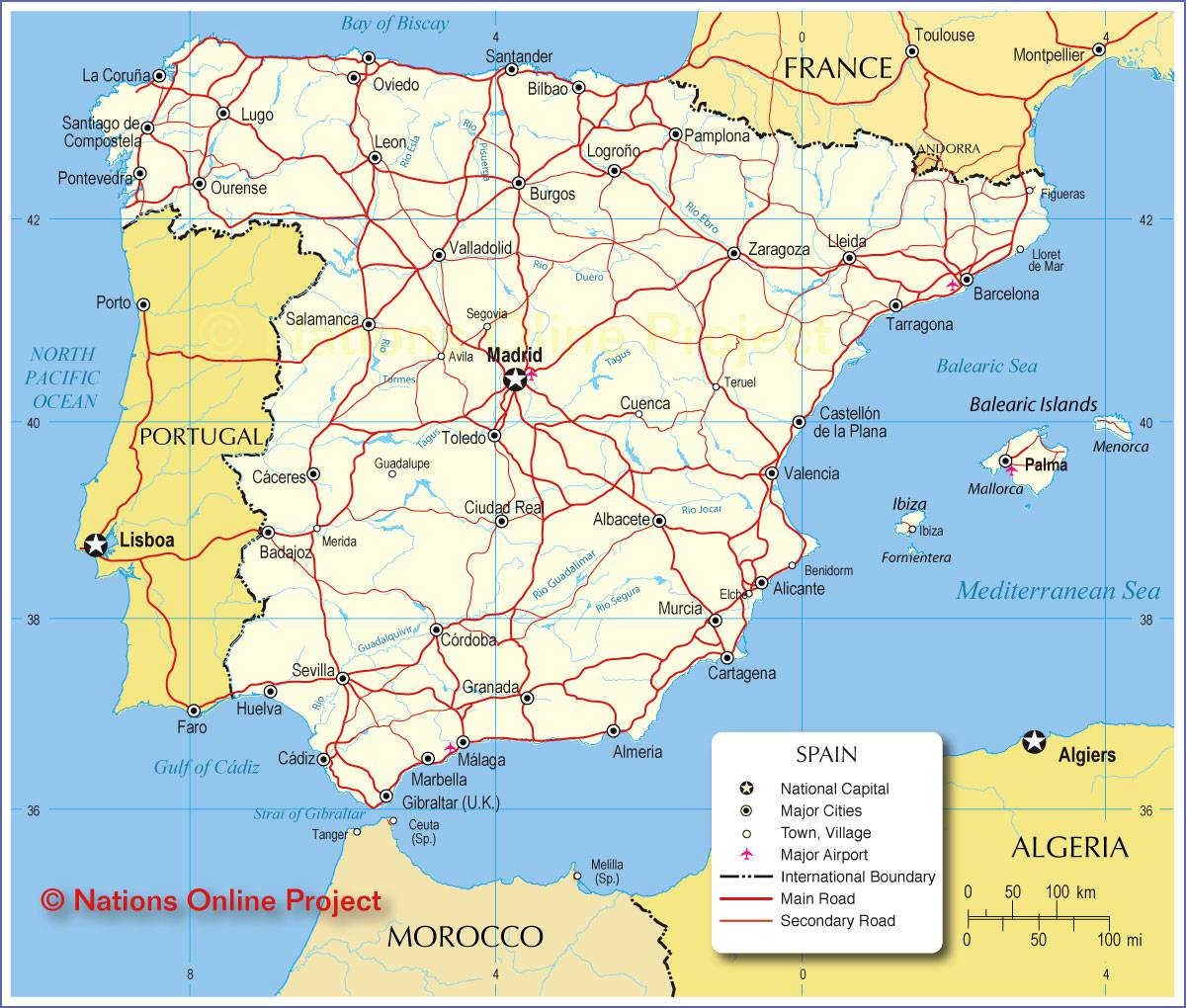
Map of Spain – Credit Nations Online
As we can see on the map of Spain, Portugal and the Atlantic Ocean lie respectively to the west and north-west of the country. Spanish territory also includes the Balearic Islands in the Mediterranean, the Canary Islands in the Atlantic Ocean (more precisely off the African coast), and two autonomous cities in North Africa, Ceuta and Melilla, which border Morocco.
The country has a total area of 504,030 km², making Spain the second-largest country in Western Europe and in the European Union. The largest by area is France. At the European level, it is the third-largest in Europe behind Ukraine and France, if we do not count the European part of Russia.
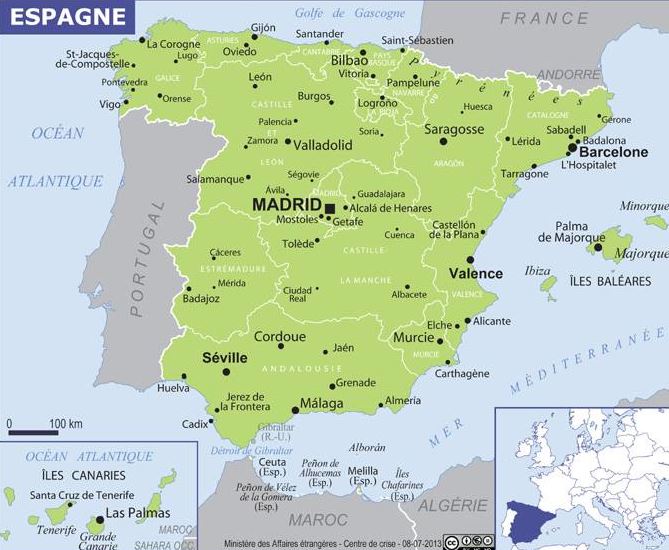
Spain map – Credit: Ministry of Foreign Affairs
Article outline
Map of Spain: Tourism
Tourism has strongly contributed to the country’s spectacular economic growth. Worldwide, around 10% of international tourists choose Spain as their destination. Many foreigners enjoy the Spanish sun during the winter months.
Tourism grew sharply at the beginning of the 1990s, notably thanks to the Summer Olympic Games held in Barcelona, but also thanks to the Seville World’s Fair. The latter attracted thousands of visitors during the summer of 1992. Plan your trip with the map of Spain, especially the one showing roads.
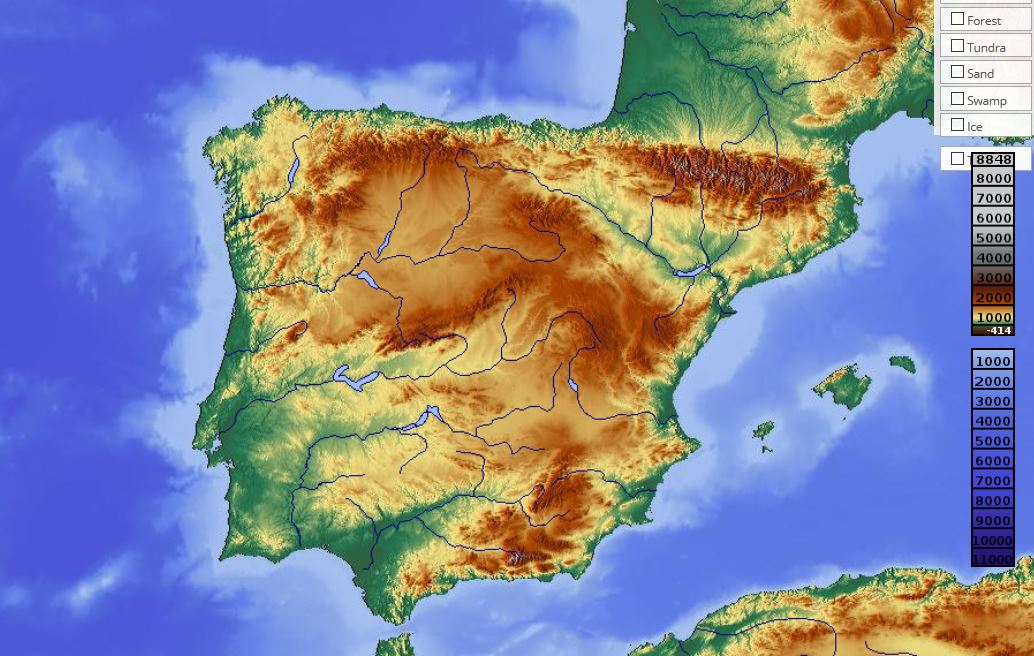
Map of Spain’s relief – Image extracted from maps-for-free
Relief on the map of Spain
Spain is a country that stretches between Europe and Africa. With a land area of 504,030 km², Spain makes up five-sixths of the Iberian Peninsula. It is the largest country in Europe after France.
It is bordered by the Mediterranean Sea, from the eastern end of the Pyrenean range to the Strait of Gibraltar. As you can see on the map of Spain, on the Atlantic side Portugal and Spain share the peninsula’s coastline. The Pyrenees form the natural barrier that separates Spain from the rest of Europe.
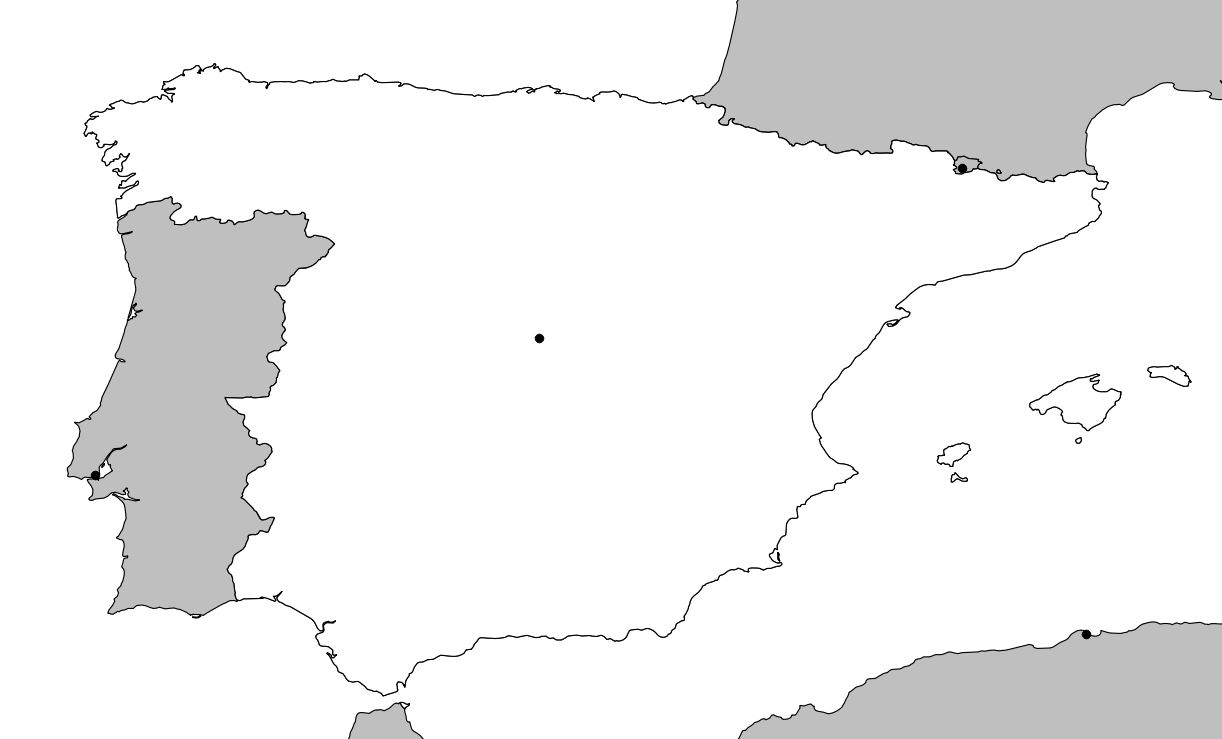
Blank map of Spain – Credit Actualitix
The Pyrenees, whose peaks are distinctive, are often covered with snow. They stretch over 435 kilometers (270 miles). They have very often served as a human barrier. The famous French quote: “The Pyrenees mark the beginning of Africa” is a reminder of the significant role played by these mountains. The prolonged political independence of the tiny Principality of Andorra results mainly from its position straddling France and Spain.
To better appreciate this vast country, it is necessary to look at the geography of Spain’s main regions. They are visible on the map of Spain. The first and most important Spanish region forms the heart of the Iberian Peninsula. This region is called “el Centro”, the Center. It is dominated by a rugged high plateau: the Meseta.
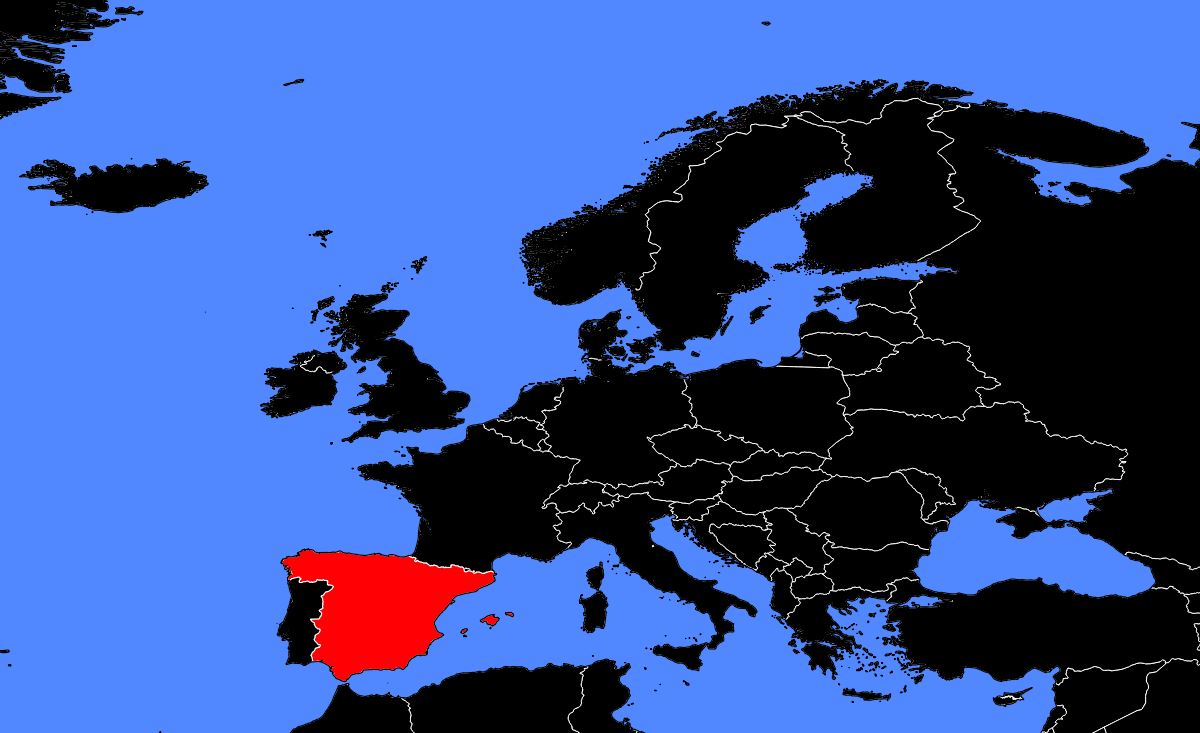
Spain on a map of Europe – Credit Actualitix
It is a sparsely populated region that occupies half of Spanish territory. Nevertheless, it is home to only a quarter of the population. The three other regions occupy the coastal belts that stretch between the center of the Meseta and the seas surrounding the peninsula.
The fourth and last region is the south. It is a coastal region opening onto the Mediterranean Sea and the Atlantic Ocean. The autonomous region of Andalusia covers almost all of the south and its area represents about 17% of Spain.
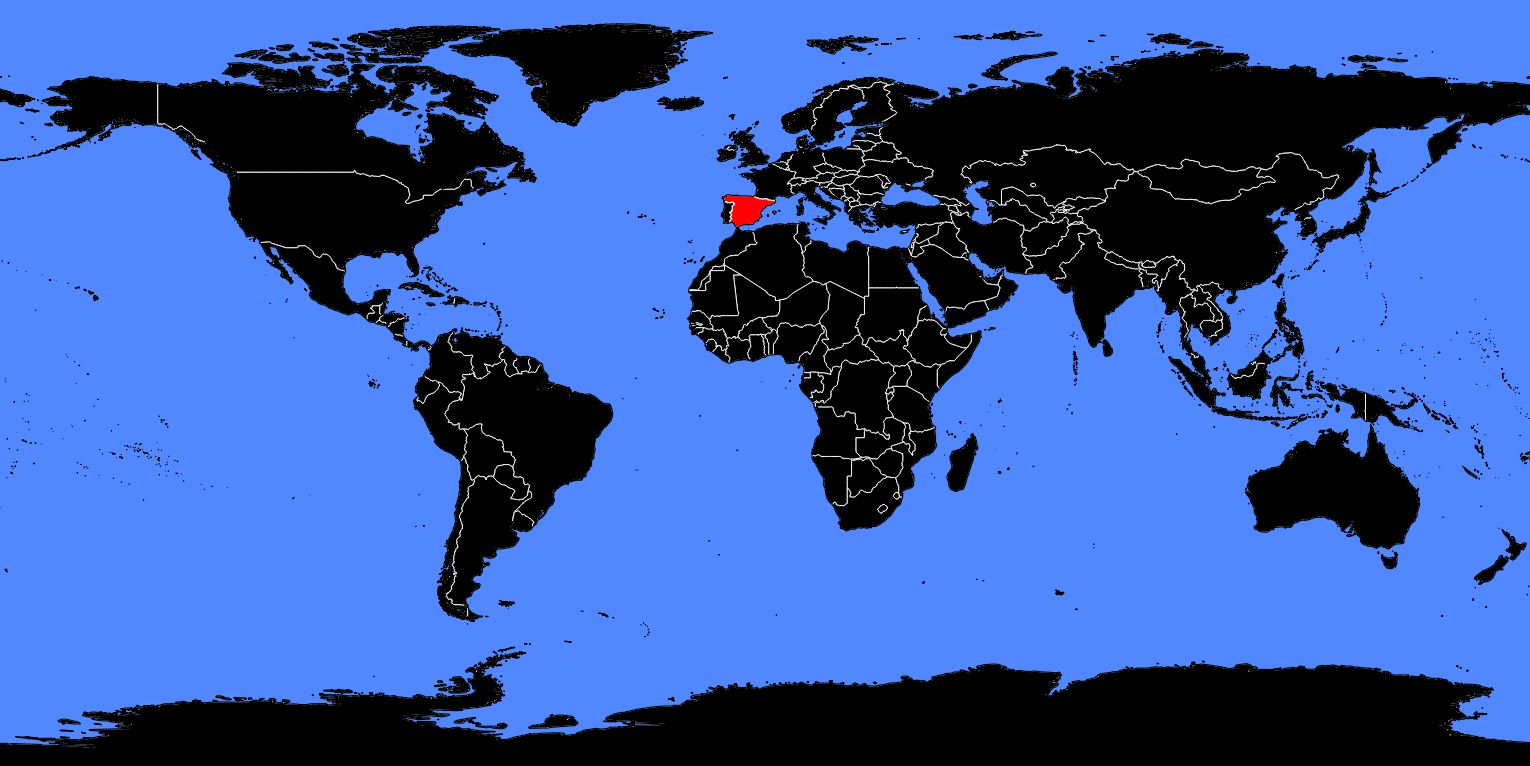
Spain on a map of the world – Credit Actualitix
The tiny Spanish possessions of Melilla and Ceuta, located opposite Andalusia on Morocco’s Mediterranean coast, are part of the southern region. But together they cover only 31 square kilometers. There are no major urban metropolises in the south, and the population represents a little under 18% of Spain’s total population.
Map of Spain: blank map
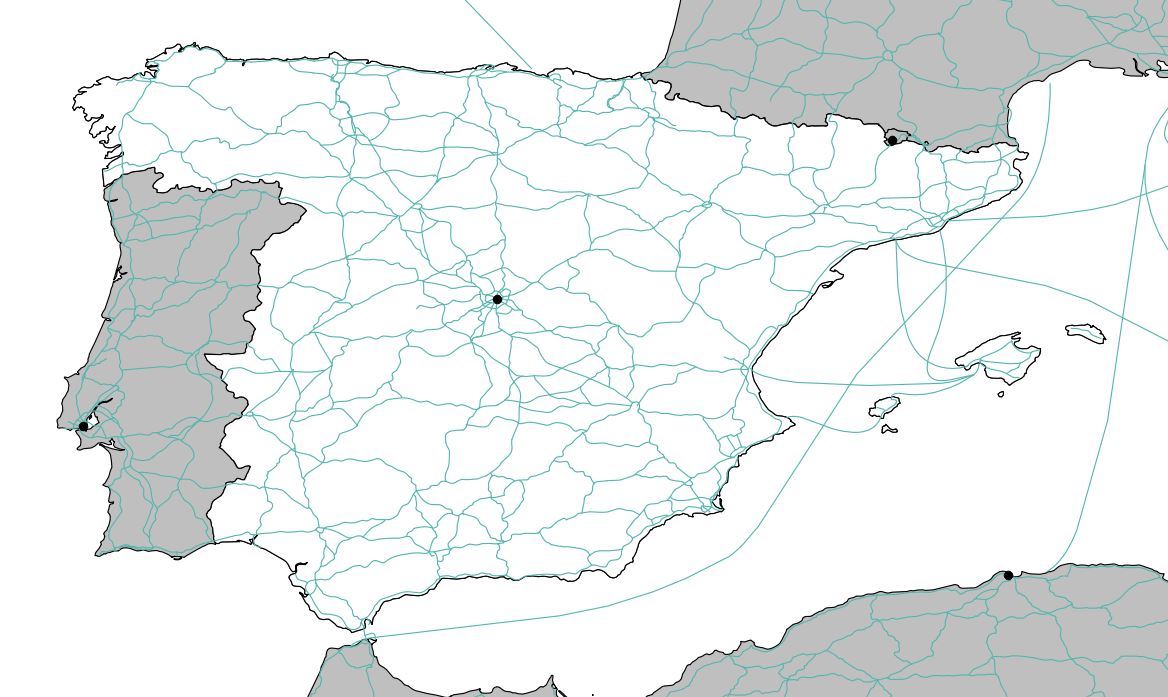
Blank map of Spain with roads – Credit Actualitix
Discover other topics about Spain.