
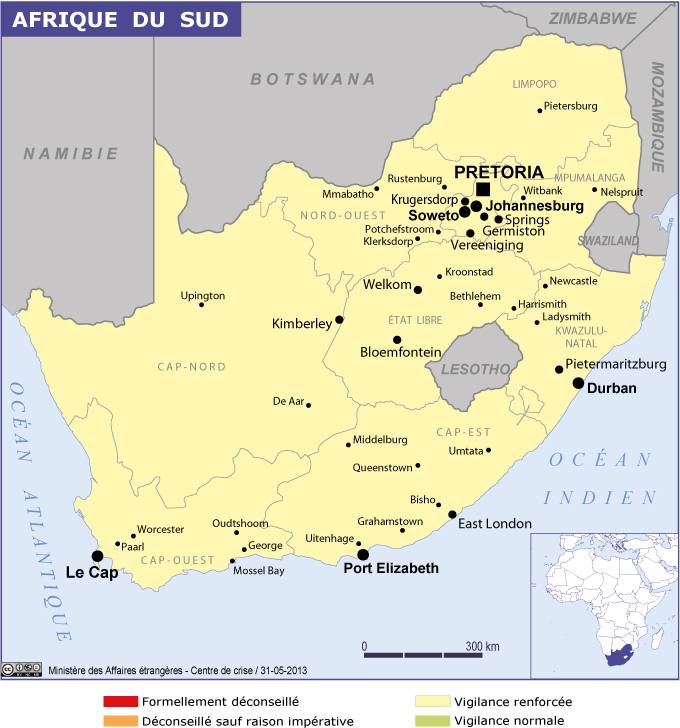
Discover a map of South Africa. The Republic of South Africa is characterized by both an advanced economy and a Third World culture.
Its population is made up of a complex mix of different ethnic and racial groups, and until 1994 it was politically ruled by a white minority. Until May 1994, a policy of racial segregation prevailed in the country. This policy was called “Apartheid,” or social segregation.
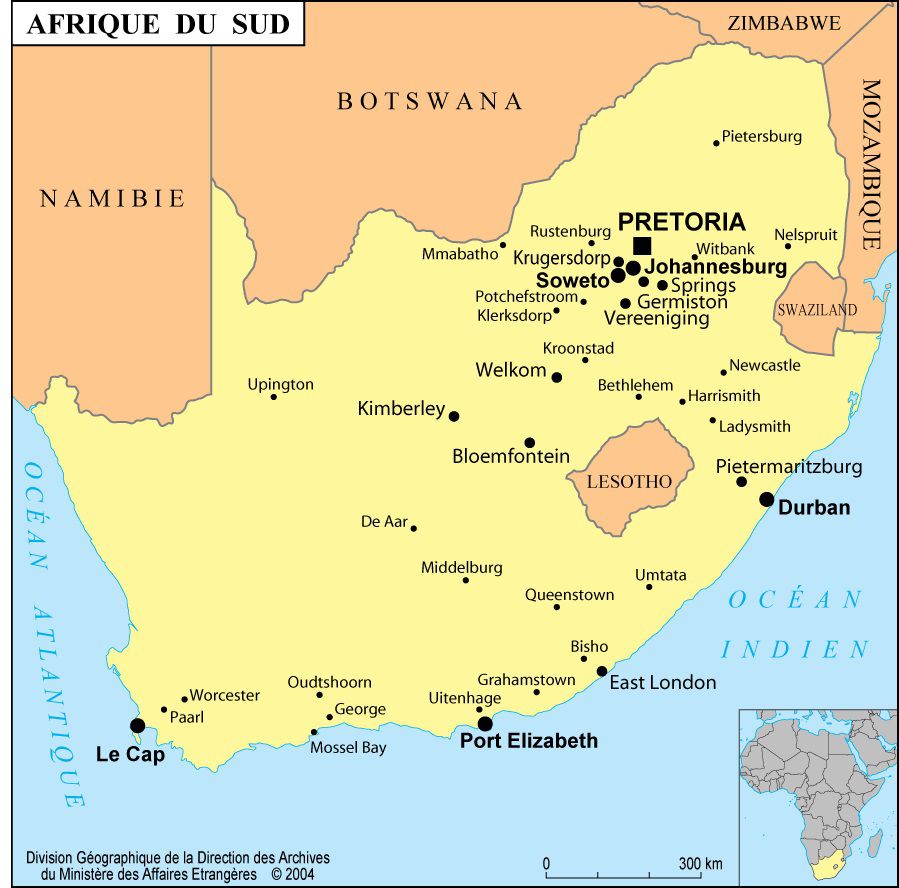
Map of South Africa and relief
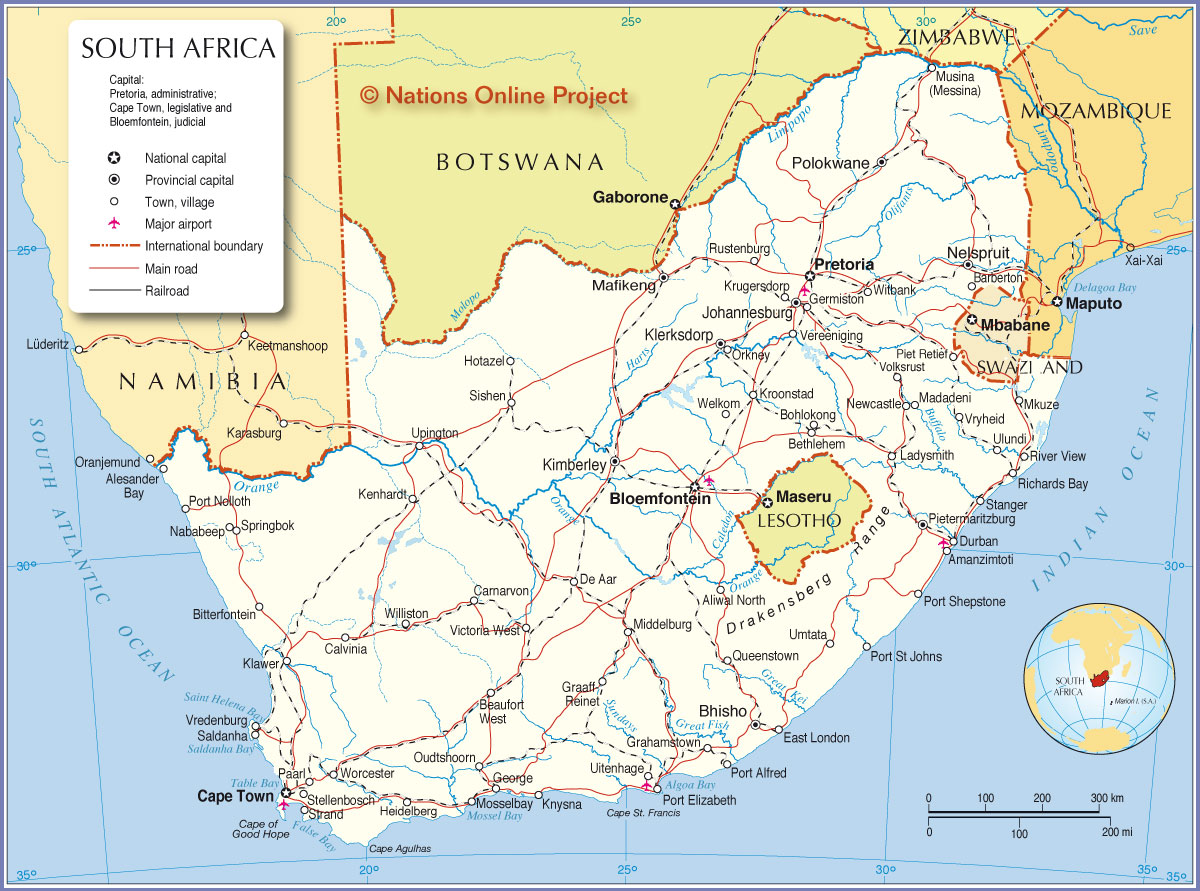
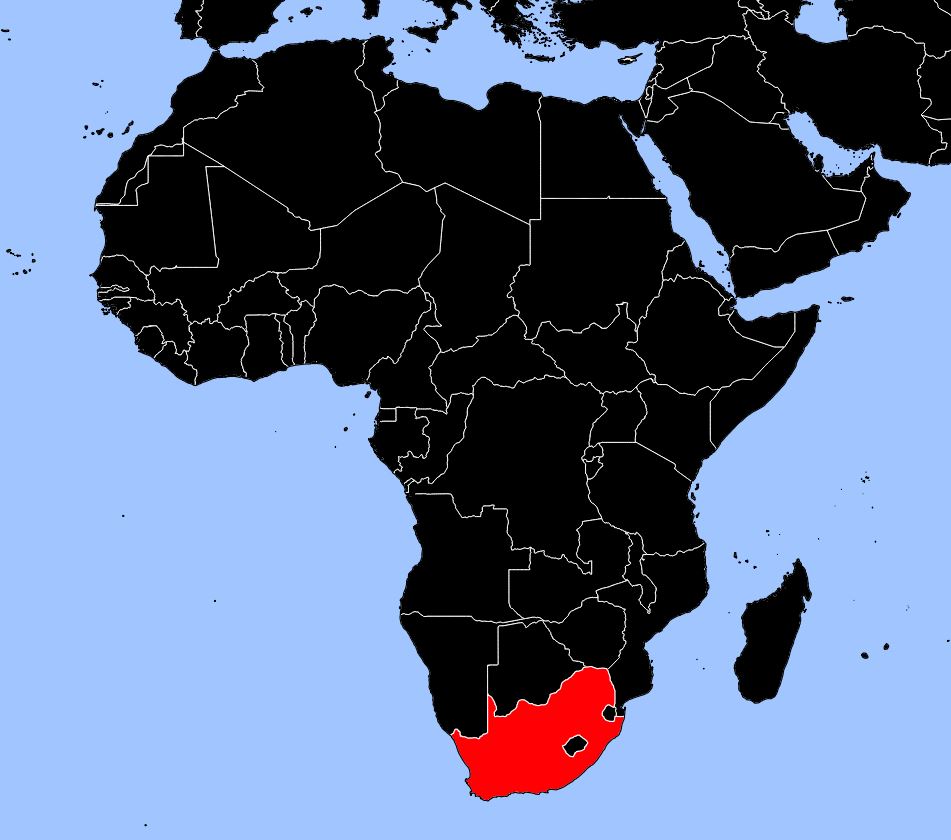
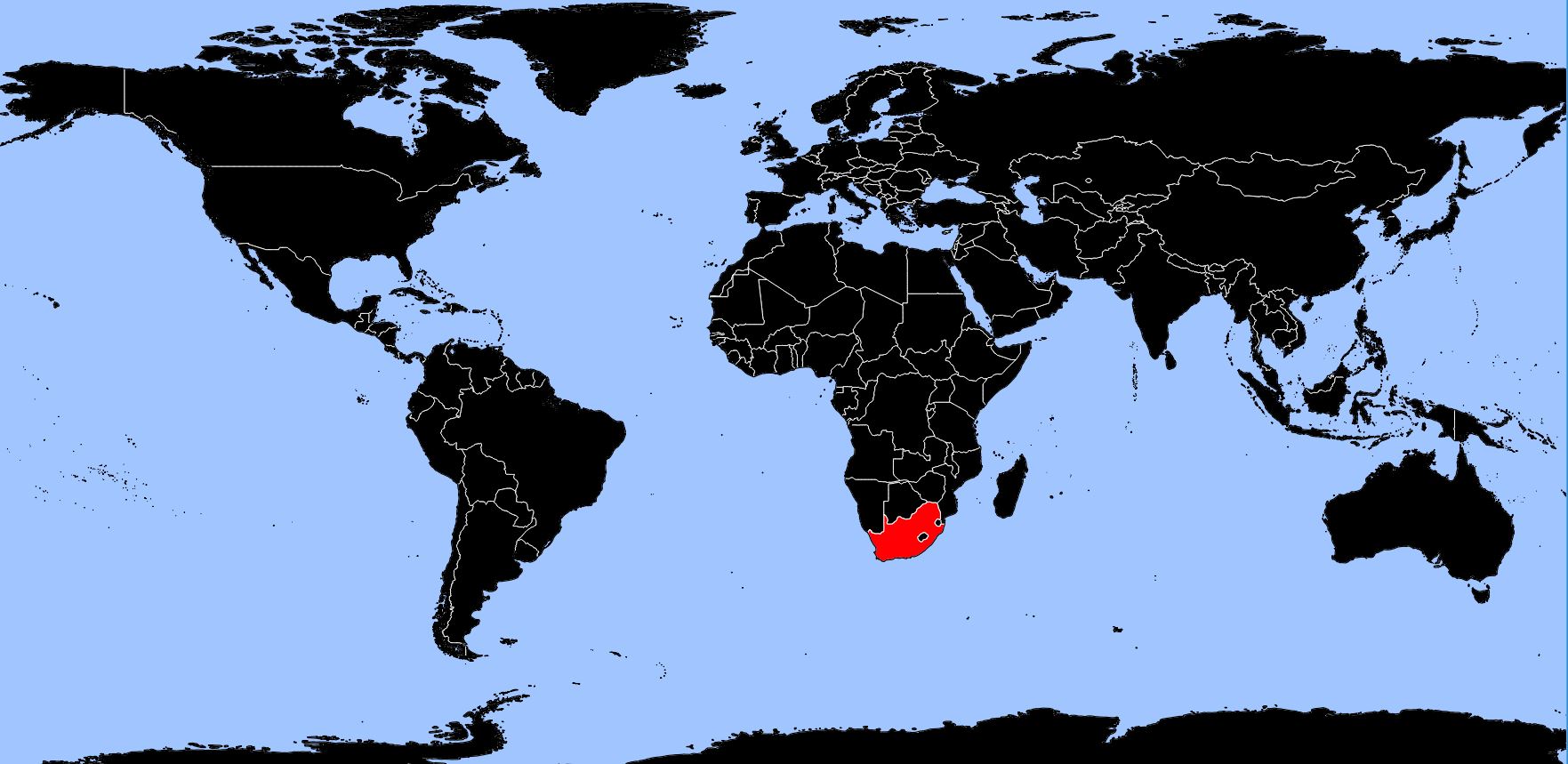
The country is located at the extreme south of the African continent, as you can see on the map of South Africa. Africa is also one of the oldest continents in the world. There are no high mountain ranges like the Rockies, the Andes, or the Himalayas in this country. The only mountains of this type are found at the far southern tip.
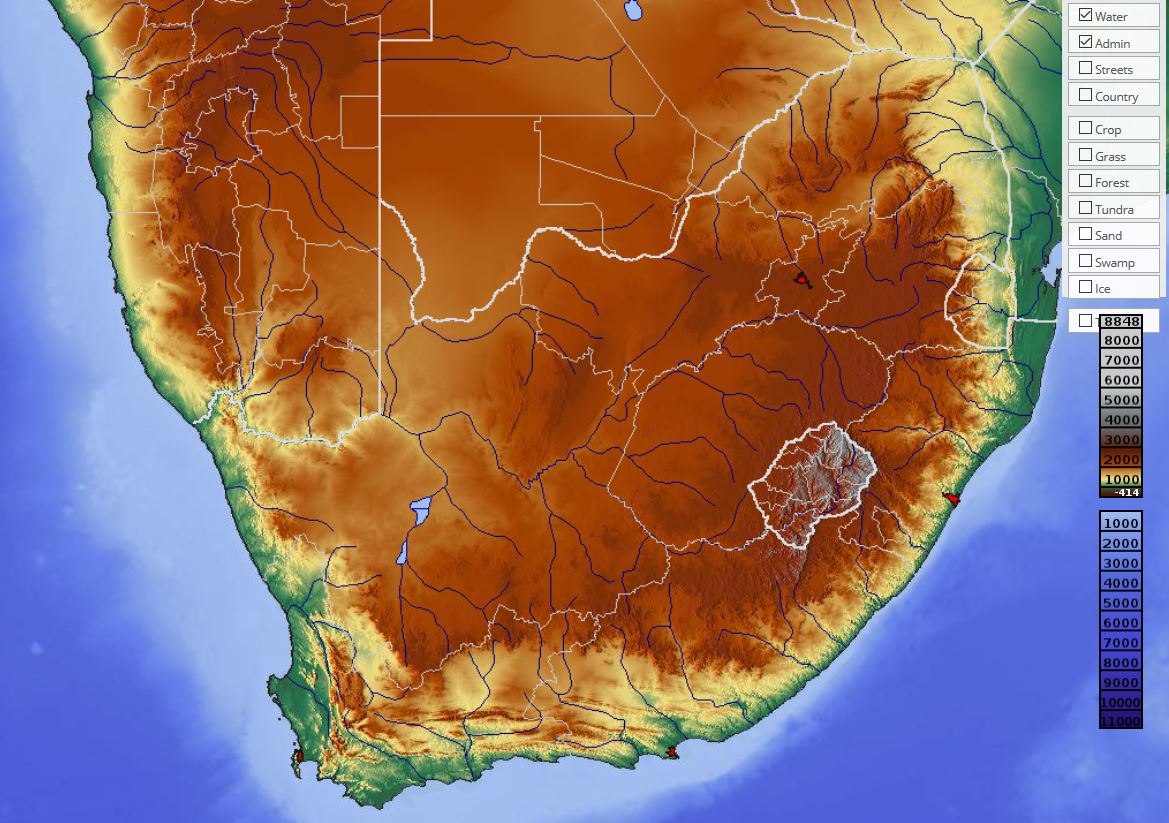
Most of the country consists of a saucer-shaped plateau with an elevation between 900 and 2,000 meters. The semi-arid Karoo region lies in the northeast of the country and gives way to the Kalahari and Namib deserts.
South Africa lies north of 35° S latitude. It is bordered by the Indian and Atlantic oceans (see the map of South Africa).
Table of Contents
Map of South Africa and relief
The country is located at the extreme south of the African continent, as you can see on the map of South Africa. Africa is also one of the oldest continents in the world. There are no high mountain ranges like the Rockies, the Andes, or the Himalayas in this country. The only mountains of this type are found at the far southern tip.
Vegetation and wildlife
Natural vegetation has been heavily modified due to intensive livestock farming, seasonal fires, and the introduction of new species. Only the region in the southwest of the Cape has preserved a true temperate forest. As rainfall decreases, one encounters brambles and other thorny trees, then grasslands, and finally the Kalahari Desert and the Namib Desert. In the Western Cape province, the climate is Mediterranean (dry and warm). Vegetation there consists of succulents and varieties of pines and oaks. In the Little Karoo and Great Karoo regions, you can find shrub species, cacti, and aloes.
South Africa has rich wildlife. Big cats (lions, leopards, and cheetahs) roam freely and feed on antelopes and monkeys. There is also a great diversity of reptiles (crocodiles, iguanas, venomous snakes). Since the 19th century, large animals began to disappear due to the development of hunting. Four major reserves were established in Natal in 1897 to protect them, and Kruger National Park was opened in 1898.
Today there are 10 major nature reserves, and significant efforts have been made to protect endangered species such as the white rhinoceros.
Natural resources in South Africa
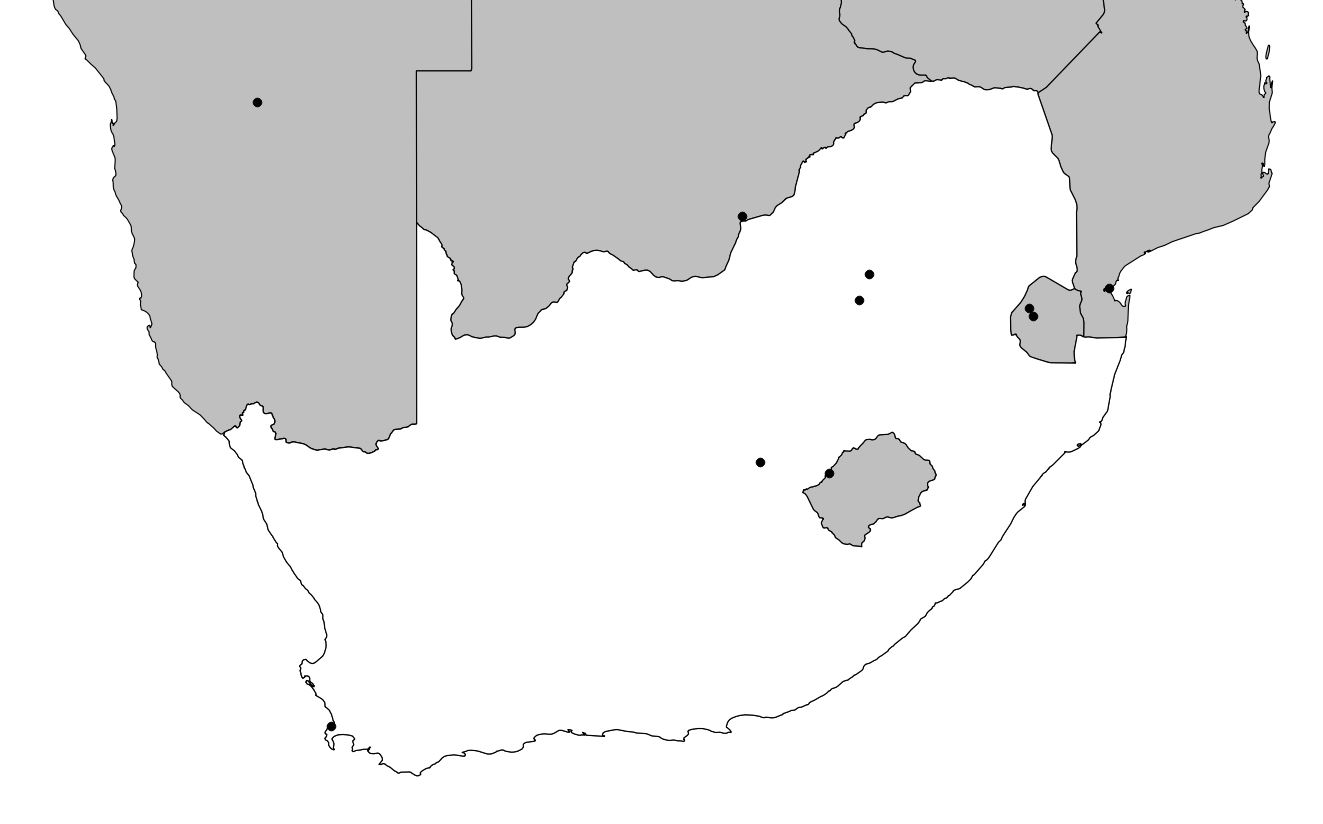
Only 15% of the country’s land is arable. However, South Africa produces the food needed for its own consumption. It also exports many products such as sugarcane, maize, fresh fruit, canned fruit, vegetables, and wine. Sheep and Angora goats are raised in the Highveld and Karoo regions for their wool and mohair, which are exported. Many dairy cows and beef cattle are also raised in the same region. Below is a map of South Africa.
South Africa is a sparsely wooded country; 971,000 hectares of forest have been planted since 1946. It can therefore produce pulpwood, construction materials, and more in quantities sufficient for export.
Thanks to warm waters along the east coast and cold waters along the west coast, South Africa has a wide variety of fish and crustaceans. Key exports include canned mackerel and frozen rock lobsters.
South Africa possesses and extracts a large share of the world’s 12 main natural resources. It holds 77% of global chrome reserves, 94% of platinum-group metals, 62% of gold, 72% of vanadium, 92% of manganese, and 11% of fluorite. It also has other reserves such as asbestos, nickel, phosphate, copper, zinc, and lead.
Uraninite is produced as a by-product of gold mining and is converted into uranium oxide to meet local needs and for export. Significant quantities of industrial diamonds and gem-quality diamonds are also mined and sold on world markets. Large reserves of bituminous coal are exploited in thermal power plants and are intended for export. Because of the lack of oil, South Africa built plants that convert coal into crude oil.