
Discover a map of Cuba. The country is undoubtedly the largest island in the Greater Antilles archipelago. It lies immediately south of the Tropic of Cancer in the Caribbean Sea and extends westward into the Gulf of Mexico, between Florida and the Yucatán Peninsula.
As we can see on the map of Cuba (the one showing its location in the world), the country holds a strategic position in that it controls the Florida Straits (between the Atlantic Ocean and the Gulf of Mexico); the Windward Passage, which begins in the Atlantic Ocean and then continues into the Caribbean Sea between Cuba and Haiti; and the Yucatán Channel, between the Caribbean Sea and the Gulf of Mexico. Havana, the capital, is located on the northwestern coast of Cuba, 170 kilometers from Key West.
Article outline
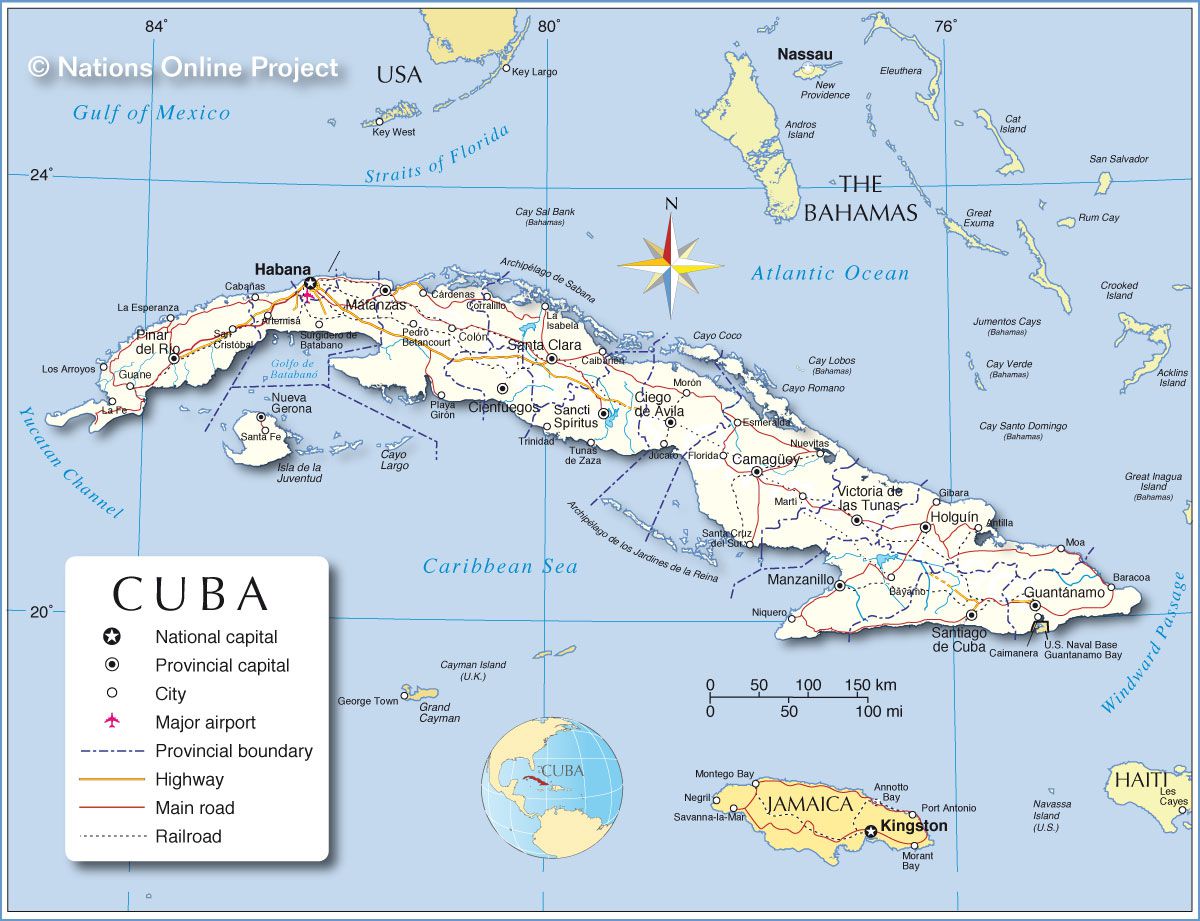
Cuba map – Credit: Nations Online
The island of Cuba has an east–west orientation. It is approximately 1,255 kilometers long and 97 kilometers wide. The Isle of Youth (formerly the Isle of Pines) has an area of 2,398 square kilometers and lies off the southwestern coast of Cuba.
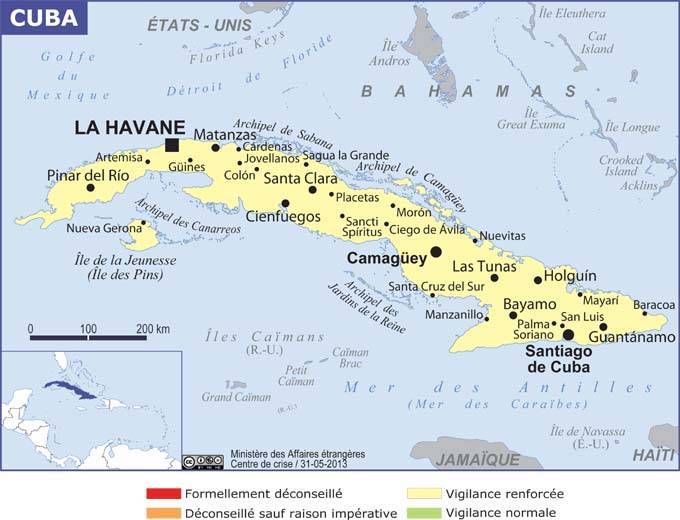
Cuba map – Credit: Ministry of Foreign Affairs
With nearly 1,000 islets and reefs, the Cuban archipelago has a total area of 110,860 square kilometers and a population of 11.11 million inhabitants according to 1996 estimates.
More Details on the Map of Cuba
The island of Cuba is a country of plains and limestone plateaus. The average elevation is under 91 meters. Mountain areas account for a quarter of the total surface area. The map of Cuba (relief) makes it possible to see the details of the island’s physical geography. The Sierra Maestra, a very rugged mountain range, rises close to the coastline in the southeast of the country. It is home to Pico Turquino, Cuba’s highest peak.
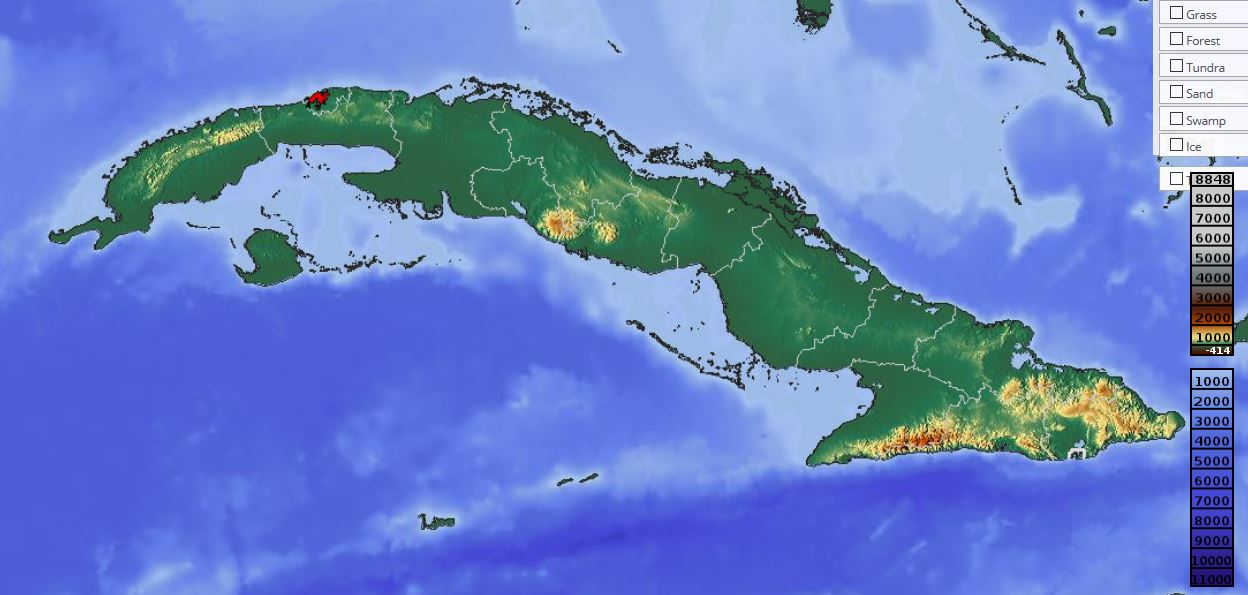
Relief map of Cuba – Image extracted from maps-for-free
In the center of the island, the Sierra de Trinidad and the Escambray Massif rise to over 1,160 meters in elevation. A little farther west, the Sierra de los Órganos, a limestone massif, features very rugged terrain shaped by erosion.
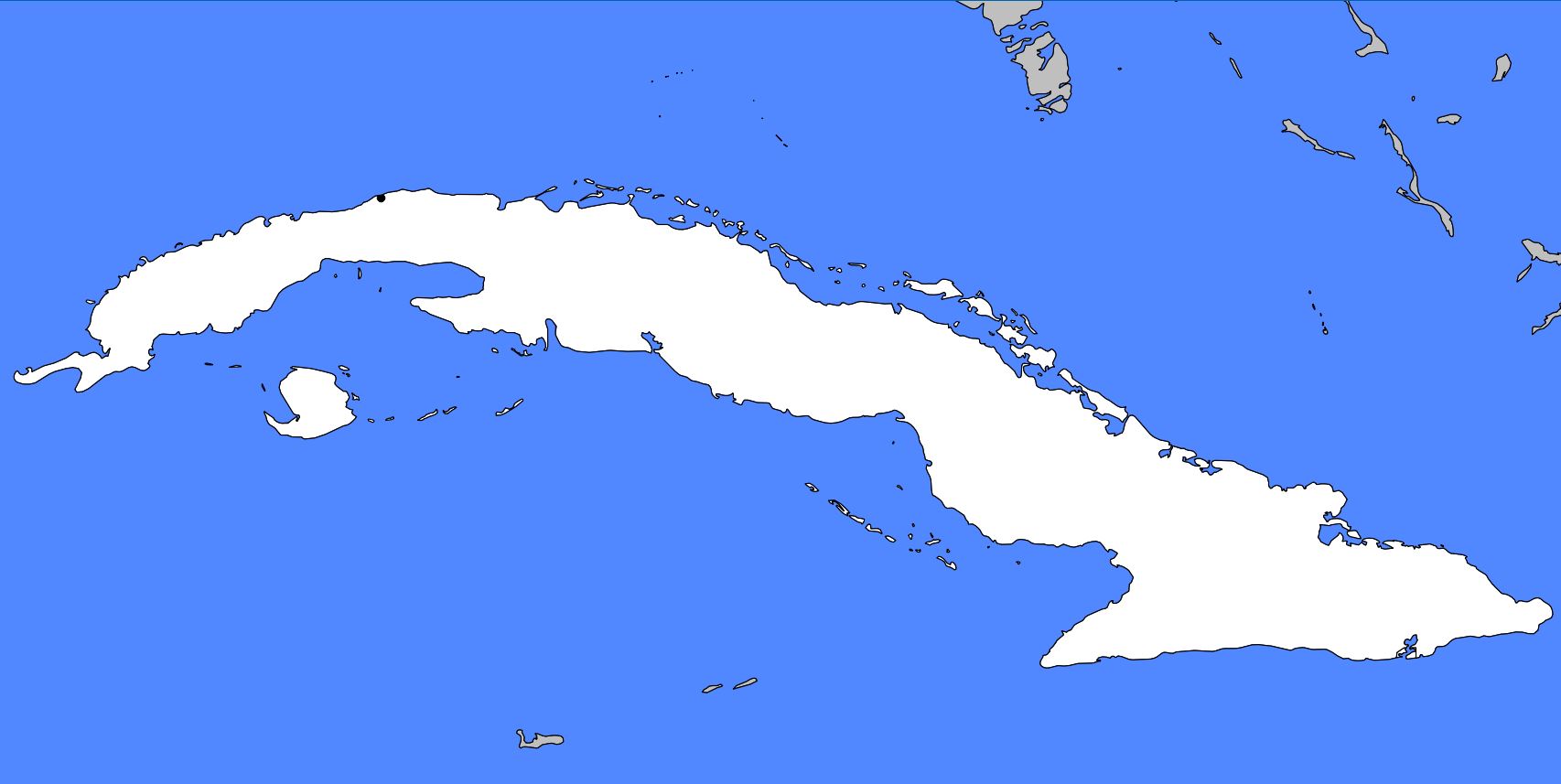
Blank map of Cuba – Credit: Actualitix
You might not necessarily realize it from the map of Cuba, but the coastline stretches for 3,200 kilometers; it is fringed with coral reefs, mangroves, and marshy areas. It is also characterized by the presence of more than 280 fine-sand beaches.
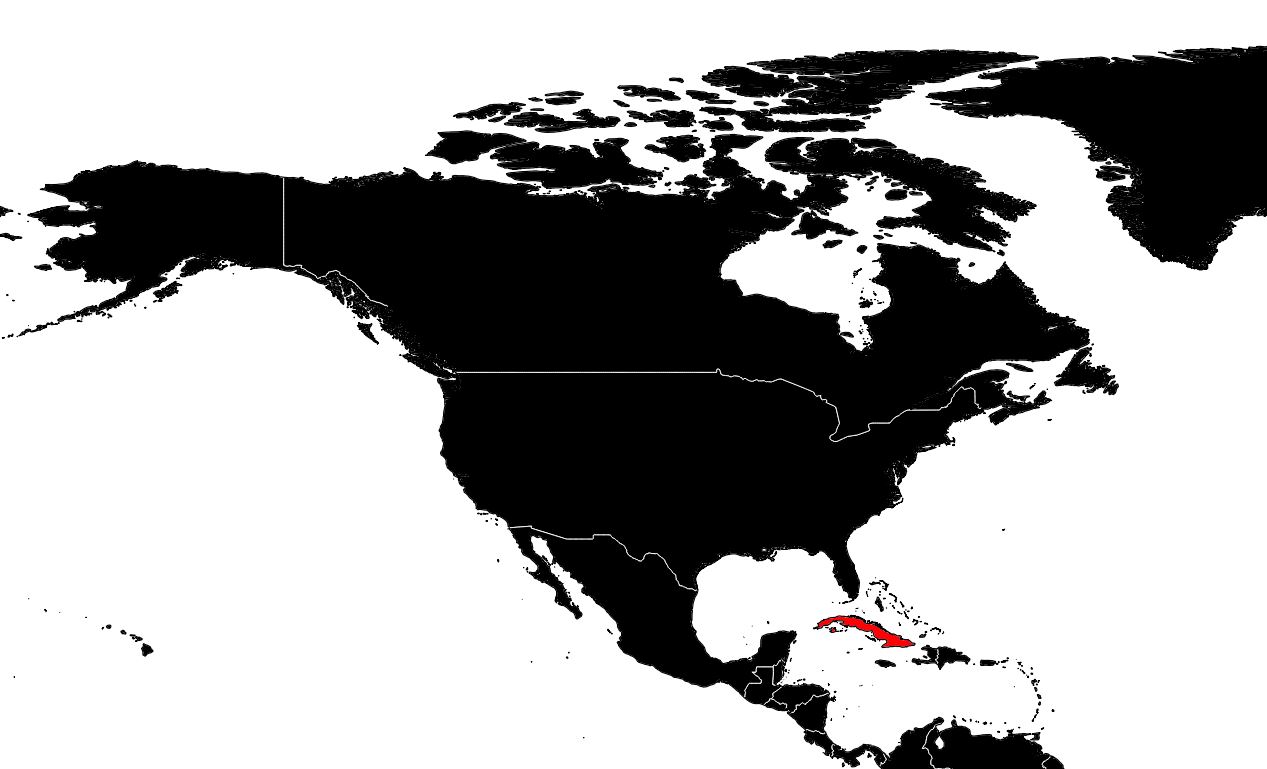
Cuba on a map of North and Central America – Credit: Actualitix
Bays and inlets shelter a multitude of ports. Guantánamo Bay, in the southeast of the island, has hosted a U.S. naval base since 1903 and is still under U.S. control today. The island also has more than 200 waterways. Seasonal flooding is common, and the Río Cauto is the only river that is partly navigable.
The island’s tropical climate is tempered by the trade winds and by the proximity of ocean currents carrying warm waters. The average annual temperature is around 25°C. In winter, it never falls below 21°C, and it rises to 27°C in summer.
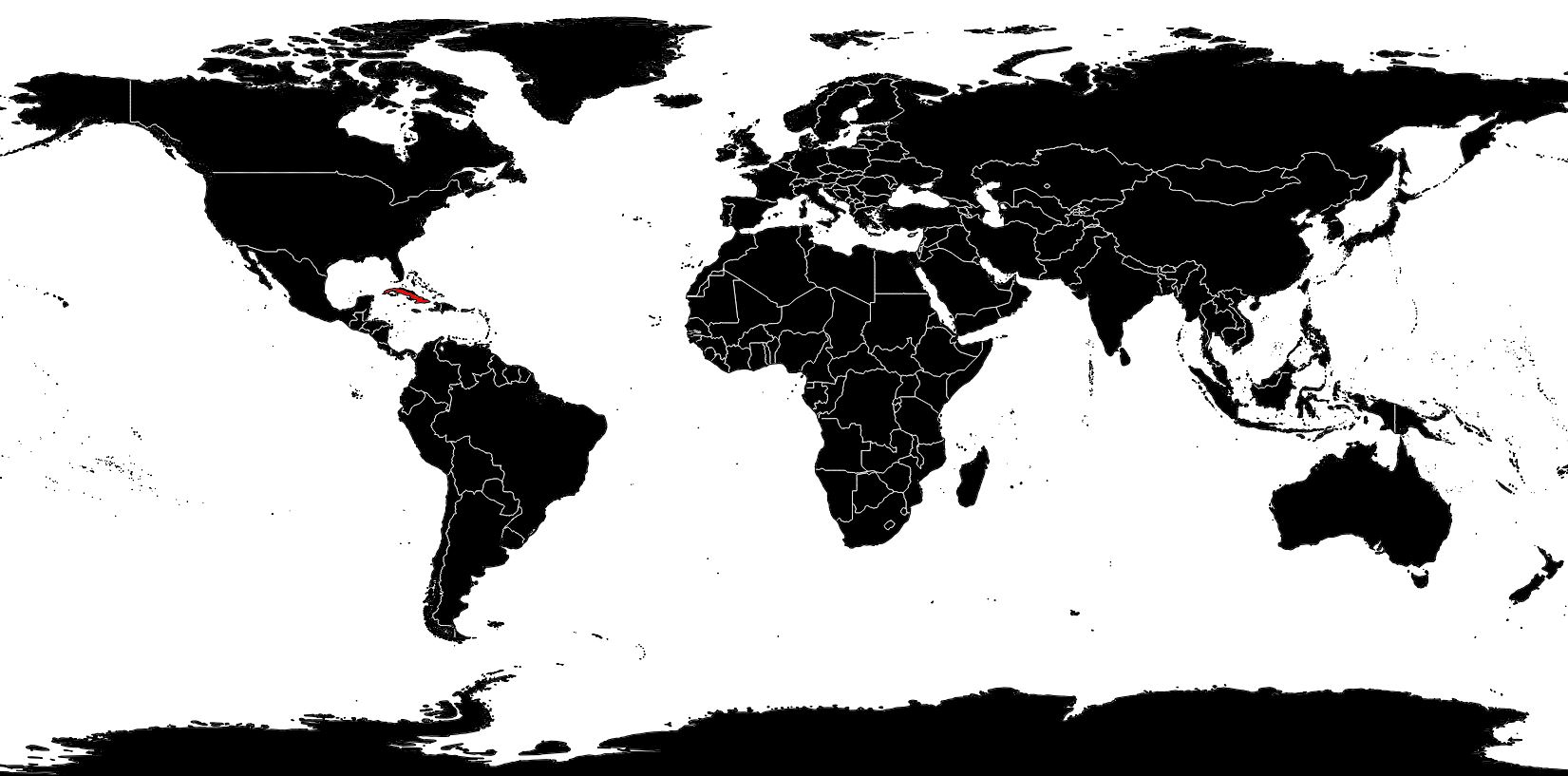
Cuba on a world map – Credit: Actualitix
Annual rainfall reaches 137 centimeters, and the heaviest precipitation occurs between May and June, then between September and October. The island of Cuba is also affected by frequent, devastating hurricanes from July to October.