
Discover a map of Iran. This Middle Eastern nation is the cradle of the ancient Persian Empire. 2,500 years ago, the empire stretched from the Indus Valley to the Nile, passing through what is now Pakistan. It even occupied part of present-day Libya.
The empire was better known as Persia, a name used by ancient Greece and inspired by the city of Persepolis. The population also used the name Iran. In 1935, the government officially adopted the name Iran to emphasize the people’s ethnic origins. This change is also explained by the success of the nationalist movement of the time. Since the Islamic Revolution of 1979, the country has officially been called the Islamic Republic of Iran.
Table of contents
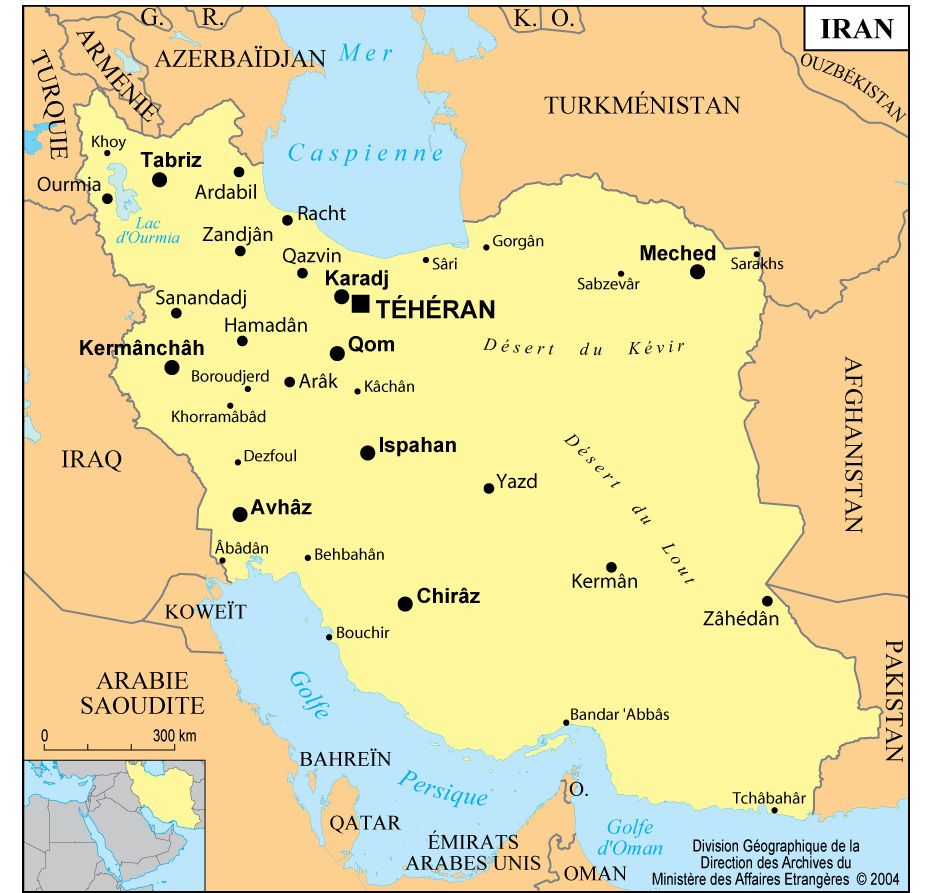
Map of Iran – Credit: Ministry of Foreign Affairs
Relief and climate on the map of Iran
Iran lies in the southwest of the Asian continent. Its borders meet, to the north, Armenia, Azerbaijan, Turkmenistan and the Caspian Sea; to the west, Turkey and Iraq; to the south, the Persian Gulf and the Gulf of Oman; and to the east, Pakistan and Afghanistan, as you can see on the map of Iran. Its area is 1,648,000 square kilometers, and its population density is low. A number of islands located in the south of the Persian Gulf are also part of the territory.
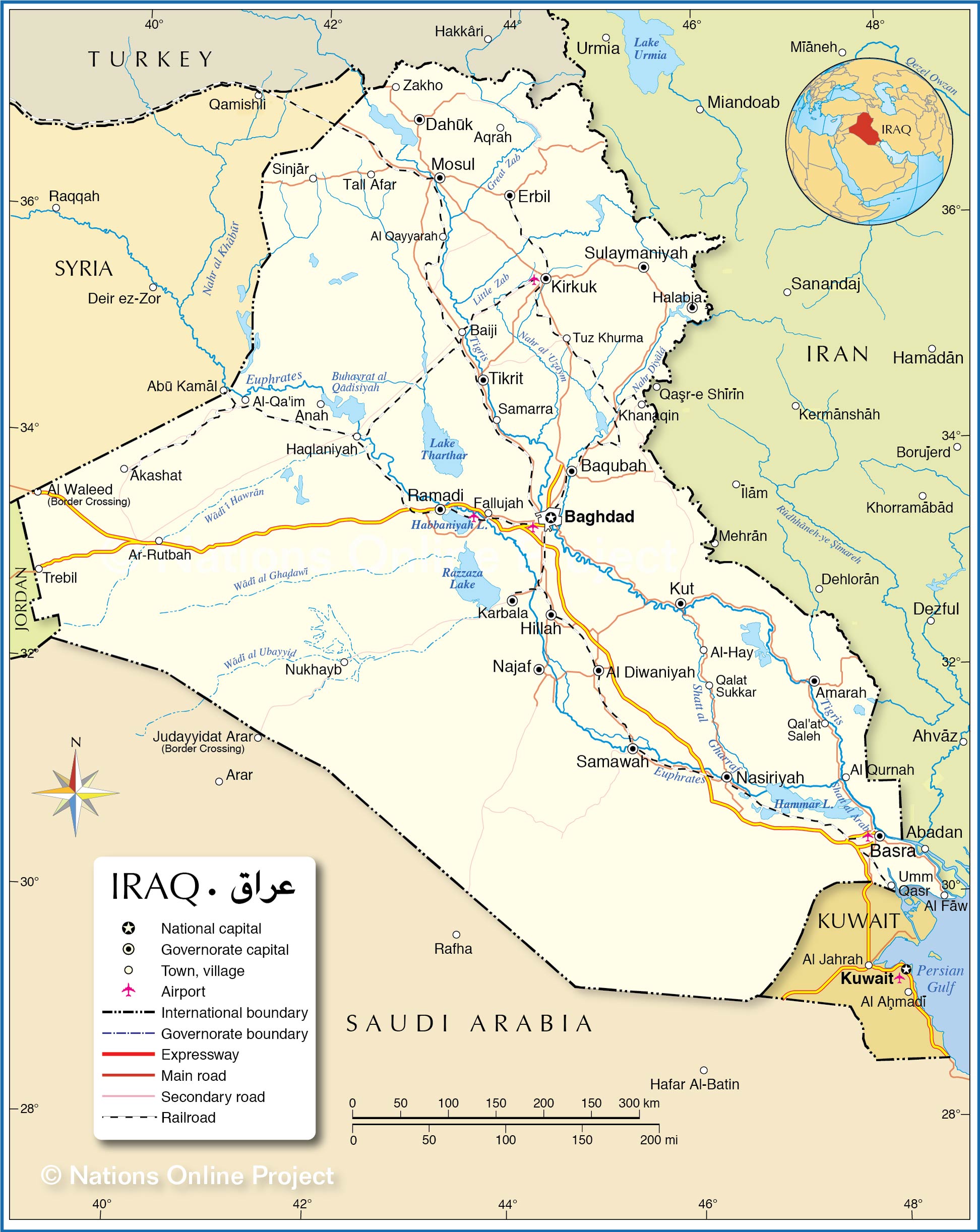
Map of Iran – Credit: Nations Online
The Iranian Plateau, dry, barren and triangular, dominates most of the country. It rises between 900 and 1,500 meters above sea level. The high Alborz mountains extend from east to west along the northern border. Iran’s highest point is Mount Damavand, a snow-capped volcanic peak reaching 5,610 meters in altitude.
The Zagros Mountains, running from northwest to southeast along the western border, are broader than the Alborz range. They separate the narrow coastal plains of the Caspian shoreline and the Persian Gulf from the high plateaus and deserts of central Iran. Several parallel foothills run from western Iraq to the eastern edge of the Iranian Plateau. The country is often hit by strong earthquakes.
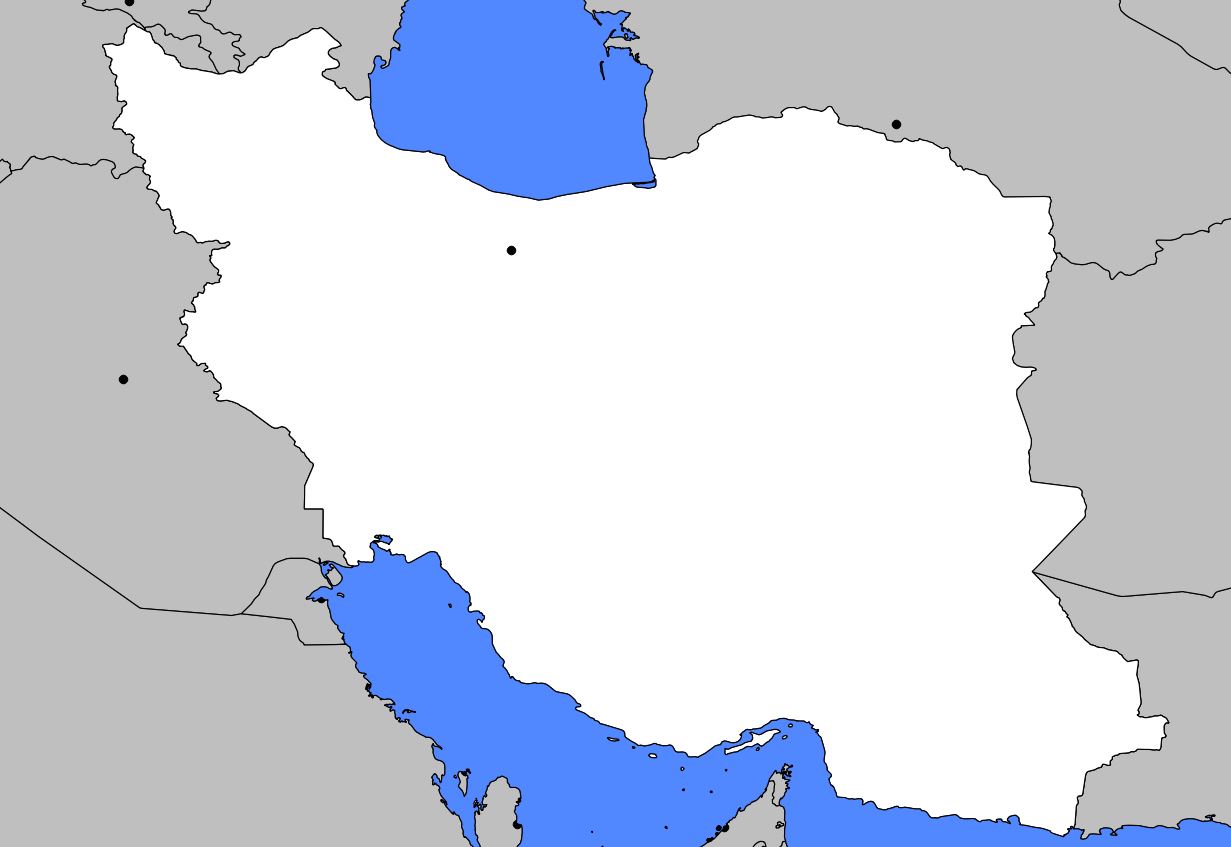
Blank map of Iran – Credit Actualitix
Iran’s average altitude is 450 meters (you can see the map of Iran on the relief). Mountain regions are very rugged, difficult to access, and inhabited by nomadic shepherds. The country has three major rivers, but only the Karun River, in western Iran, is navigable. Water from the mountains also makes it possible to generate electricity. Lake Urmia, a salt lake in the far northwest of the country, is Iran’s largest.
Desert covers about one sixth of the country. Desert regions are covered, on the one hand, with fine sand and stones called dasht, and on the other, with large sculpted salt dunes called kavir. Kavir areas are bleak regions, practically uninhabited and unexplored.
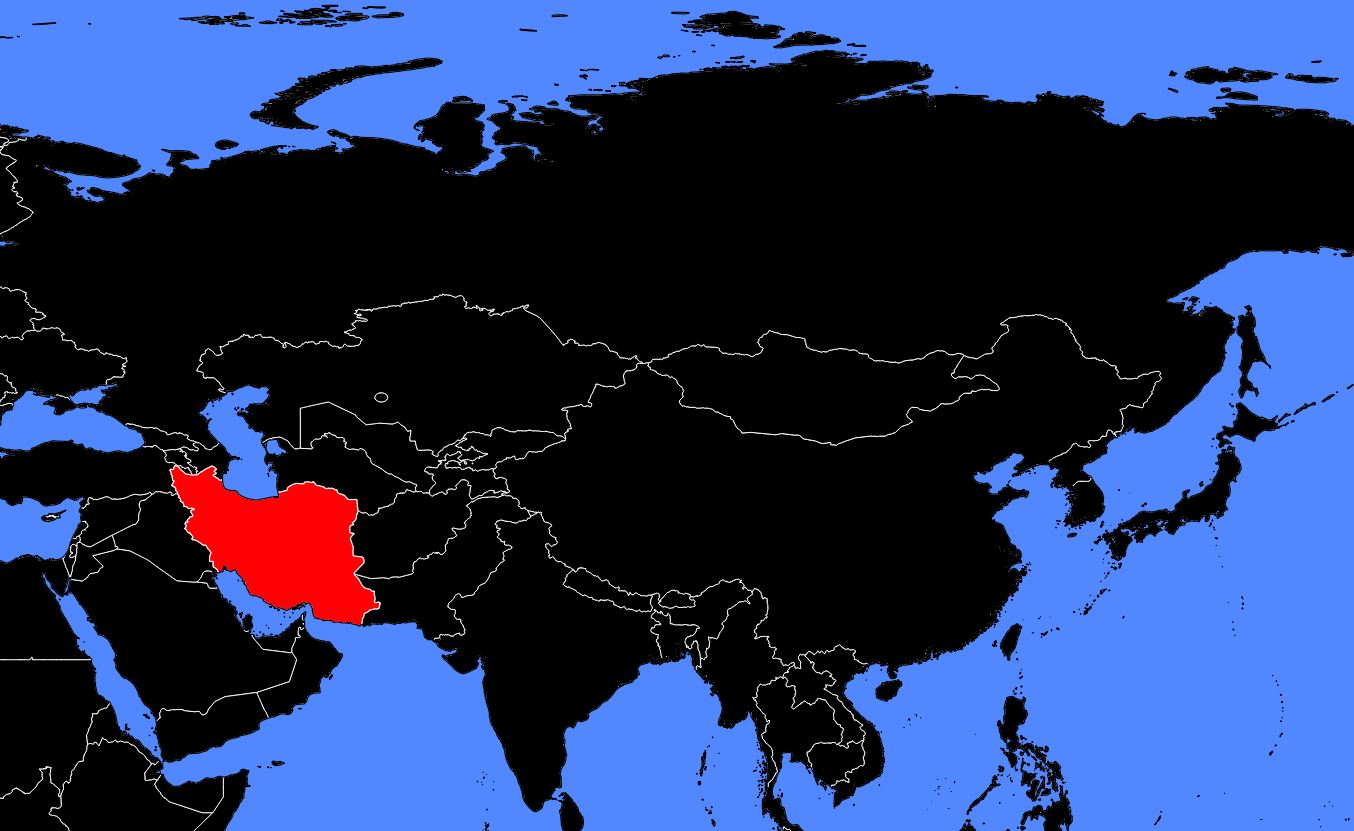
Iran on a map of Asia
Forests cover nearly 11% of the territory. They are mainly located in the Caspian region. They consist of oaks, maples, beeches, elms, walnuts and ashes. A few oases fed by underground springs are scattered at the foot of the mountains. Vegetation in these places includes tamarisks, poplars, date palms, myrtles, oleanders, acacias, mulberries and vines. Wildlife includes bears, sheep, goats, gazelles, wild boars, leopards and foxes.
The climate of the Iranian Plateau is continental, with cold winters and hot summers. Rain and snowfall together account for 38 cm of water in the western part of the country. Precipitation is only 12 cm per year in the east. The Caspian coast (see the map of Iran), the most densely populated region, records 200 cm of rain per year. Precipitation decreases in the Persian Gulf region, where it does not reach 12 cm per year. Snowfall in the mountains is significant. It provides most of the water reserves for irrigating farmland. Temperatures on the Iranian Plateau can drop to -7°C in winter and rise to 38°C in summer.
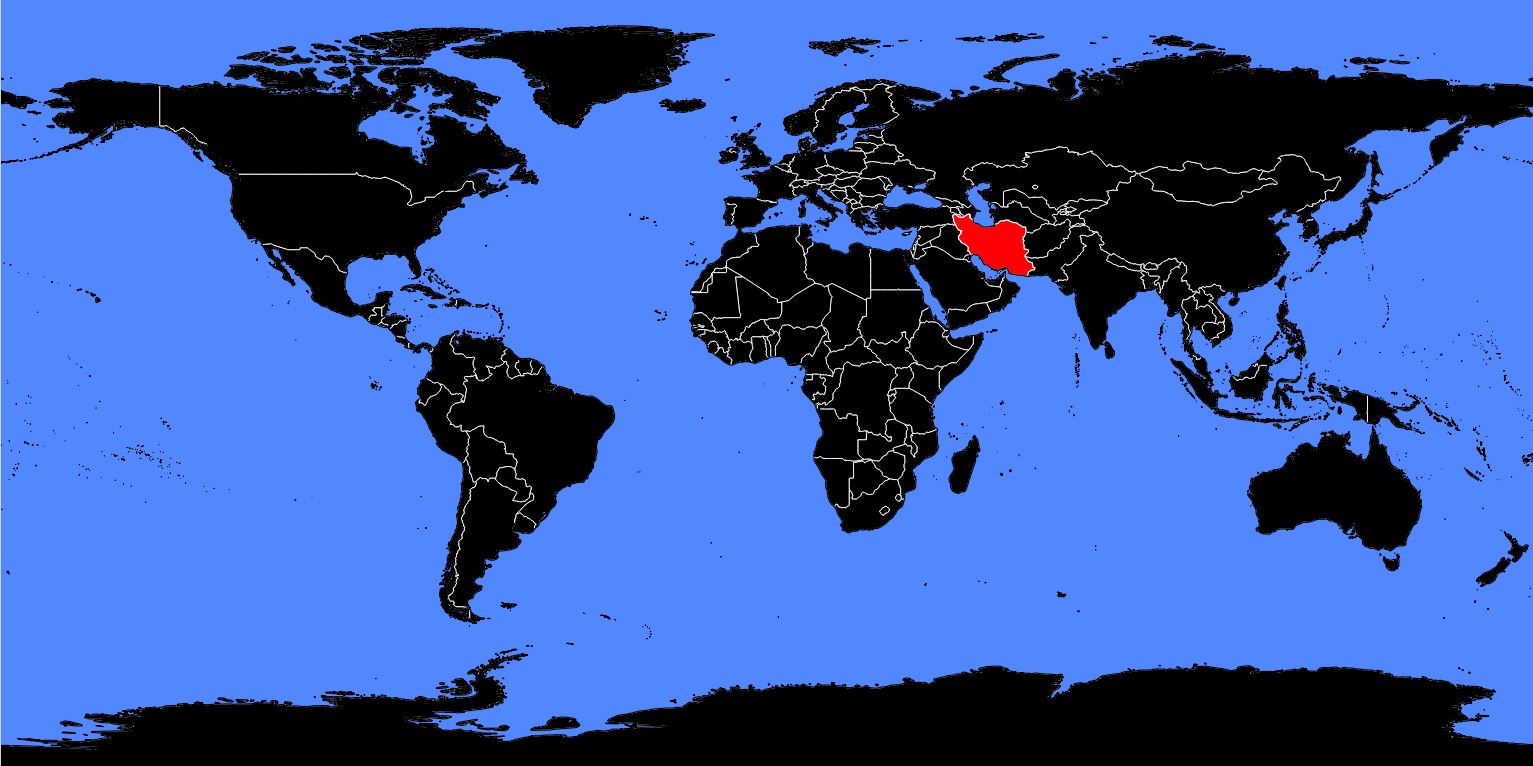
Iran on a world map – Credit Actualitix
Population in Iran
According to estimates dating from 1991, Iran’s total population exceeds 82 million inhabitants. Annual population growth averages 3.1%. Nearly 96% of the population belongs to the Indo-Iranian group. The rest is of Turkic, Arab, or other Semitic origins. The official language, Persian, uses the Arabic alphabet.
The vast majority of Iranians are Shi’ite Muslims. Iranians consider Mashhad a holy city because the tomb of Ali al-Ridha, the eighth imam and a major figure of Shi’ism, is located there. Qom is another holy site. A small number of Iranians still practice Zoroastrianism, the religion of ancient Persia. Christians and Jews are rare. It is also interesting to consult the map of Iran on this subject.
Some ethnic groups form a majority in certain regions of the country. The Kurds, Bakhtiaris and Lurs, all descendants of ancient Persian peoples, occupy the western mountains. Turkmen and Baluch live in the east, Azerbaijanis in the northwest, and Arabs in the southwest.
Many of these groups raise sheep and goat herds in the deserts and mountains, moving from mountain slopes in summer to plains in winter.
Traditionally, a village’s farmland belonged to a single owner, and peasants had to pay rent. During the 1960s, the government distributed small plots to farmers, but the most fertile land remained in the hands of large landowners.
In most of the Iranian Plateau, irrigation plays an essential role. Given the limited number of rivers, farmers must find water from underground sources. To prevent evaporation, peasants channel water from the mountains to the fields via a system of conduits called qanats.
Iranian cities are traditionally surrounded by high mud walls. Entrances to the city are made of glazed tiles. Each craft guild has its place in the bazaar or local market. You can also consult the map of Iran for the country’s main cities.
Whatever the family’s social level, Iranian housing is always made up of a garden surrounded by mud walls. It represents a miniature landscape with a tiled pool at the center. Tehran, the capital and largest city, is the country’s greatest commercial center. Perched on the Iranian Plateau, the city lies 110 km south of the Caspian Sea. Its wide, tree-lined streets are often congested.
The city has, however, retained a certain traditional character. Western-style buildings give it a modern appearance. Isfahan, the country’s capital in the 17th century, is Iran’s artistic cradle. Located in the northwest, in the rich region of Azerbaijan, Tabriz is the country’s most important national agricultural market. Abadan, on the Persian Gulf, is Iran’s leading oil port. However, it suffered severe damage during the Iran–Iraq conflict. Few remains of the ancient Persian Empire are left: only the ruins of Persepolis remain in the south of the country.
Transport in the country
The highway network links the country’s main cities. In the early 1970s, Iran had 43,450 km of roads, including 11,270 km paved and 20,900 km covered with gravel. Twenty years later, the road network reached 140,000 km, including 68,000 km paved. The rail network has about 4,700 km of track. It connects Iran to Turkey and Europe. The main ports are located on the Persian Gulf. Airports include both domestic and international facilities.