
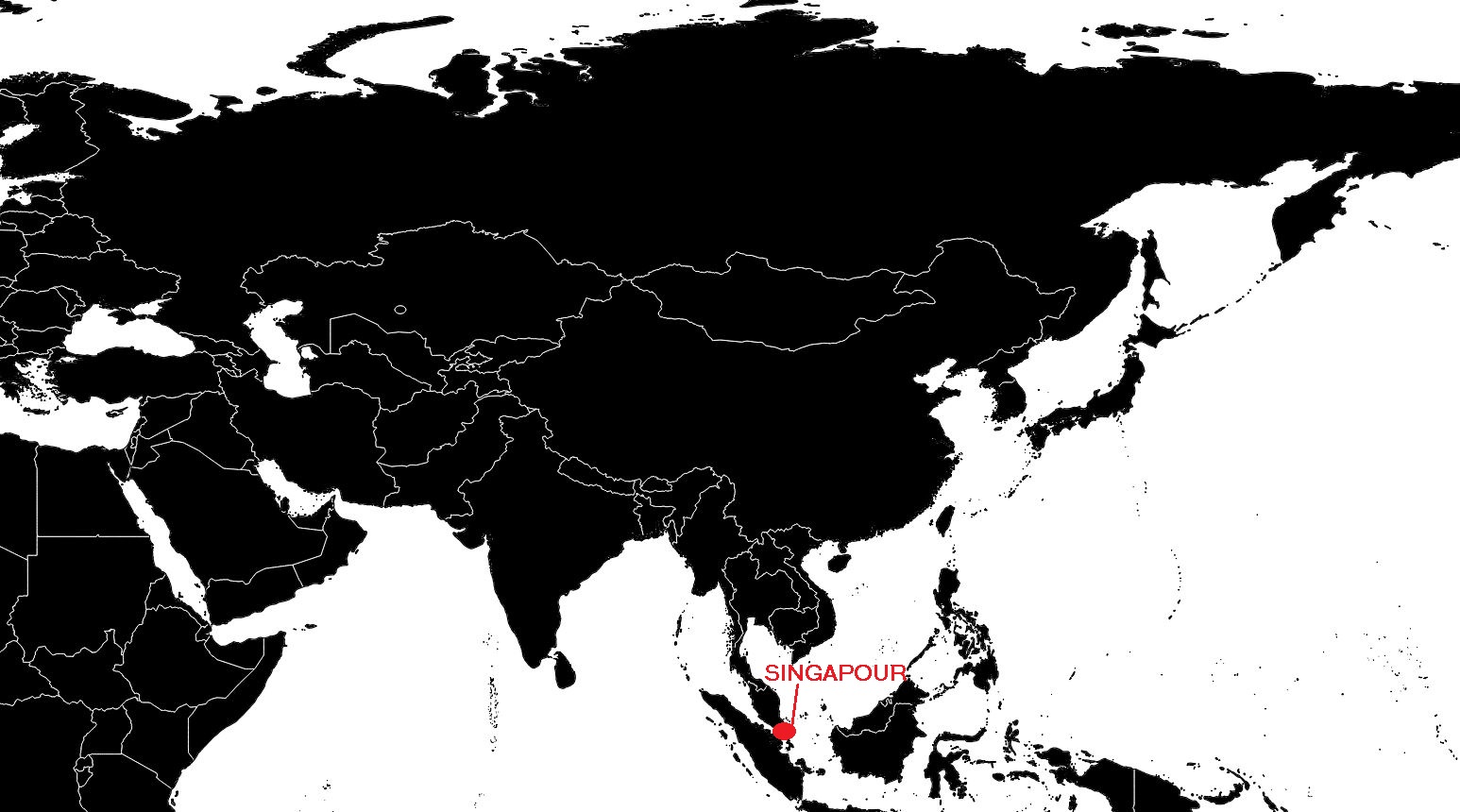
Discover a map of Singapore. Located in Southeast Asia, the Republic of Singapore is a city-state connected to Malaysia by a 1.1-kilometer-long causeway carrying both a road and a railway. Nicknamed the Lion City
, Singapore is a modern metropolis. Its port (which can be seen on the map of Singapore) handles one of the largest volumes of traffic in the world. Yet this small tropical island has also preserved many traces of its colonial past. If you wish to discover the country, you can read this article to find the best time to visit Singapore.
The diversity of ethnic groups that make up the population provides a rich cultural, religious and linguistic heritage.
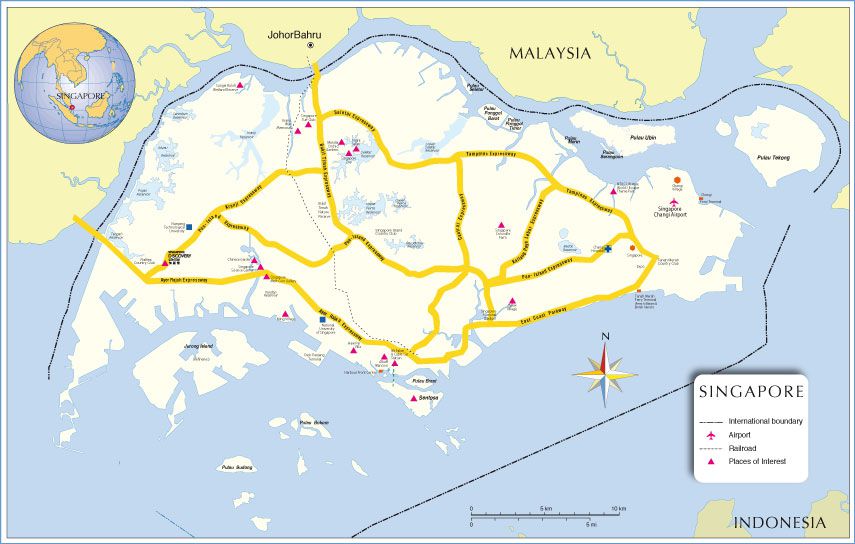
Map of Singapore: landscape and climate
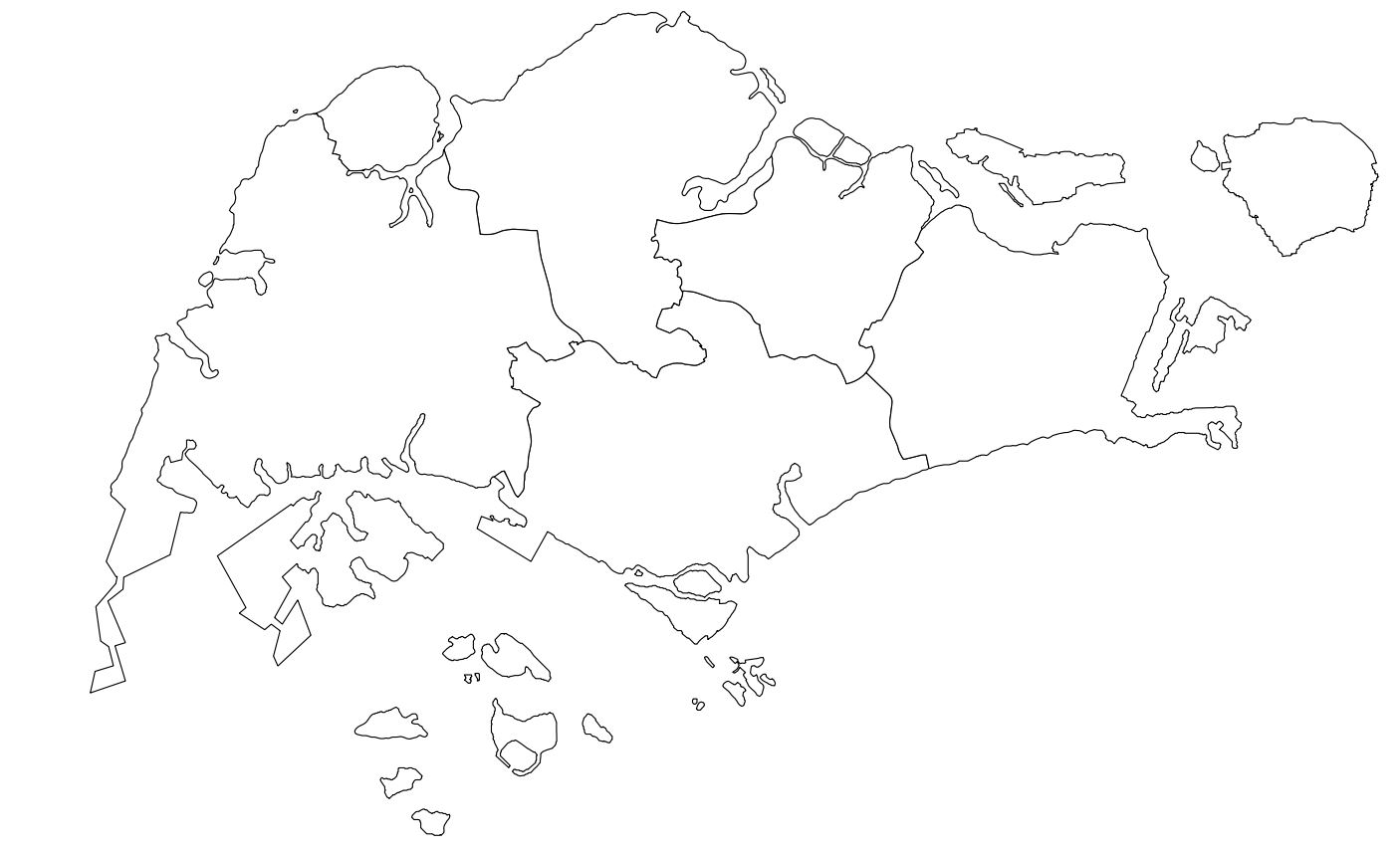
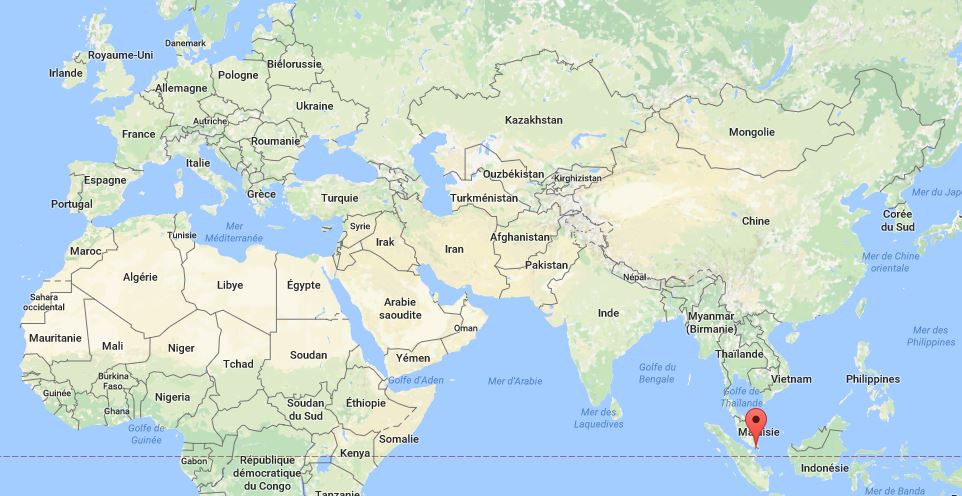
Singapore is separated from the mainland and Malaysia by the Johor Strait to the north. Beyond the Strait of Malacca and the Singapore Strait, to the west and south of the island, lies Indonesia. You can see this on the map of Singapore.
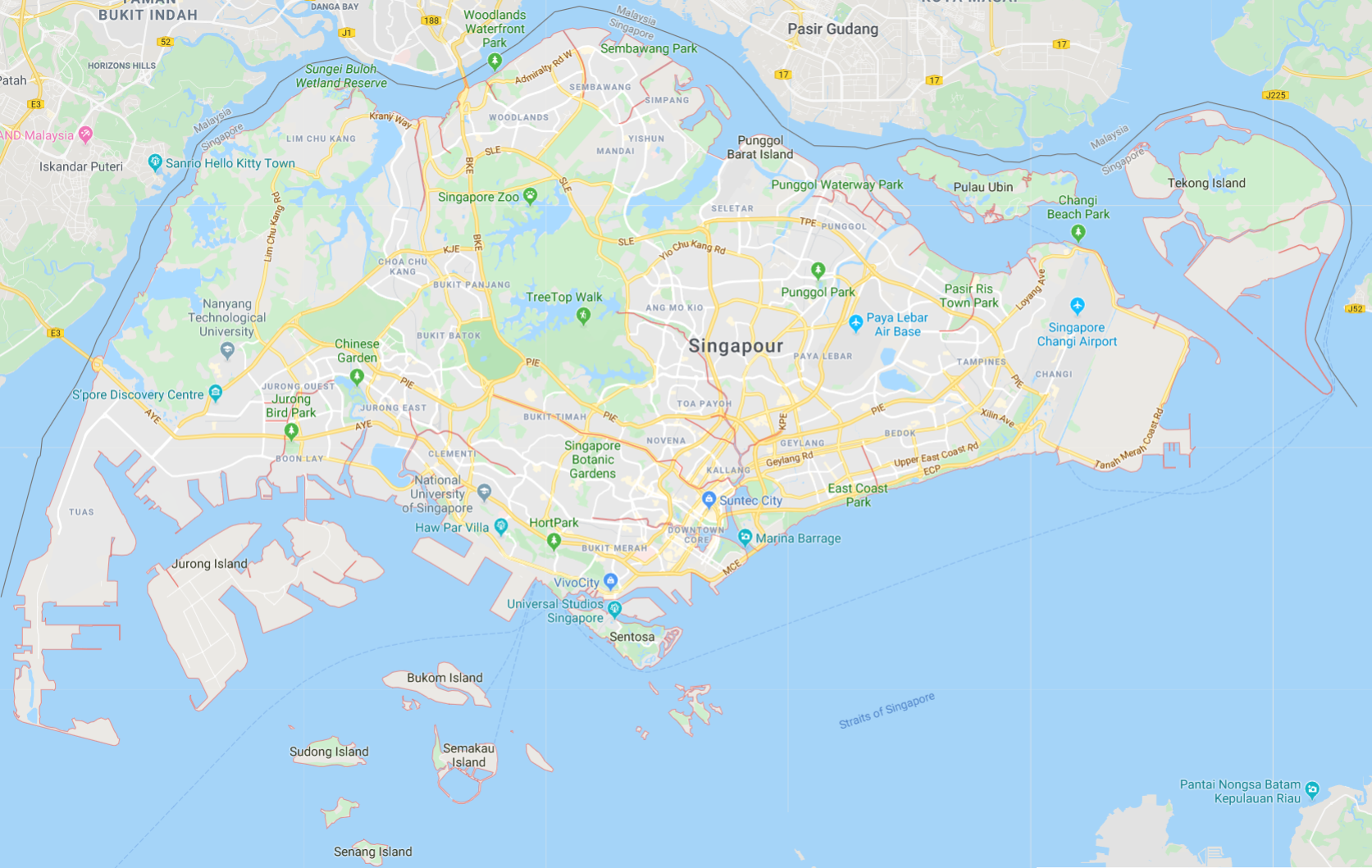
The total area of the country is 632.6 square kilometers and includes about 57 small islets.
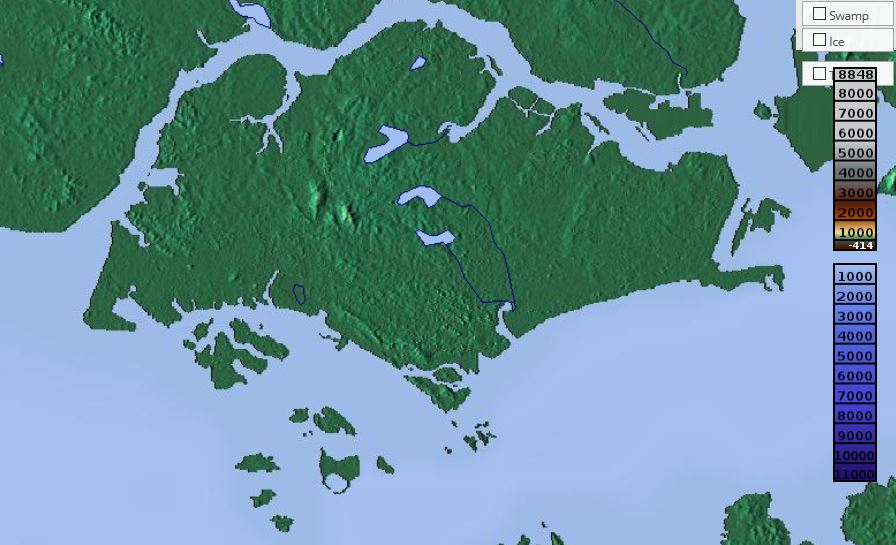
Originally made up of swamps and jungle vegetation, Singapore’s terrain is almost flat, except for a few low hills. Bukit Timah, the highest point, rises only 162 meters above sea level.
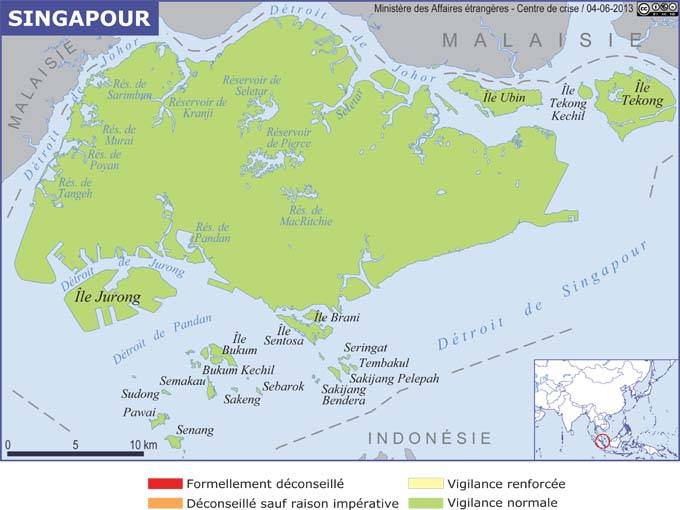
Located 137 kilometers (85 miles) north of the Equator, Singapore has a tropical climate characterized by high temperatures and heavy humidity. Annual and daily temperatures vary very little. The average high is around 31°C. The island, which does not really have seasons, receives an average of 254 centimeters of rain per year. During periods of heavy rainfall, floods often affect the lowest areas.
The island lies on the path of two monsoon currents that alternate with the seasons. The northeast monsoon dominates the climate from November to March, and the southwest monsoon from June to September.
The republic is in fact a large metropolitan area composed of outlying population centers. The main urban center is located on the southern coast, as seen on the map of Singapore.
Population and culture
Singapore’s population was estimated at 5.5 million inhabitants in 2015. With a population density of 7,670 inhabitants per square kilometer, the island is one of the most densely populated nations in the world.
Singapore was the first Asian nation to control its population growth. Family planning programs were run by government agencies in dozens of clinics. The program was so successful that concerns now focus on population decline. Infant mortality is about 7 per thousand, one of the lowest rates in the world. Singapore’s population is composed of three main ethnic groups: Chinese, Malays and Indians. The Chinese represent 76% of the population, Malays 15% and Indians 6%. Relations between these different ethnic groups are good.
The official languages are Malay, Chinese (Mandarin), Tamil and English. The government insists on the need for bilingualism and particularly encourages the use of Mandarin. Nevertheless, Malay remains the national language and English the language of business.
Singapore is a secular state. Most Chinese are Taoist or Buddhist, and Christians are increasingly numerous. However, religion is not of major importance in everyday life in this country.
Food
Not related to the map of Singapore, but the country offers an unlimited range of international and local gastronomy. The Indian community in particular has shaped the island’s culinary tradition. Originating from southern India, Indians who immigrated to Singapore brought with them a culinary style based on the use of many spices.
Singapore in the world
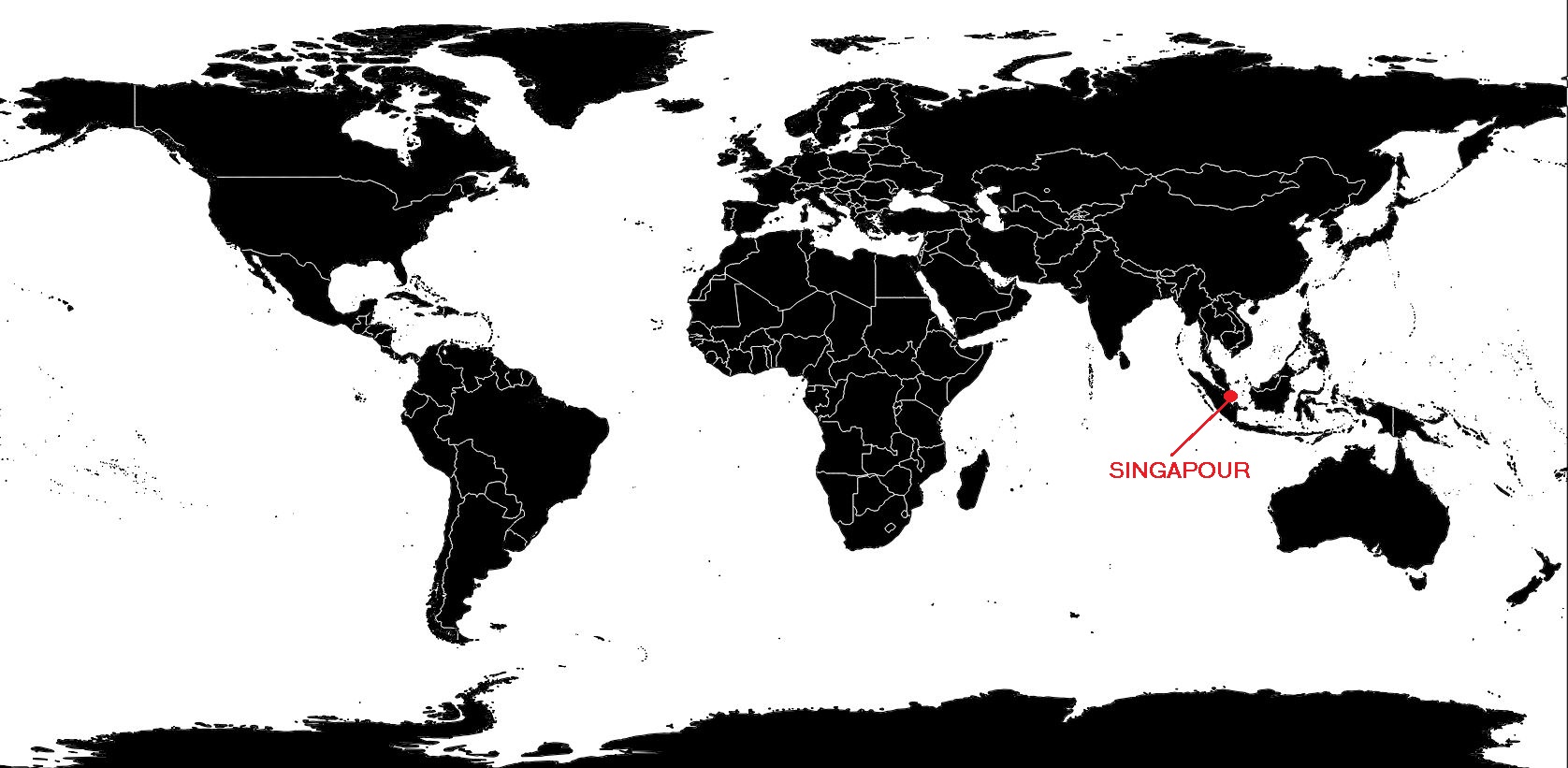
Located at the crossroads of major international sea and air routes (as can be seen on the map of Singapore), the country has long been an important communications and transportation hub. The Port of Singapore Authority manages five access zones and more than 12 kilometers of quays. Its container loading and unloading facilities are among the largest and most modern in the world.
Singapore excels in air transport. Singapore Airlines has an excellent reputation worldwide. Changi Airport, Singapore’s international terminal, is the most modern in Southeast Asia.
High-quality public transport includes buses, taxis and a Mass Rapid Transit (MRT) system that has been in operation since 1987. MRT lines connect the largest residential centers with industrial areas and urban business districts.
Tourism has developed strongly and represents a major source of revenue. The main attractions include the botanical and zoological gardens.