
In this article you will find a map of Jordan. A small country with limited natural resources, the Hashemite Kingdom of Jordan has for years played a key role in the struggle for power in the Middle East.
This is due to its strategic location at the center of a region considered by Christians, Jews, and Muslims as the Holy Land. As you can see on the map of Jordan, the country is bordered by Syria to the north, Iraq to the east, Saudi Arabia to the south and southeast, and Israel to the west.
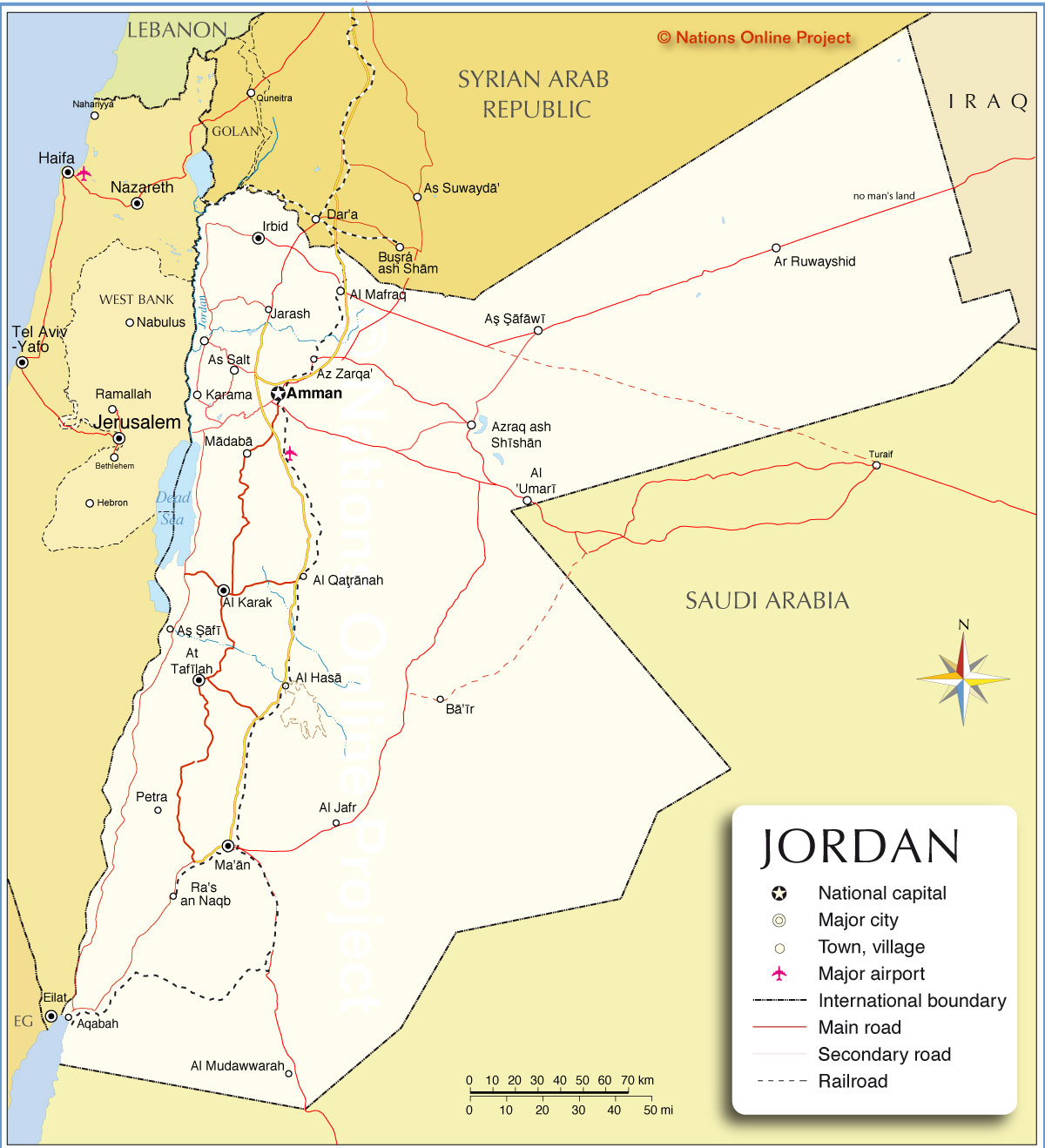
Map of Jordan – Credit: Nations Online
Jordan is famous for its archaeological sites, including many Roman ruins, Crusader-built citadels such as Al Karak, the rose-red city of Petra, and Aqaba, the country’s only port. The hospitality of the Jordanians, inherited from their Bedouin origins, is well known and has helped raise their nation to the status of a commercial hub in the Middle East. The capital, Amman, is experiencing significant growth.
Geography with the map of Jordan
In spring, the hills and valleys where herds graze are covered with grasses and wildflowers. No fish live in the Dead Sea, whose salinity is exceptionally high, but the waters of the Gulf of Aqaba are home to many marine species.
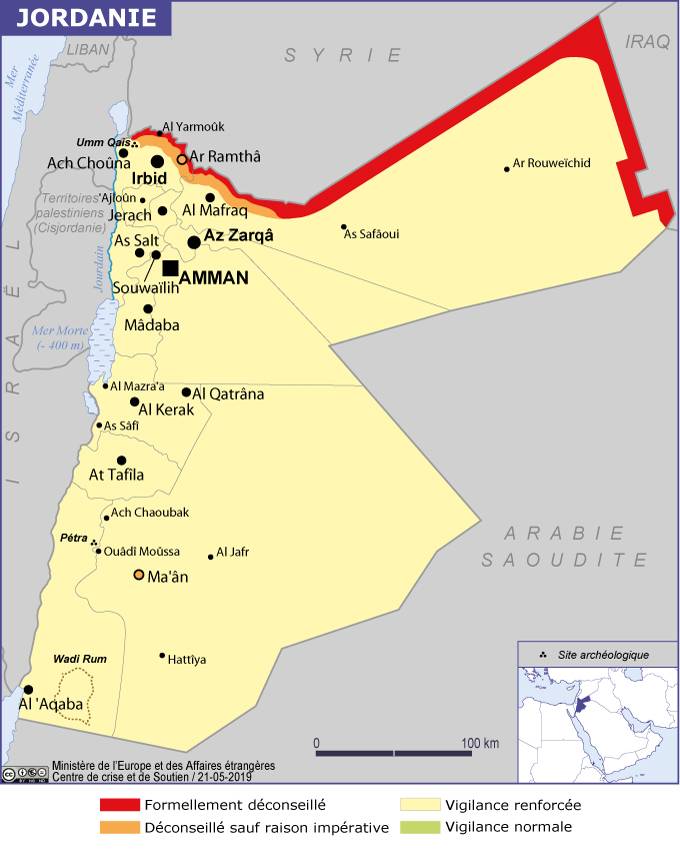
Jordan map – Credit: Ministry of Foreign Affairs
As you can see on the map of Jordan, the western part of the country, separated from the sea by Israel, enjoys a Mediterranean climate, while the east is desert in character. In the south, the influence of dry winds blowing from the Sahara can be felt, while the northwest, crossed by the Jordan River which flows into the Dead Sea to the south, is the country’s main agricultural region.
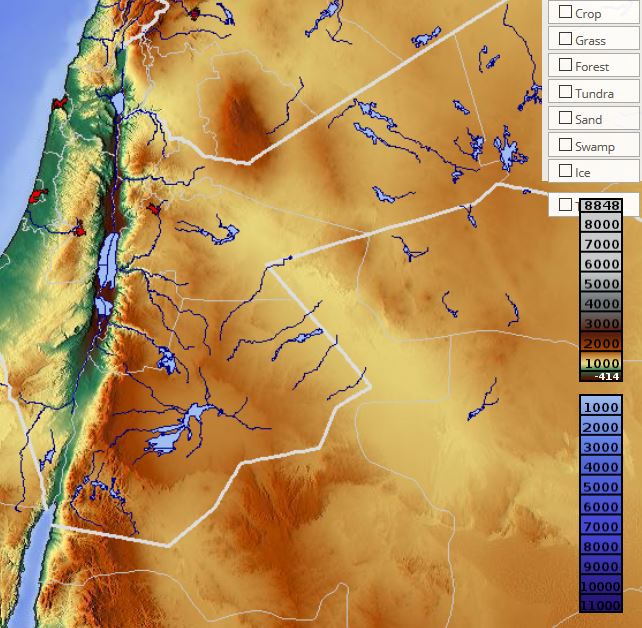
Relief map of Jordan – Image from maps-for-free
Population in Jordan
In 1921, the region east of the Jordan River, known as Transjordan, was placed under British mandate. Its population consisted mainly of nomadic tribes and a small Circassian minority that had arrived from the Caucasus in the 19th century. Today, the population is largely urbanized.
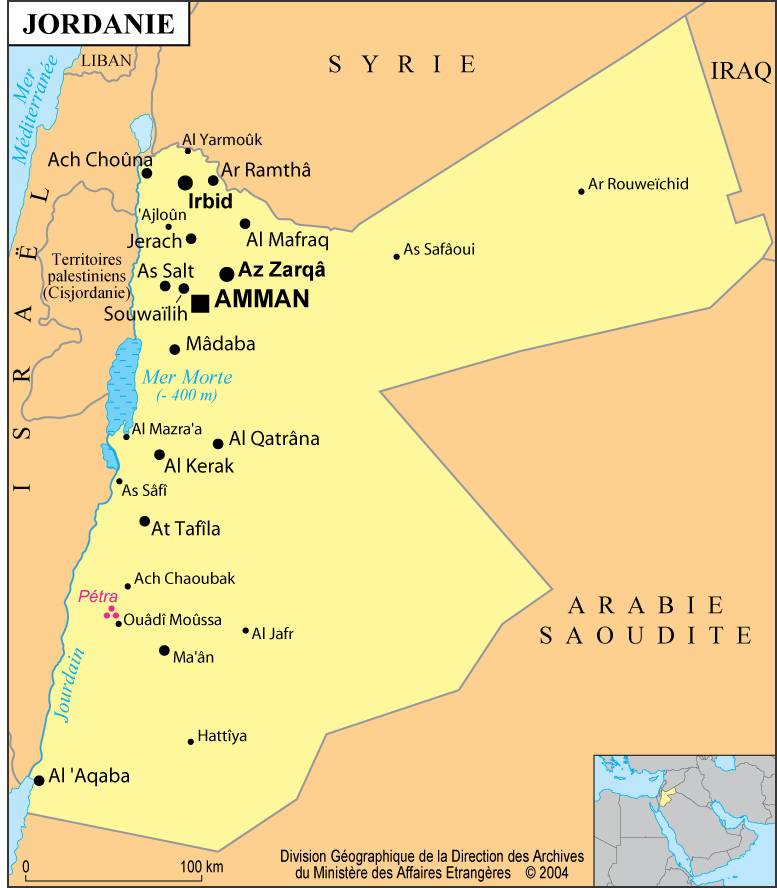
Map of cities in Jordan – Credit: Ministry of Foreign Affairs
After the creation of the State of Israel in 1948 and the occupation of the West Bank by Israeli troops in 1967, Palestinian refugees poured into the country. Jordan now has 9.5 million inhabitants, 99% of whom are Arabs and only 1% Circassians. The population is 90% Muslim. The official language is Arabic, and the illiteracy rate is around 20%.
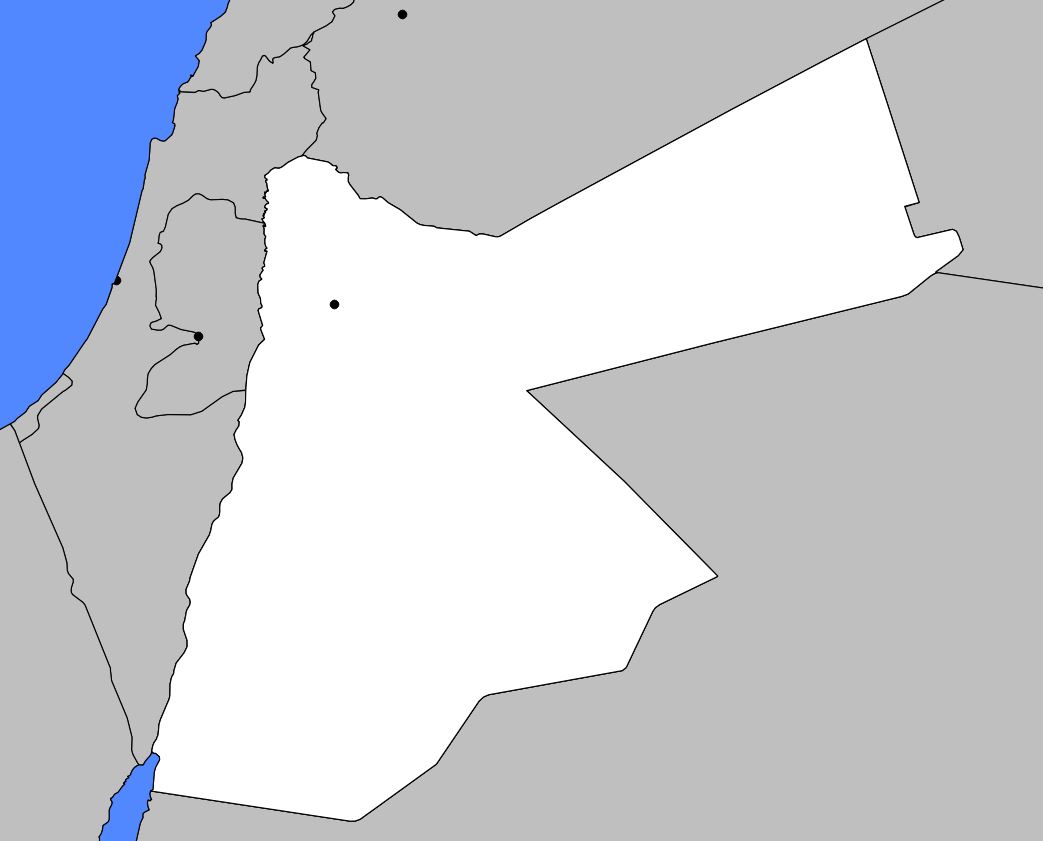
Blank map of Jordan – Credit Actualitix
Learn more
The economy has suffered considerably from the presence of a large number of refugees, all of whom obtained Jordanian nationality and political refugee status, thus benefiting from financial aid.
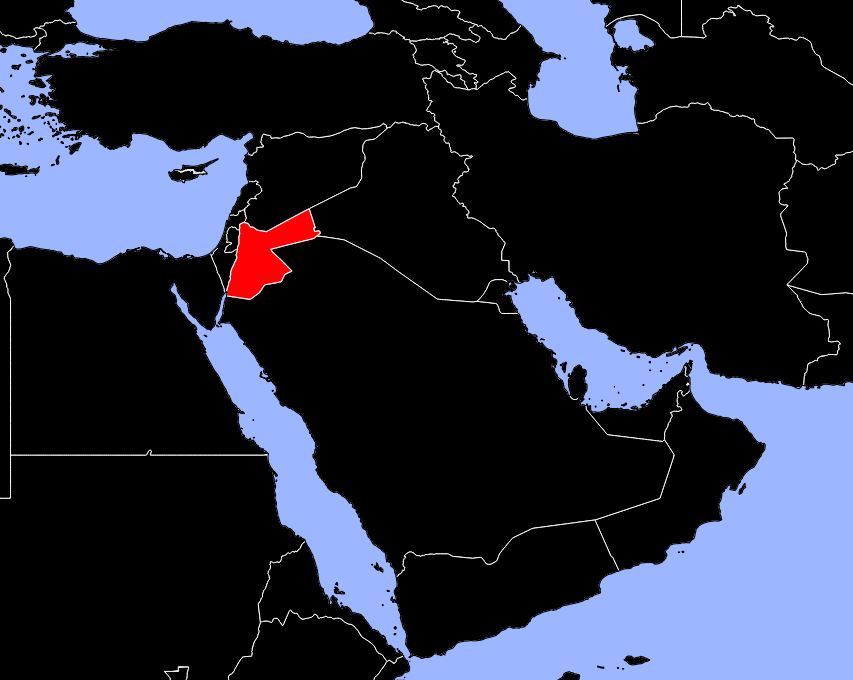
Jordan on a Middle East map – Credit Actualitix
A large part of the country is covered by arid land unsuitable for cultivation, but the fertile lands of the Jordan Valley produce vegetables, olives, fruit, and cereals. The economy is largely based on phosphate extraction, oil refining, cement production, and tourism.
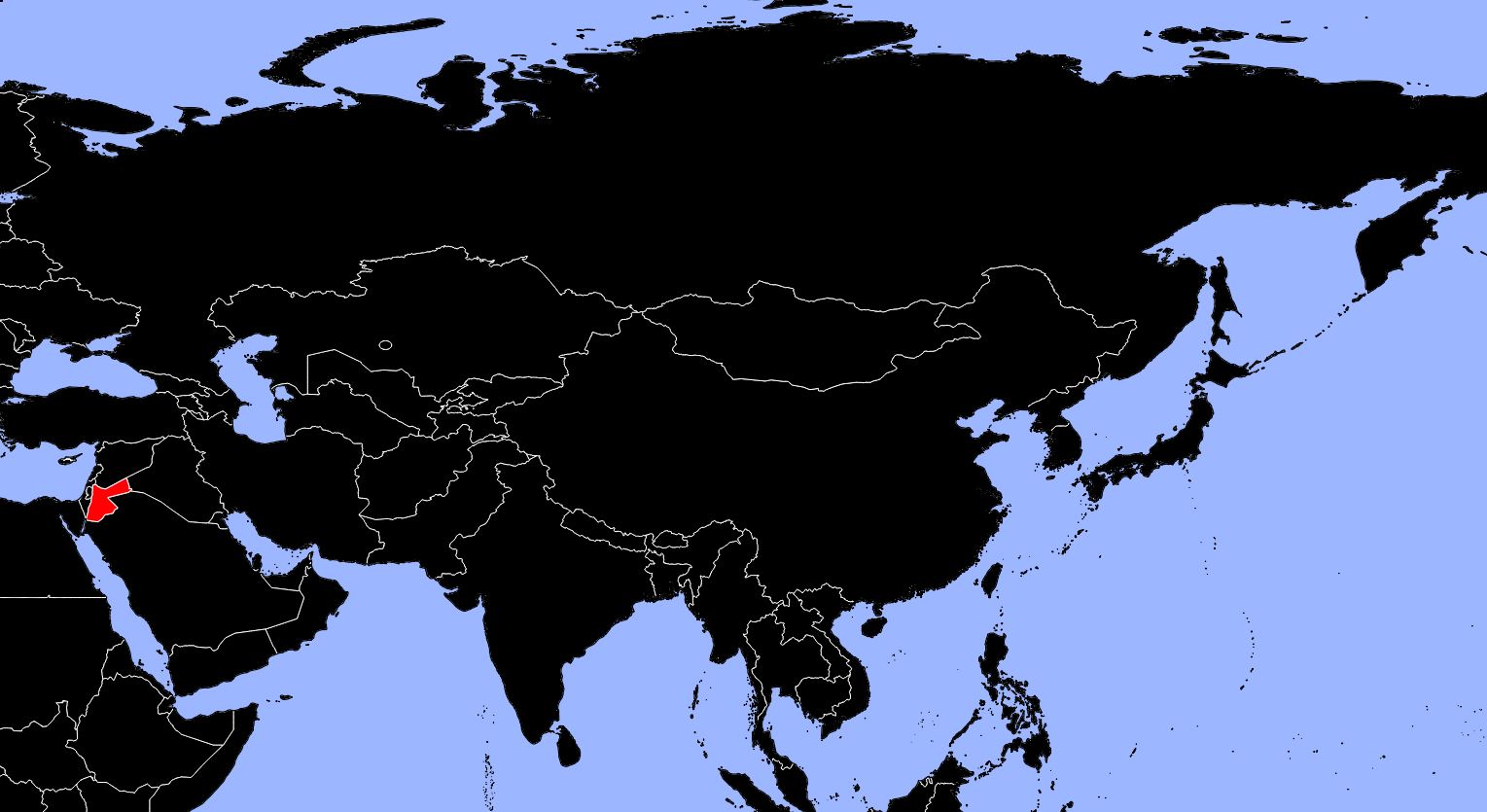
Jordan on an Asia map – Credit Actualitix
A highway crosses the country between Amman (you can see its location on the map of Jordan) and the port of Aqaba on the Red Sea and is used to transport goods for export. Many other highways are under construction. The country has a television station and a radio station and also receives another radio station broadcasting from Jerusalem.
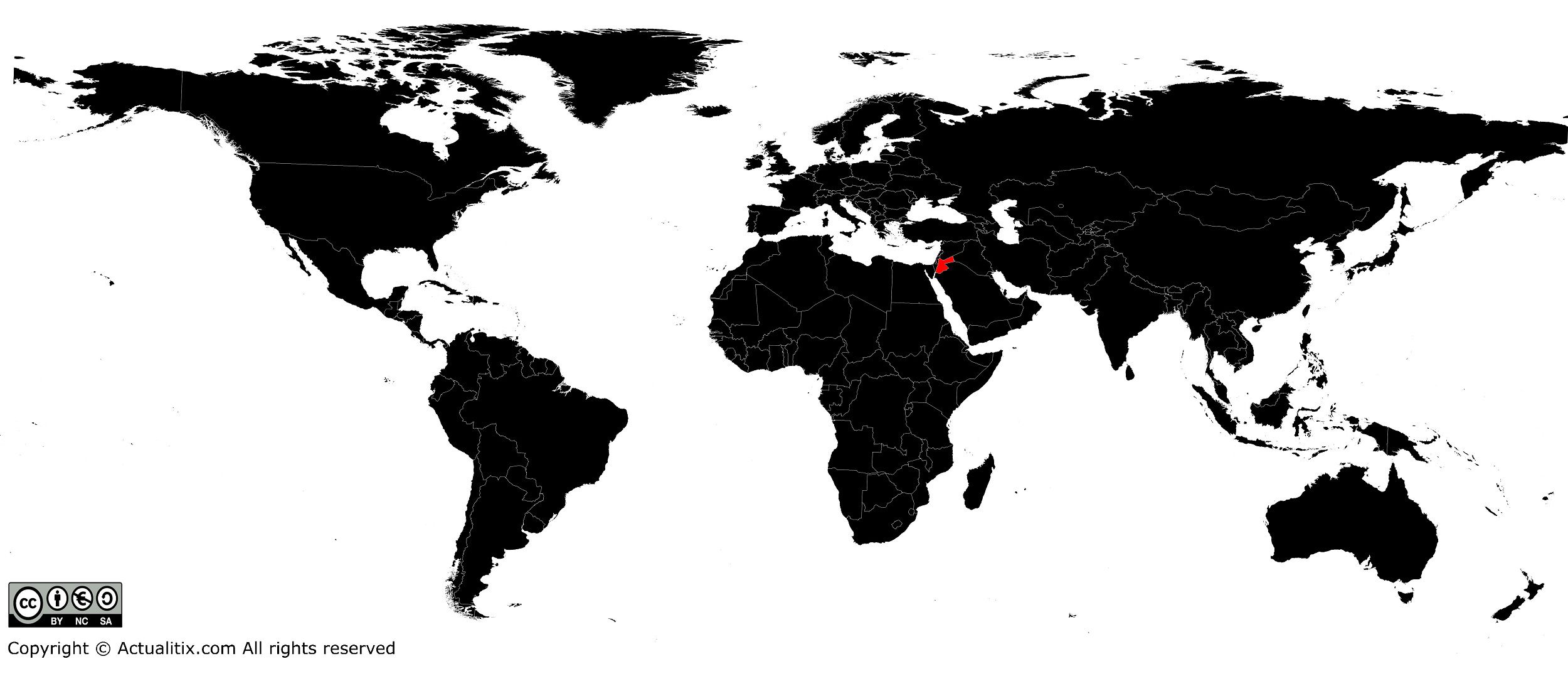
Jordan on a world map – Credit Actualitix
You can discover all the available maps for the different countries of the world on this page.