
Finland is the northernmost country in Europe. As you can see on the map of Finland, it is bordered by Russia to the east, Sweden to the west, and Norway to the north. To the southwest, it extends into the Baltic Sea. There, it is bordered by the Gulf of Bothnia to the west and the Gulf of Finland to the south. Nearly a third of the territory lies beyond the Arctic Circle.
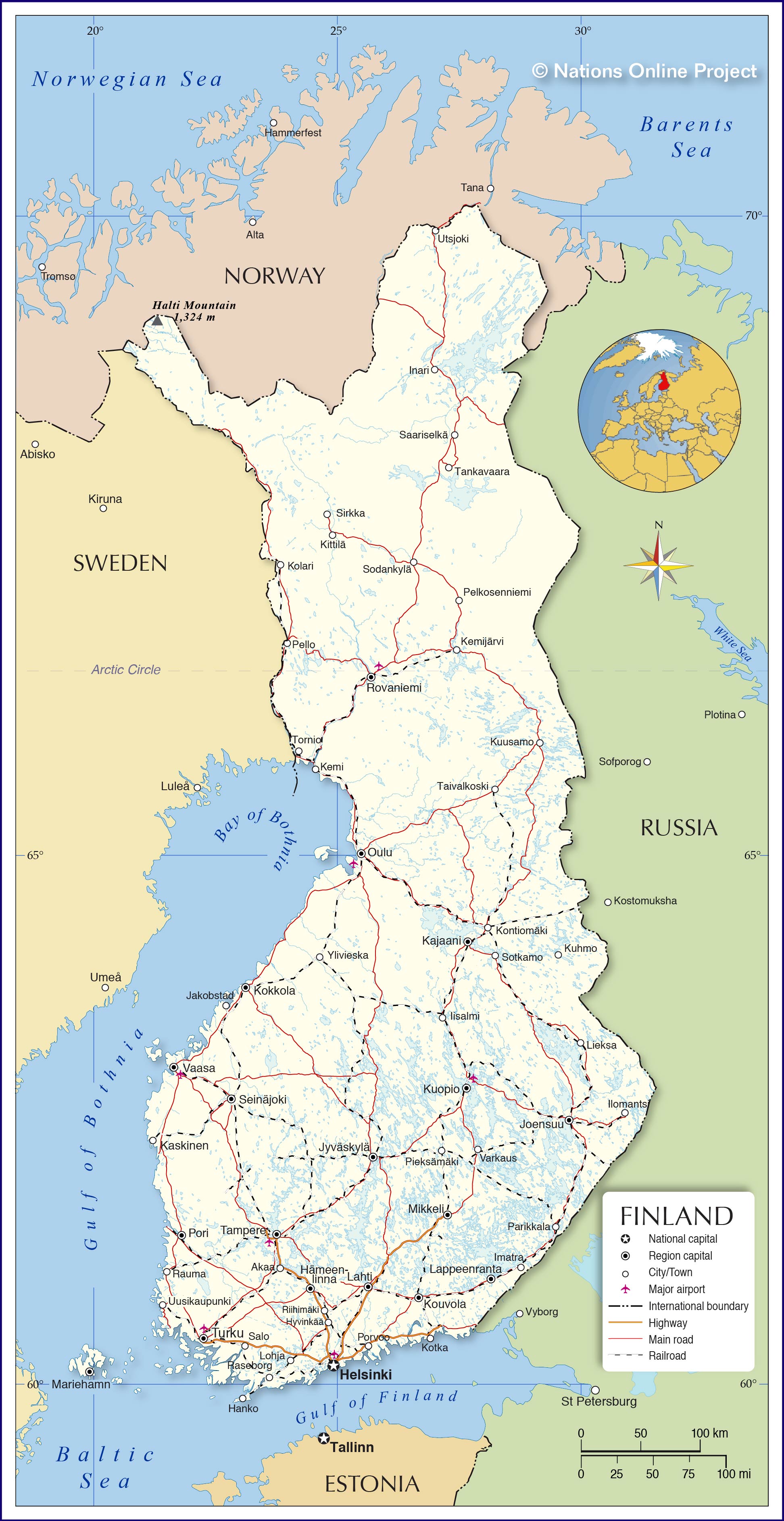
Map of Finland – Credit: Nations Online
Information about Finland
The Åland Islands are located at the entrance to the Gulf of Bothnia. Population density is almost negligible in the north of the country due to the harsh climate, the relief, and the nature of the soils. The Finnish population is mainly concentrated in the south of the country (as can be seen with the cities on the map of Finland), along the Baltic Sea coast, around the Gulf of Finland, and on the shores of glacial lakes that dot the region.
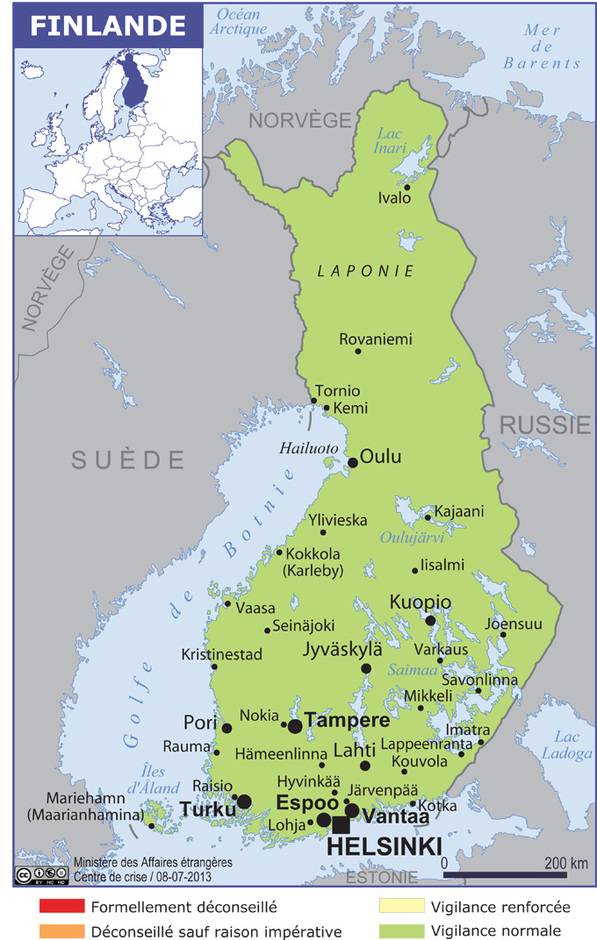
Finland map – Credit: Ministry of Foreign Affairs
Finland’s independence is relatively recent, dating back only to 1917. The new Republic of Finland was then defeated twice by the Soviet army during the Second World War. Finns were forced to cede some of their most fertile land to the Soviet Union. Since then, Finns have rebuilt their country and remained politically neutral.
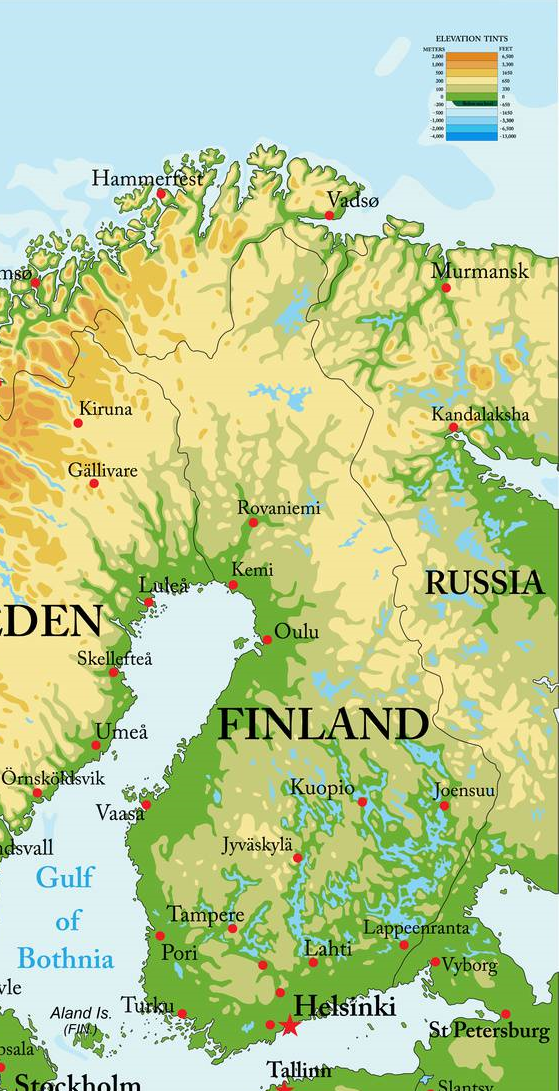
Relief map of Finland – Fotolia license
Geography with the Map of Finland
Finland covers an area of 338,462 square kilometers. In 2015, population density did not exceed 17.9 people per square kilometer. As you can see on the map of Finland, cities are widely spaced compared to the country’s size. Finland rests on an ancient granite bedrock marked by intensive glacial erosion.
Except for the mountainous areas in the north, the generally gentle landscape contains nearly 55,000 lakes. It is estimated that 10% of the land is covered by water (which you can see on the map of Finland). At the end of the last glaciation, glaciers retreated, forming countless hills, lakes, and marshlands. The most fertile soils are found in coastal regions or along lake shores, but unfortunately their area is relatively limited.
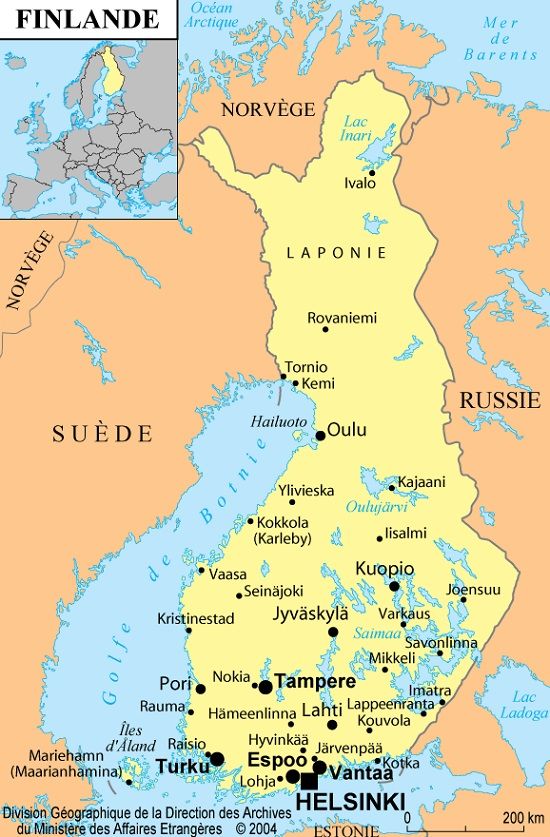
Map of cities in Finland – Credit: Ministry of Foreign Affairs
Finland has a continental-type climate. In the south, the climate is moderated by winds from the Baltic Sea and the North Atlantic. The north of the territory, however, is affected by a very harsh climate characterized by particularly long, cold winters and cool, very short summers.
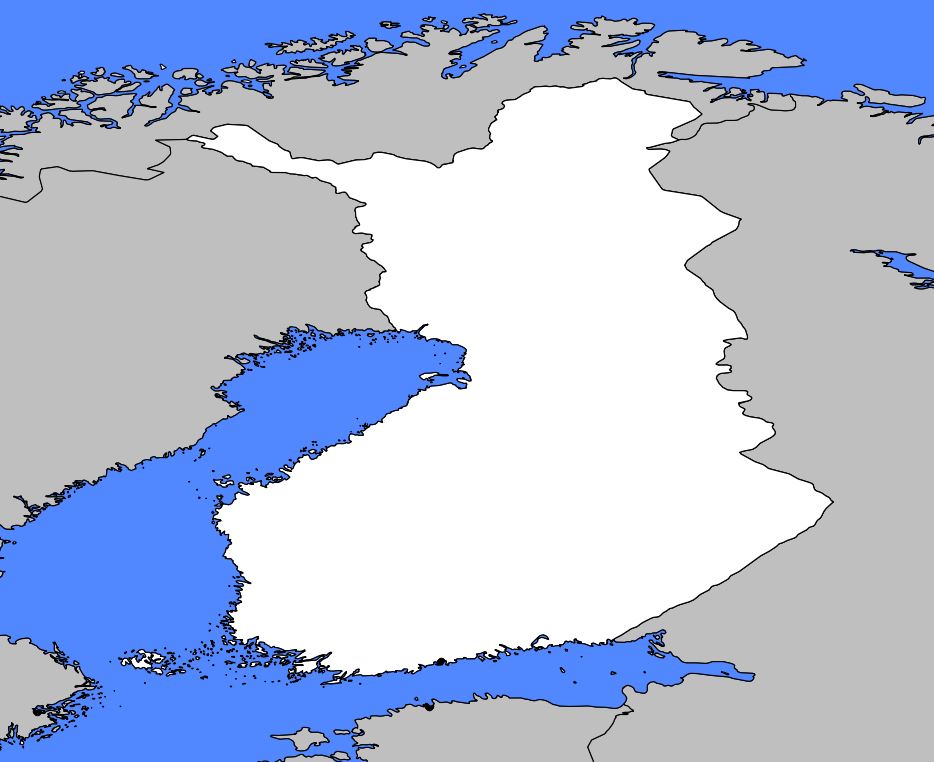
Blank map of Finland – Credit: Actualitix
Frosts are frequent throughout the year in northern Finland. In the south, the growing season does not exceed three months at best. Because of its northern position, Finland benefits in summer from very long days, whose sunlight compensates for the short growing season. Annual rainfall ranges from 61 centimeters in the south to 41 centimeters in the north. In winter, snowfall can be very spectacular.
Vegetation and Wildlife
Finnish territory is covered by vast forests. Forestry and the production of construction timber therefore play a major economic role. Pines and firs are by far the most widespread conifers. In the south, they grow alongside many deciduous tree species, including maples, hazels, birches, aspens, alders, and lindens.
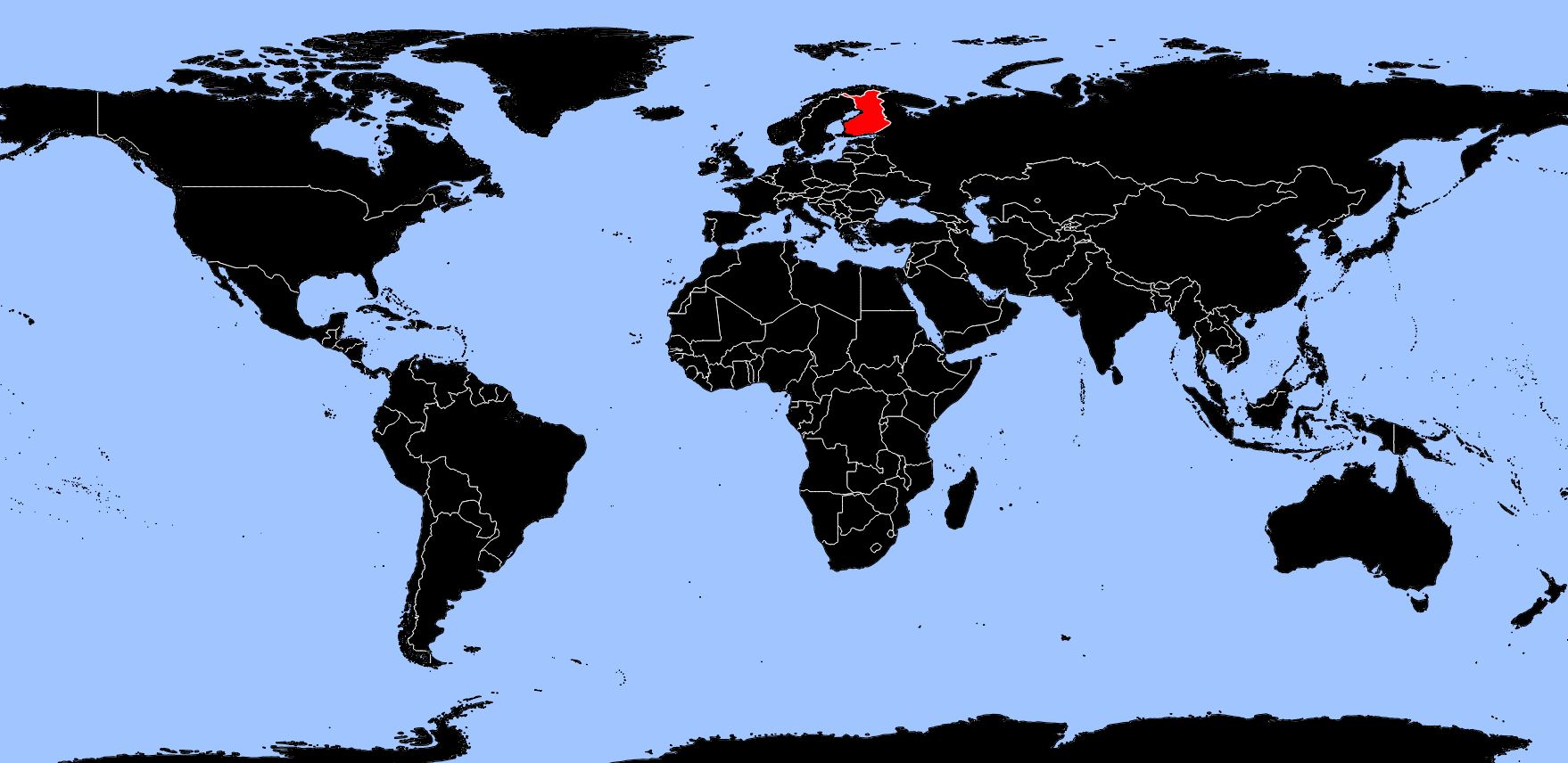
Finland on a world map – Credit: Actualitix
In the great forests of northern Finland, the harsh climate makes trees small and gnarled. Forests then give way to tundra, where vegetation is dominated by mosses, lichens, and wild raspberries.
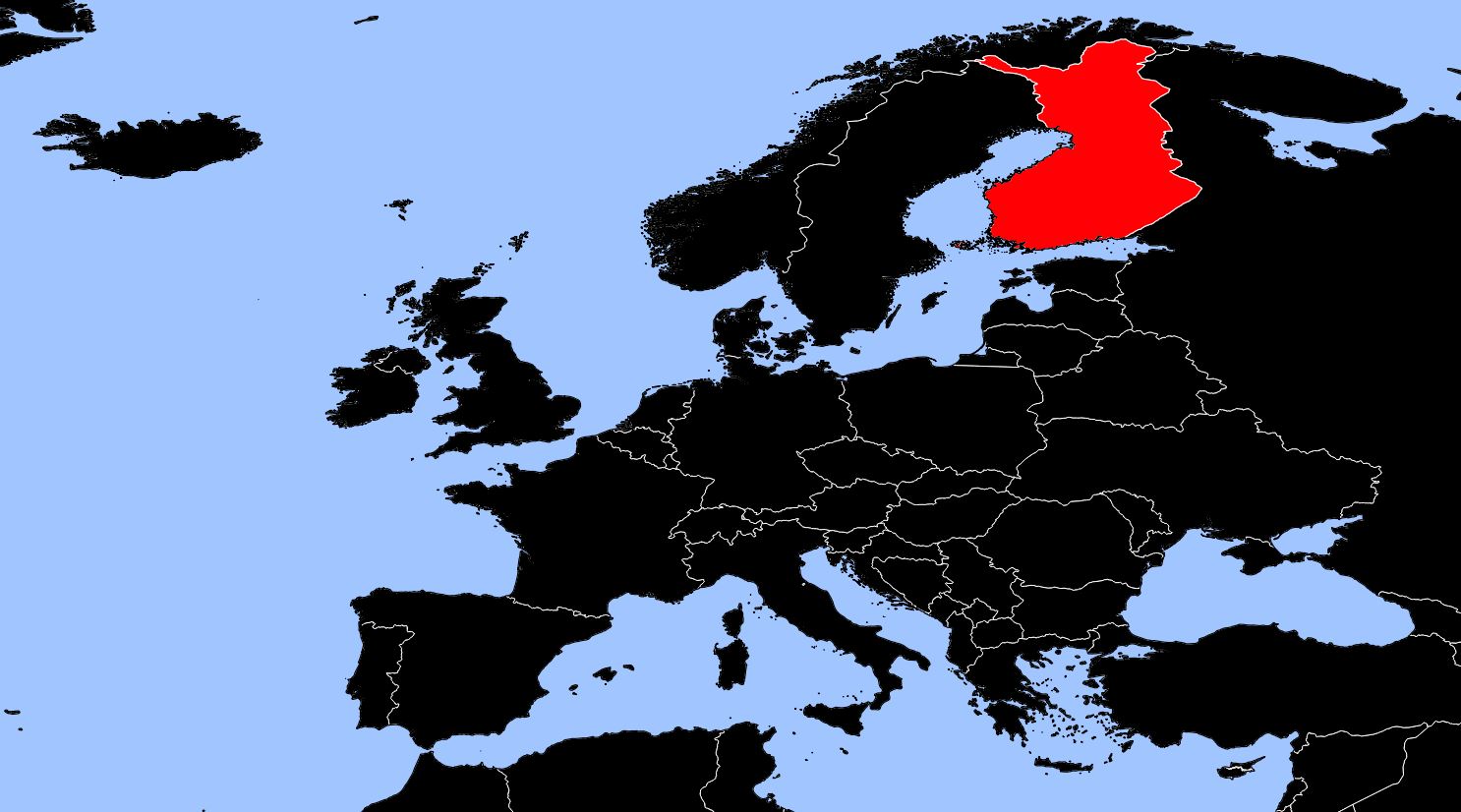
Finland on a map of Europe – Credit: Actualitix
Finnish wildlife has adapted to this often harsh and hostile environment. Birds are very numerous in coastal regions and near large lakes. Forests are home to very diverse wildlife, mainly bears, wolves, lynx, and moose. Reindeer have been widely domesticated in northern Lapland (you can see the region on the map of Finland). The most common fish are herrings in coastal areas; salmon and trout in rivers of northern Finland; and perch and pike in rivers and lakes of the south.