
As you can see on the map of Belarus, the country is bordered by Russia to the east, Poland to the west, Ukraine to the south, and Lithuania and Latvia to the north.
Article outline
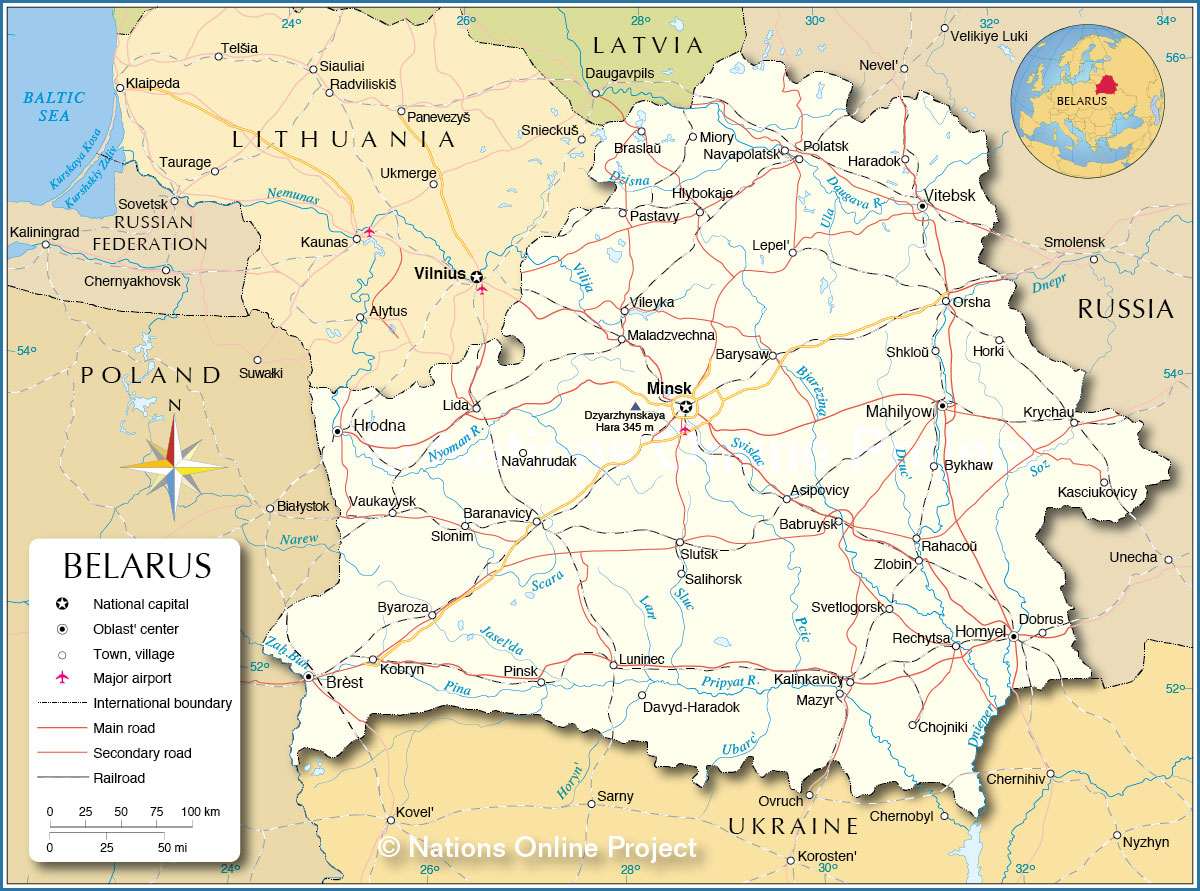
Map of Belarus – Credit: Nations Online
A Bit of History
From 1939 to September 1991, Belarus was part of the Soviet Union, after being annexed by Soviet military forces at the beginning of the Second World War. Its name at the time was the Byelorussian Soviet Socialist Republic.
When the Soviet Union dissolved in 1991, Belarus became an independent republic. Its capital and largest city, Minsk (see the map of Belarus), was also the capital of the Commonwealth of Independent States.
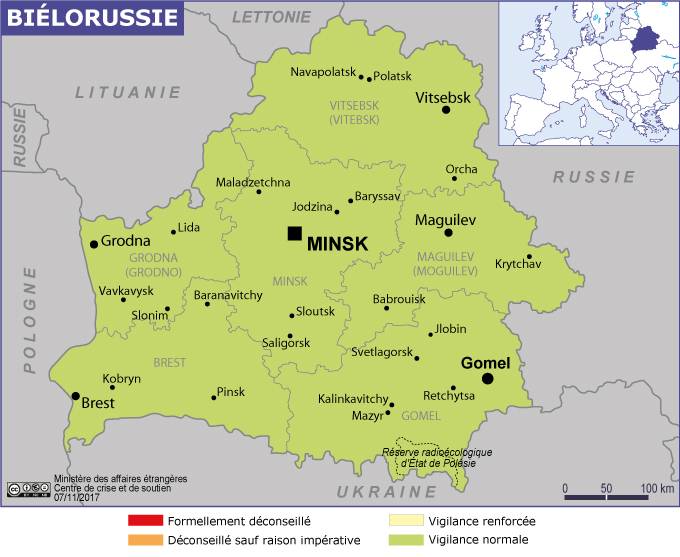
Belarus map – Credit: Ministry of Foreign Affairs
Belarus has been claimed throughout its history by Russia and Poland. The country is mainly agricultural, but it has been industrializing gradually since the Second World War.
Geography with the Map of Belarus
Belarus, with an area of 207,600 square kilometers, is home to just over 10 million inhabitants. It lies on the plain stretching from Poland to the Urals, as you can see on the map of Belarus. This mostly flat country is crossed by a ridge running from the center of the southeast up to the northeast.
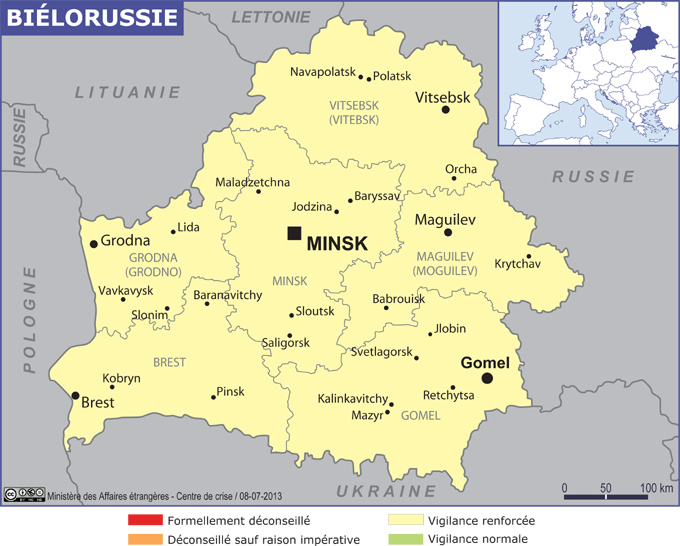
Map of cities in Belarus – Credit: Ministry of Foreign Affairs
The plains are marshy, and forests cover a quarter of the country. Fertile soils are perfectly suited to agriculture. Summers are cool and winters are mild, with frequent thaws. Rainfall occurs mainly in summer and can cause problems for harvests.
Belarusians, also known as White Russians, are the predominant ethnic group. They are a Slavic people, with a culture and language close to those of Russians and Ukrainians. Belarusians remained under Polish rule for a long time, but they refused to convert to Catholicism and remained Orthodox.
Blank map of Belarus – Credit: Actualitix
Since the end of the 19th century, Belarusian has been considered distinct from Russian, and a modern Belarusian literature has emerged. Regional costumes, cuisine, and decorative arts reflect the richness of Belarusian folk culture.
Resources
Belarus is a prosperous agricultural country despite its climate and its marshy, sandy areas. Farmers raise livestock on pastures and grow rye, oats, potatoes, and sugar beets. They also produce flax and tobacco.
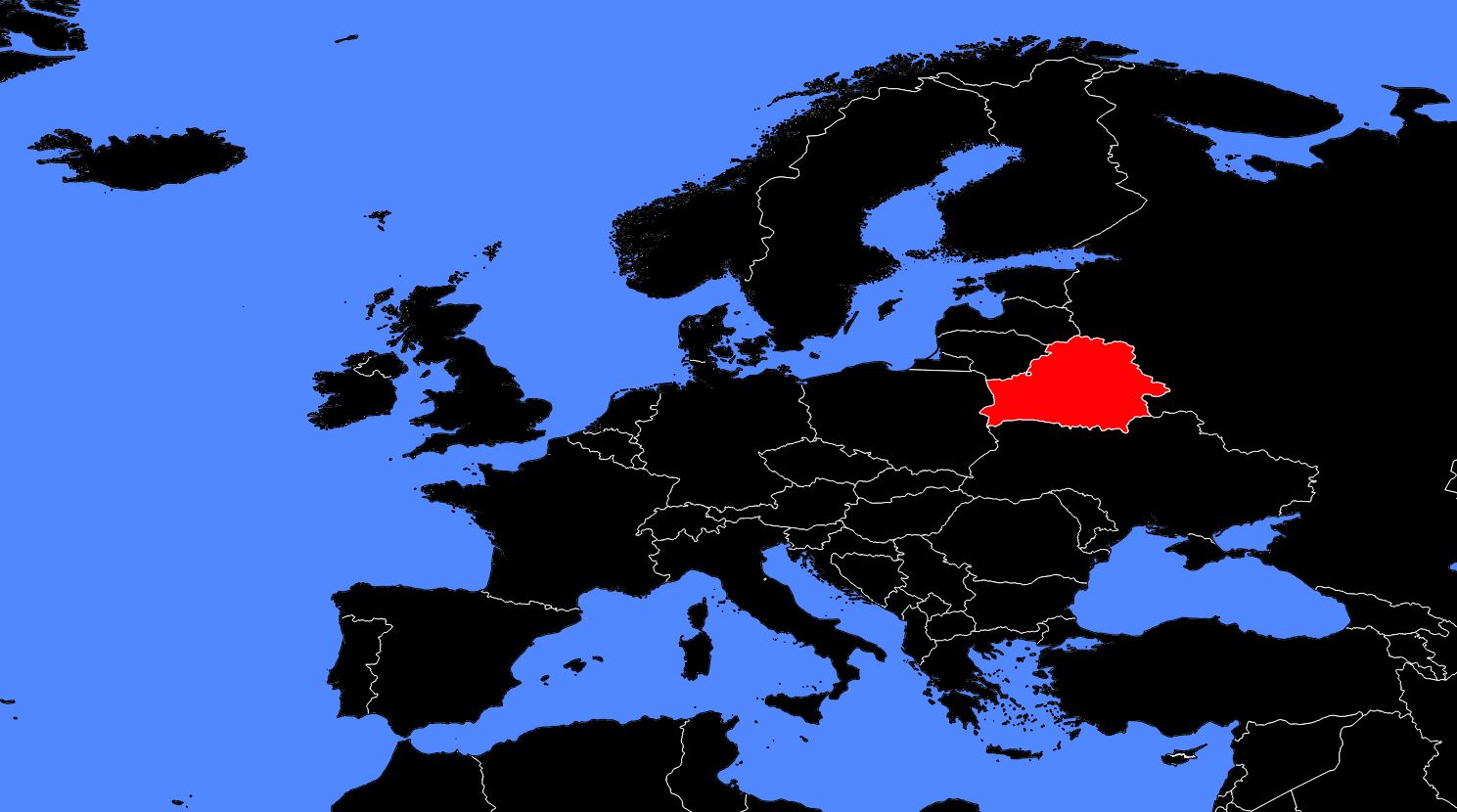
Belarus on a map of Europe – Credit: Actualitix
Belarus has few natural resources: it extracts large quantities of peat and produces fertilizers. Some oil is produced in the south of the country, but Belarus imports most of its oil via a pipeline. Two large refineries process this oil.
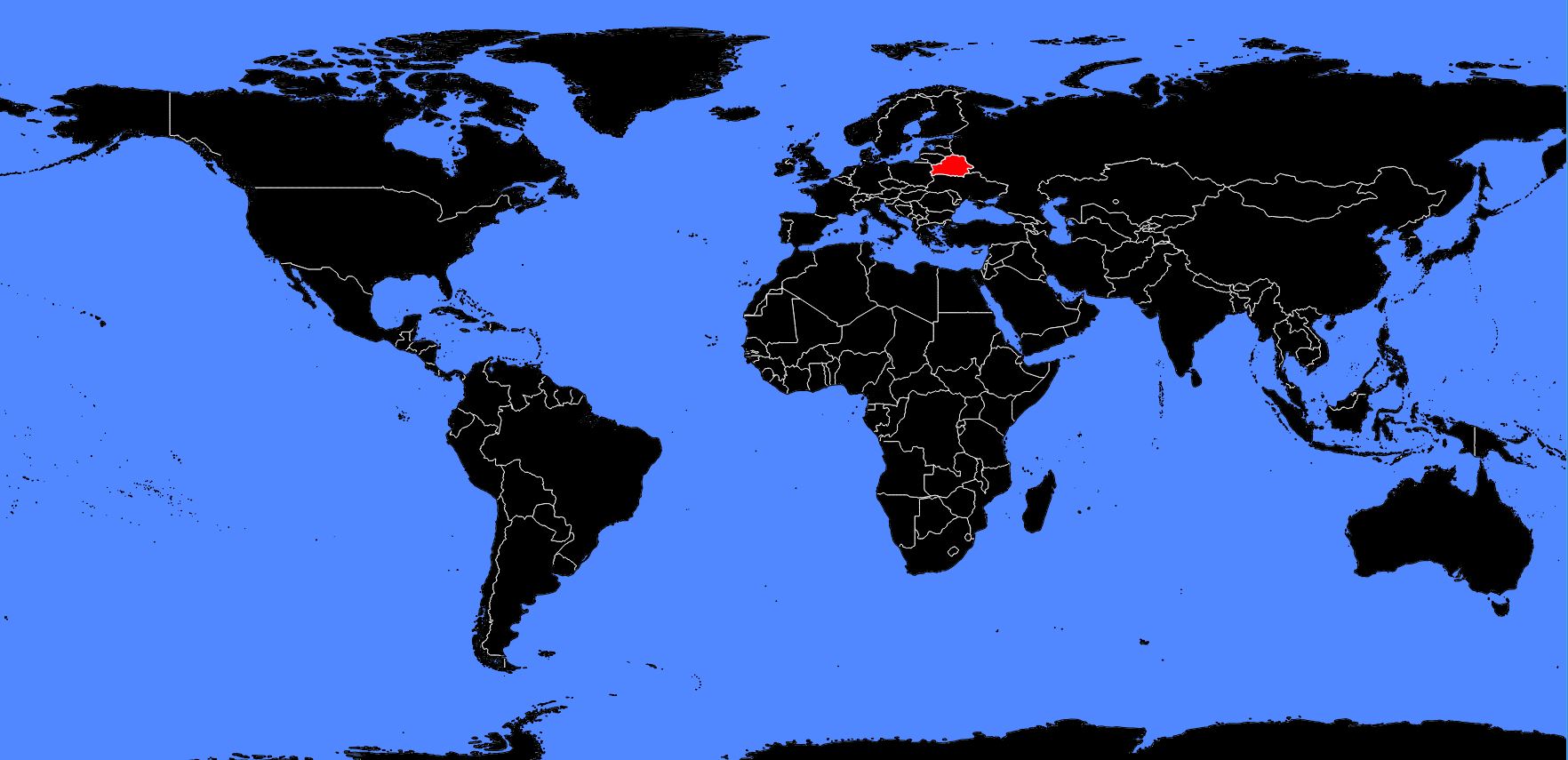
Belarus on a world map – Credit: Actualitix
Chemical plants have been set up near potash deposits and oil refineries.
Other factories produce trucks and tractors for export. The country also produces construction timber. In Minsk, one third of industrial output is produced. Several rail lines cross the country, and the capital is connected by air to many cities in Russia.