
Discover the map of Turkey. The country is located between Europe and Asia. This geographical position has played a major role in Turkish history as well as in the political and cultural life of the country. In the past, Turkey stood at the heart of the vast Ottoman Empire, which extended across most of the Middle East, North Africa, and southeastern Europe.
Since the First World War, Turkey has continued to play a role—less significant than in the past, yet still notable—in international politics. It controls one of the most strategic maritime routes in Europe: between the two straits linking the Mediterranean Sea to the Black Sea.
Article outline
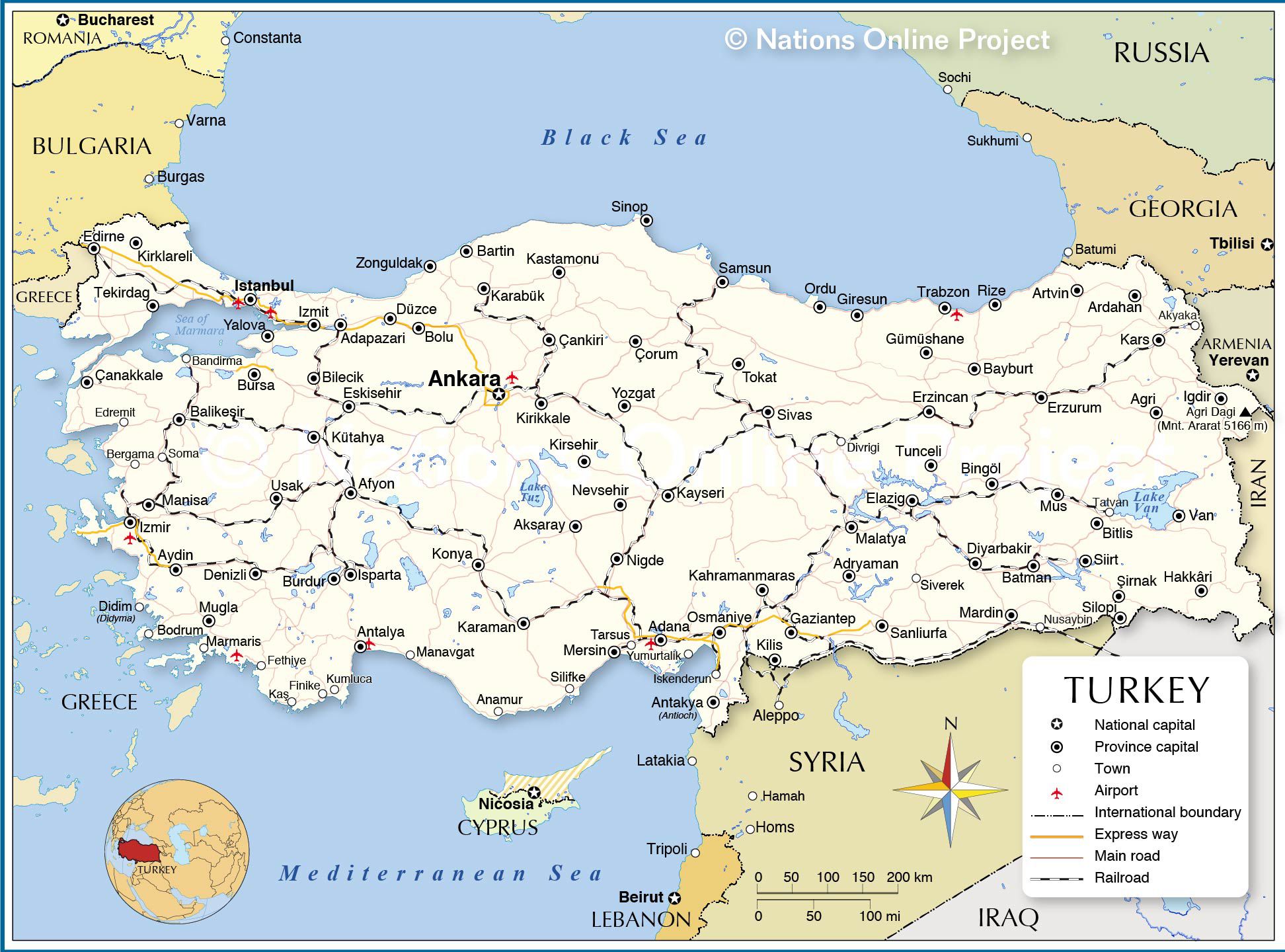
Map of Turkey – Credit Nations Online
Map of Turkey: Discovering the Country
Turkey covers an area of approximately 783,562 square kilometers. As can be seen on the map of Turkey, the country is vast. About 97% of its territory lies in Asia, while only 3% is located in Europe. The Asian part of the country consists of a long peninsula bordered to the north by the Black Sea and to the south by the Mediterranean Sea.
It is bordered: in the southeast by Syria and Iraq, to the east by Iran, and to the northeast by Georgia and Armenia. The European part of Turkey borders Greece and Bulgaria.
Turkey is traditionally divided into two main regions. The first, located in Asia, is known as Anatolia or Asia Minor. The second, located in Europe, is called Trakya or Thrace. Anatolia mainly consists of a vast plateau.
The altitude of the Anatolian plateau gradually rises from about 600 meters in the west to more than 1,800 meters in the east.
Continuing our discovery of the map of Turkey, the country is bordered in the north by the Pontic mountain ranges along the Black Sea coast, and in the south by the Taurus and Anti-Taurus ranges. These reach their highest point at Mount Erciyes, at 3,917 meters above sea level. In the west, the plateau gradually slopes down toward the Aegean Sea and gives way to a region dotted with small hills and valleys.
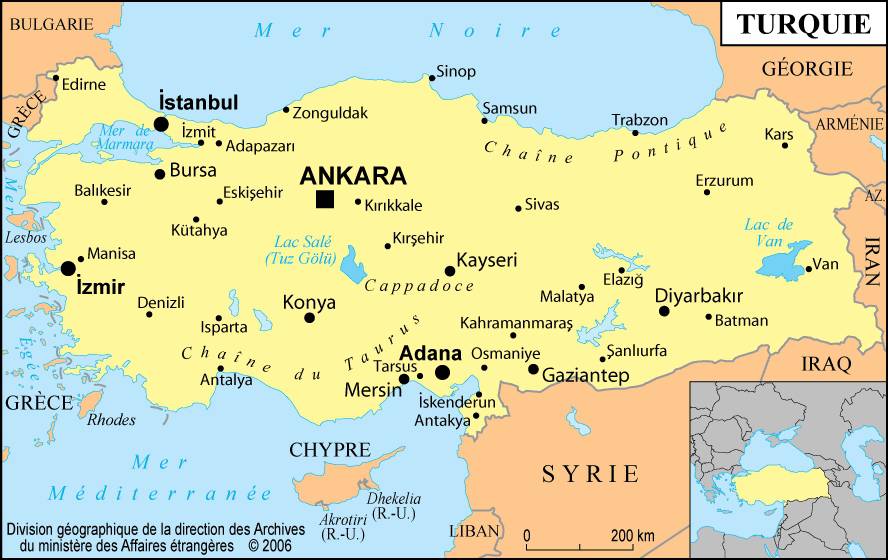
Turkey map
In the east, the Pontic and Taurus ranges join to form an almost impassable mountainous region that culminates at Mount Ararat, the highest peak in Turkey, at 5,137 meters.
A Varied Relief
As can be seen on the map of Turkey, plains are rare, except for those spread across the plateau and along the coast. The Black Sea coast is bordered only by a narrow plain, whereas in the south the coastal plain along the Mediterranean widens in many places, for example along the Gulf of Antalya and the Gulf of Iskenderun. The last notable plain is that of Cilicia.

Blank map of Turkey
It can be reached from the Anatolian plateau through a pass crossing the Taurus Mountains known as the Cilician Gates. In the west of the country, plains interspersed with hills are scattered throughout the region. Although Turkey currently has no active volcanoes, the entire territory is geologically unstable and has experienced major earthquakes.
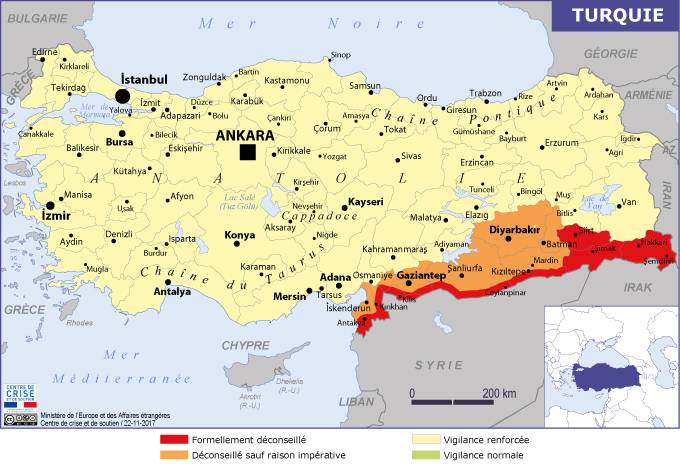
Map of cities in Turkey – Credit: Ministry of Foreign Affairs
The longest river in Turkey is the Kizilirmak. It measures 1,181 kilometers (734 miles) and flows into the Black Sea, as do the Sakarya and the Yesilirmak. The Gediz and the Menderes flow west into the Aegean Sea, while the Seyhan and the Ceyhan flow south into the Gulf of Iskenderun.
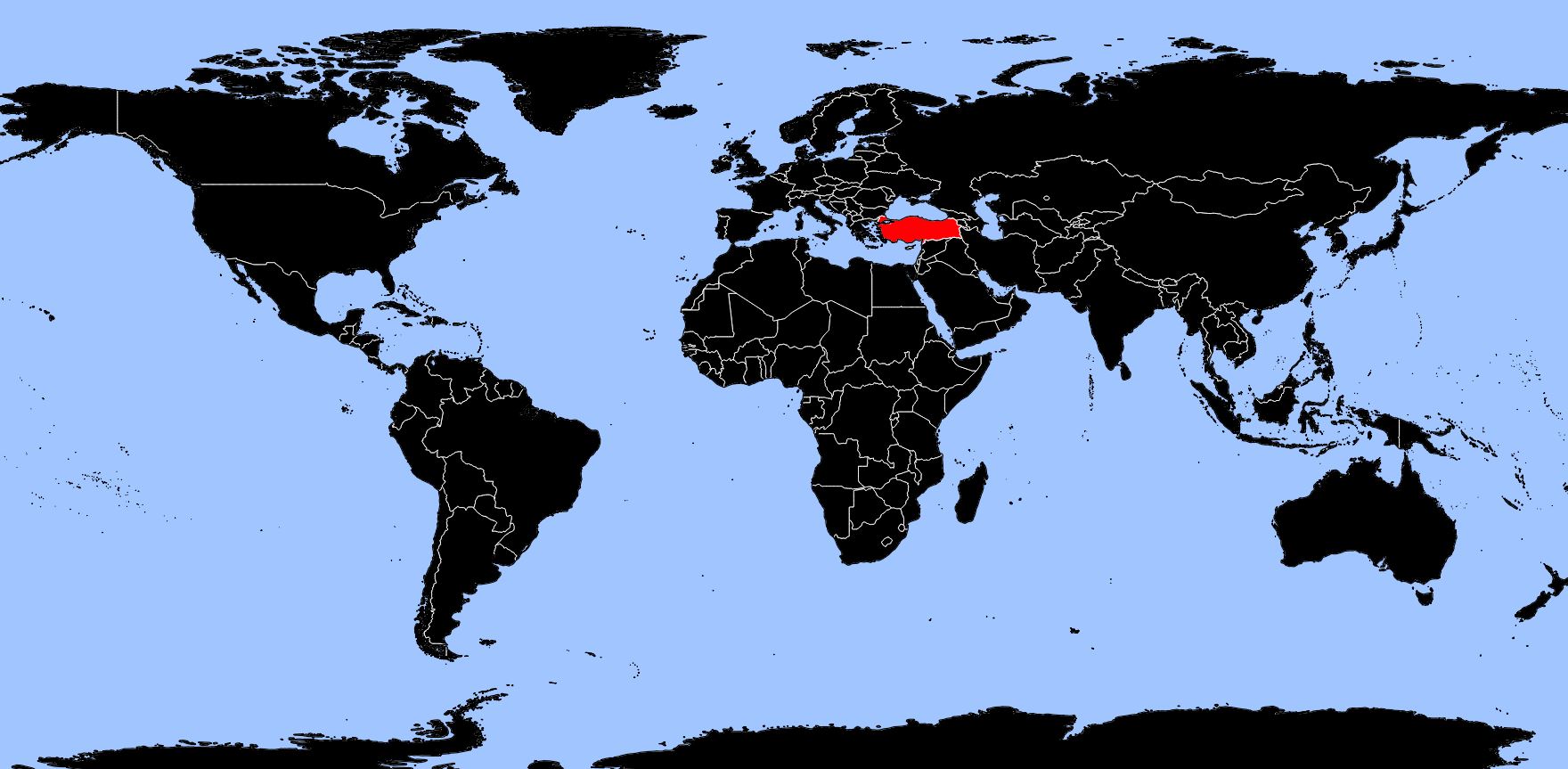
Turkey on a world map – Credit Actualitix
On the map of Turkey, you can also find the two major rivers of Iraq, the Euphrates and the Tigris, which originate in eastern Turkey and then flow toward the southern border of the country. In general, the level of Turkish rivers is relatively low in summer, so river navigation is limited. Several dams have been built on these rivers to facilitate land irrigation.
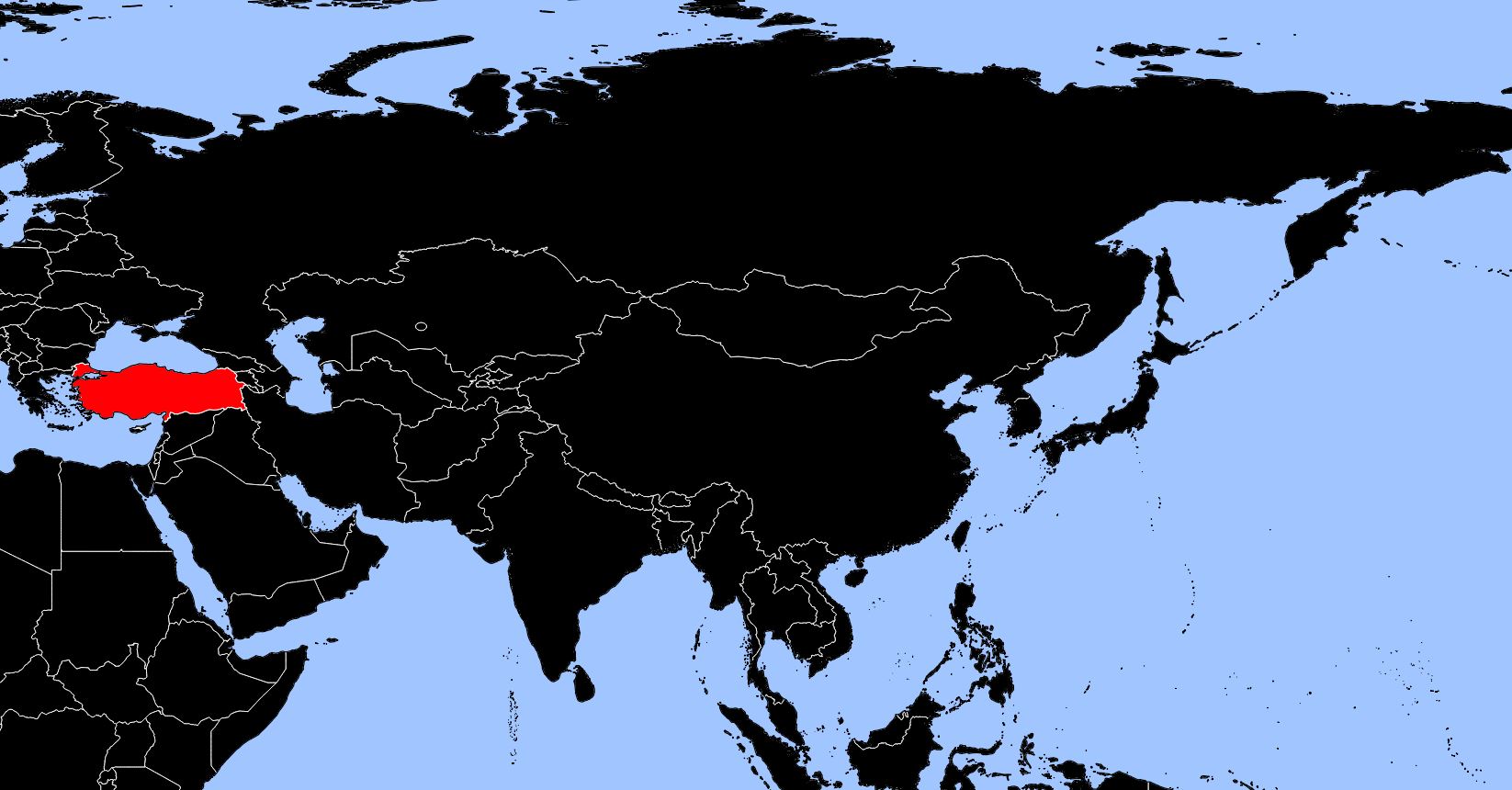
Turkey on a map of Asia – Credit Actualitix
The center of the plateau is characterized by the presence of a salt lake, Lake Tuz, which dries up completely during the summer. The region also has several other lakes, the largest of which is Lake Van, located near the eastern border.
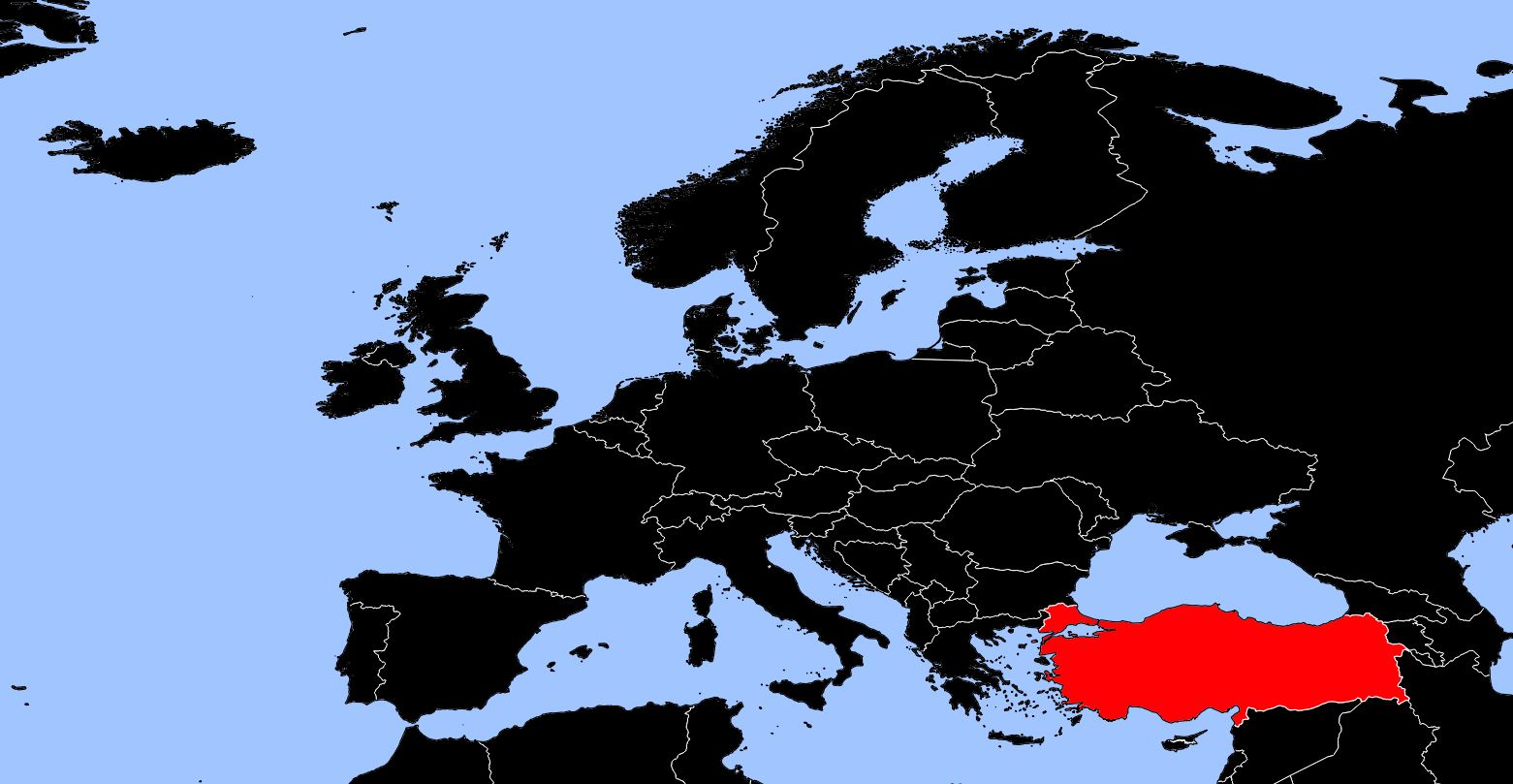
Turkey on a map of Europe – Credit Actualitix
The European part of Turkey is bordered to the north and south by mountain ranges separated by the valley of the Ergene River. The Maritsa River forms part of the border between Turkey and Bulgaria. The Asian and European territories of Turkey are separated by the Bosphorus Strait (north) and the Dardanelles Strait (south), which flank the Sea of Marmara.