
Discover a map of Hong Kong, located on the southeastern coast of southern China, 130 kilometers southeast of Guangzhou. Hong Kong Bay, one of the deepest in the world, hosts a vast and very active port.
Details on the map of Hong Kong
The densely populated metropolis of Hong Kong has gradually expanded to include several neighboring towns, Hong Kong Island, the Kowloon Peninsula, and the New Territories, which can be seen on the map of Hong Kong, reaching an area of 1,040 square kilometers.
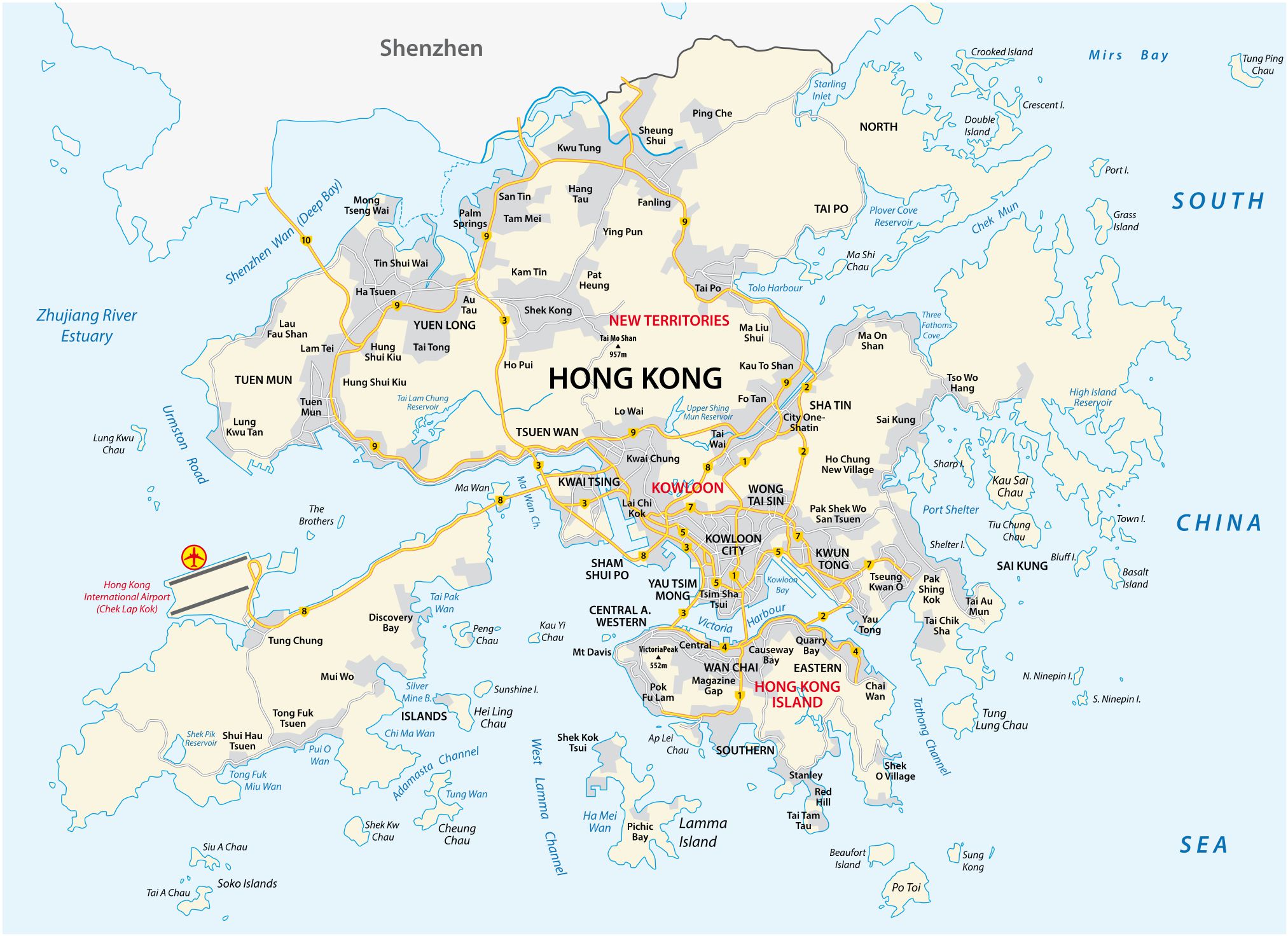
Map of Hong Kong – © lesniewski – stock.adobe.com
Hong Kong also controls the 230 islands that make up the New Territories. The Tai Mo Shan mountains, rising above the sea, create very spectacular landscapes.
The city of Victoria is located on Hong Kong Island. It is built on the slopes of Victoria Peak (556 meters), on whose summit stand some of Hong Kong’s rare villas. The island hosts the port of the South China Sea. The headquarters of major banks, leading commercial companies, and government institutions are gathered at the foot of Victoria Peak.
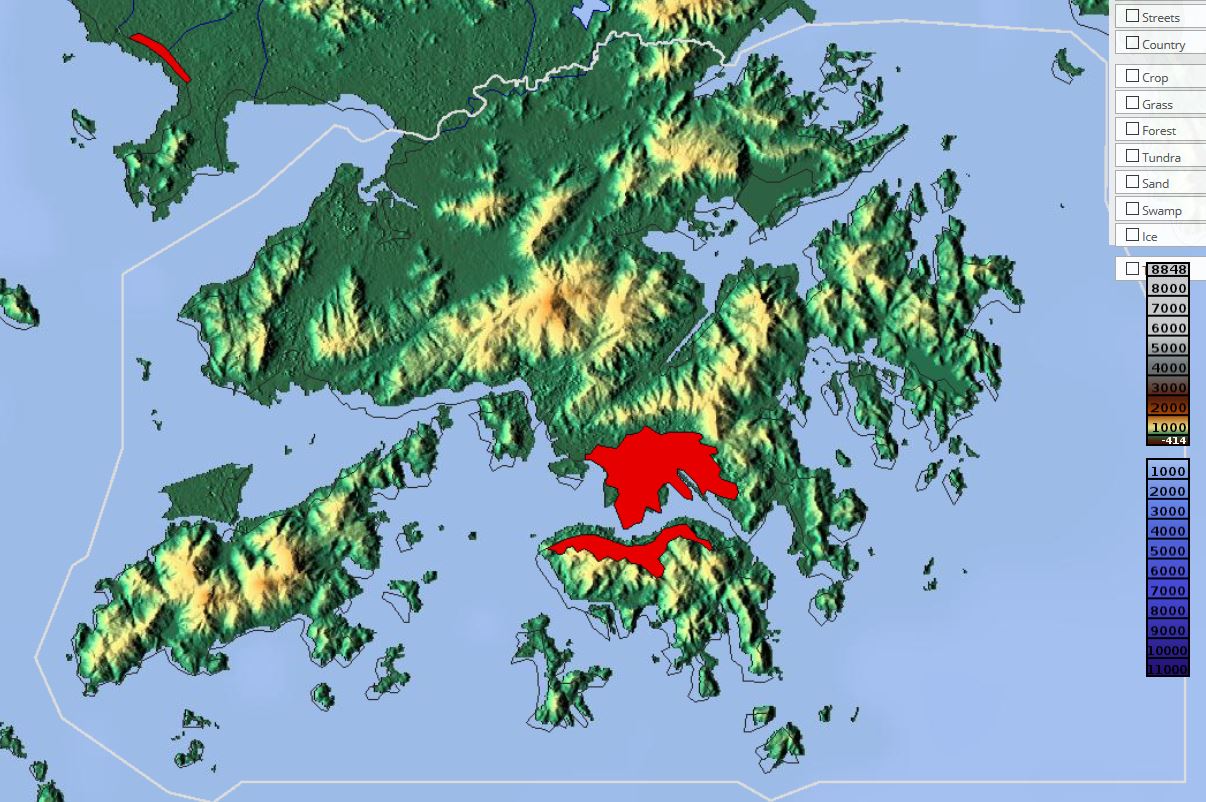
Relief map of Hong Kong – Image from maps-for-free
Kowloon is a major economic center and directly overlooks the harbor. Industrial sites are concentrated in the New Territories in the north. With the exception of Lantau Island, most other islands belonging to Hong Kong are small and sparsely populated. Some of them contain dormitory towns where workers sleep while commuting to Hong Kong Island or Kowloon.
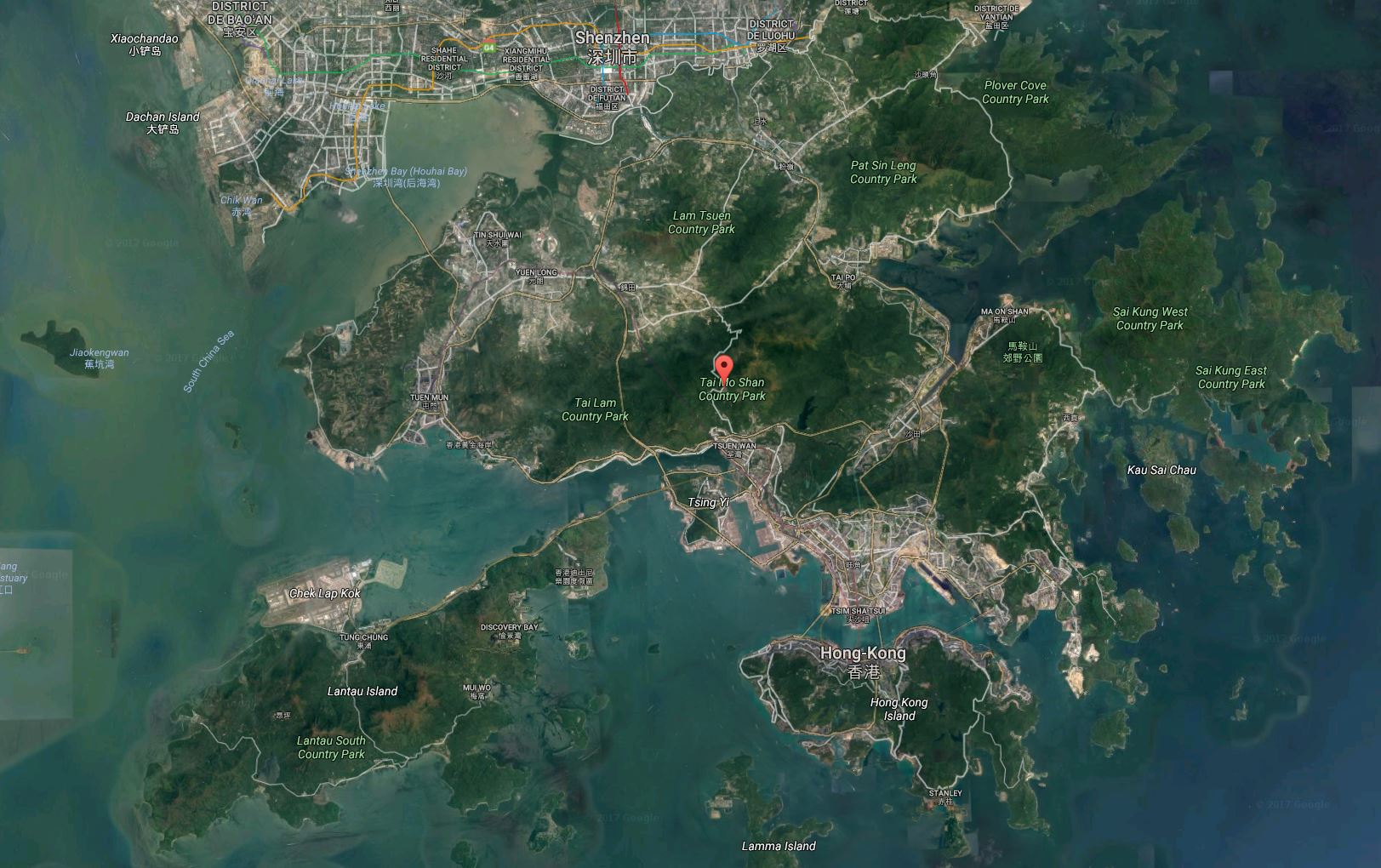
Satellite view of Hong Kong
Due to the very rugged terrain visible on the map of Hong Kong, 90% of the population is concentrated in just 15% of the territory. Hong Kong therefore has one of the highest population densities in the world.
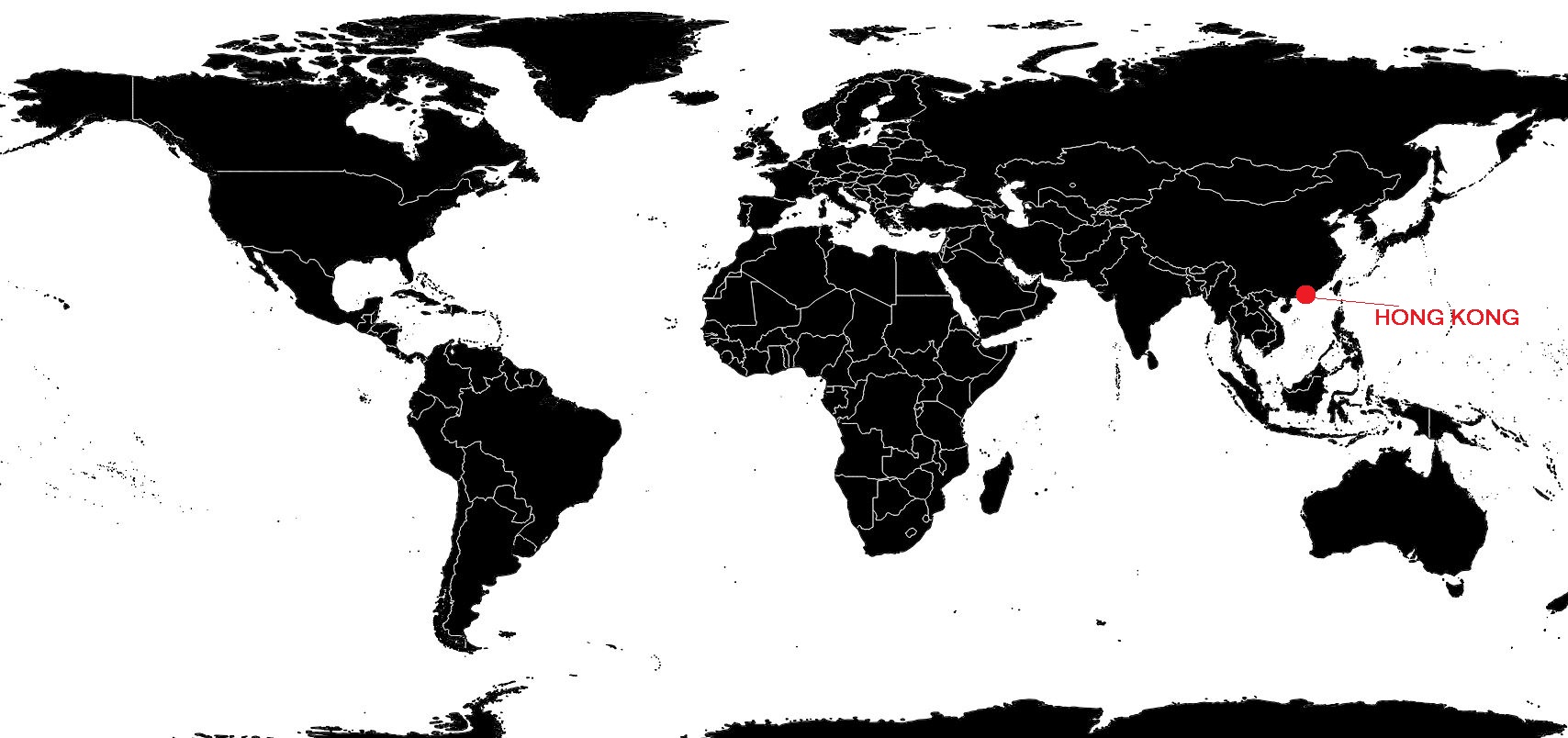
Hong Kong on a world map – Credit Actualitix
As cities cannot expand on the ground, they contain some of the tallest skyscrapers in the world, second only to those of New York. A large part of the territory is state-owned land consisting of woodland where vegetation remains wild.
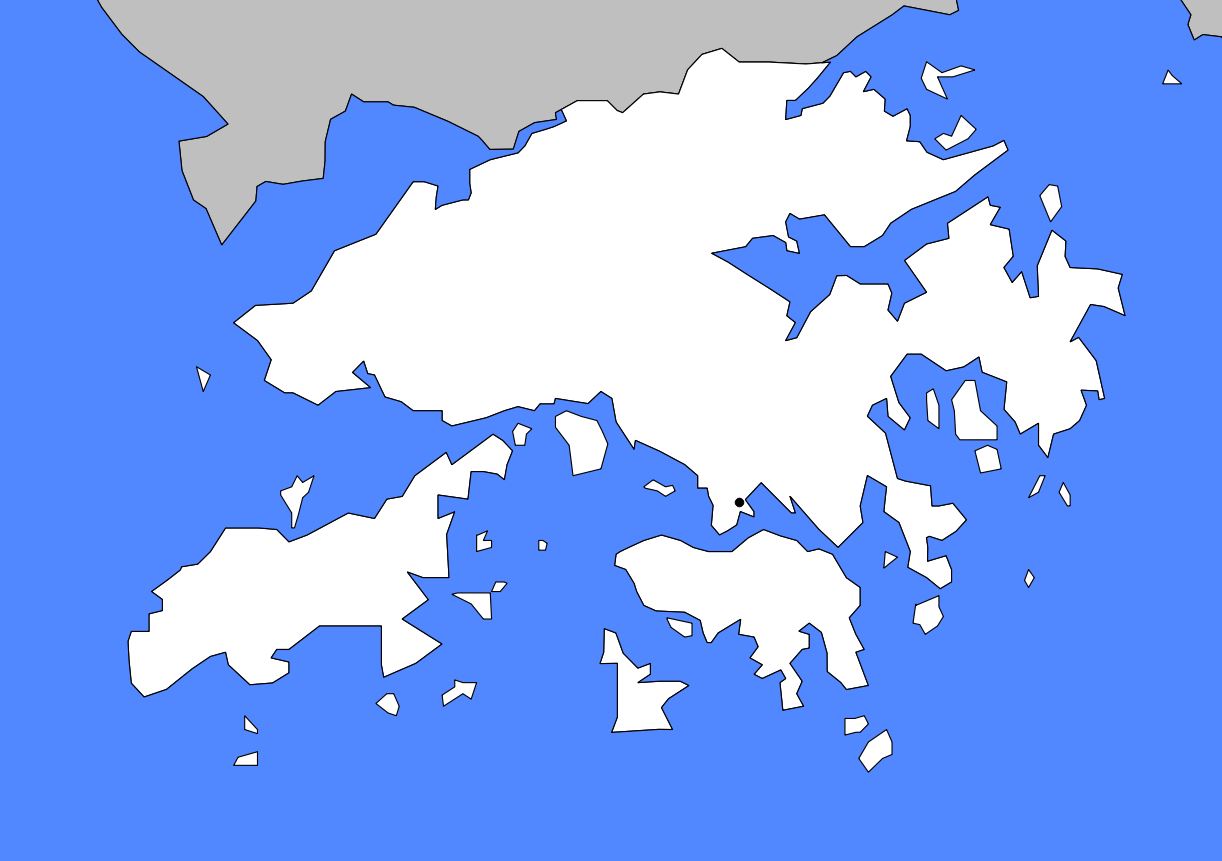
Blank map of Hong Kong – Credit Actualitix
As Hong Kong lies at a tropical latitude, temperatures remain high throughout the year and winters are particularly mild. Spring is very humid, causing floods and landslides. Autumn is extremely dry, and fires are often severe during this season. Late summer, meanwhile, is marked by devastating typhoons.
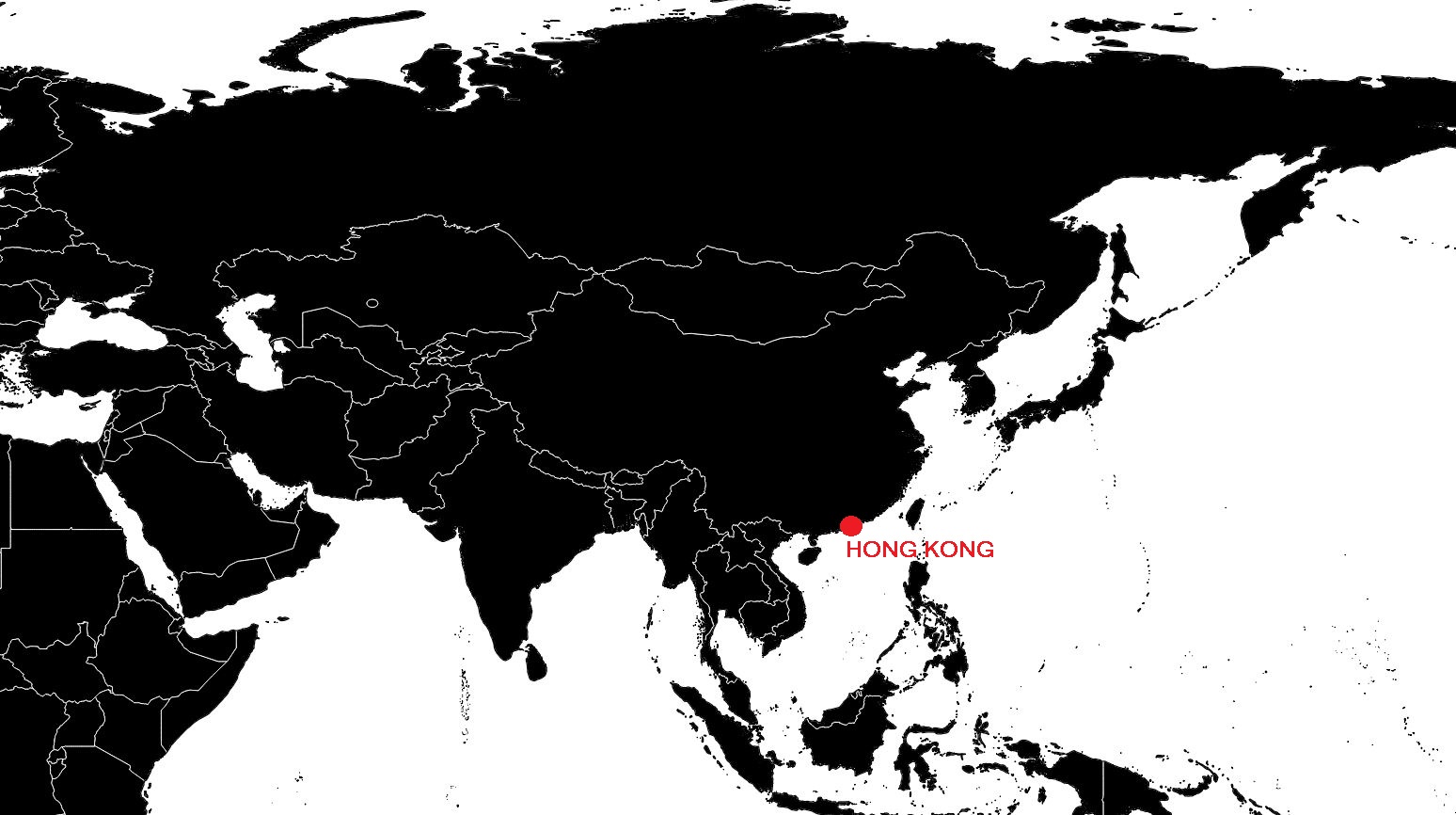
Hong Kong on an Asia map – Credit Actualitix
Population of Hong Kong
The population of Hong Kong has grown rapidly. After the fall of Saigon in 1975, it reached about 7 million inhabitants by 2013. Hong Kong welcomed many Chinese and Vietnamese refugees during that politically troubled period. Below you can find a map of Hong Kong:
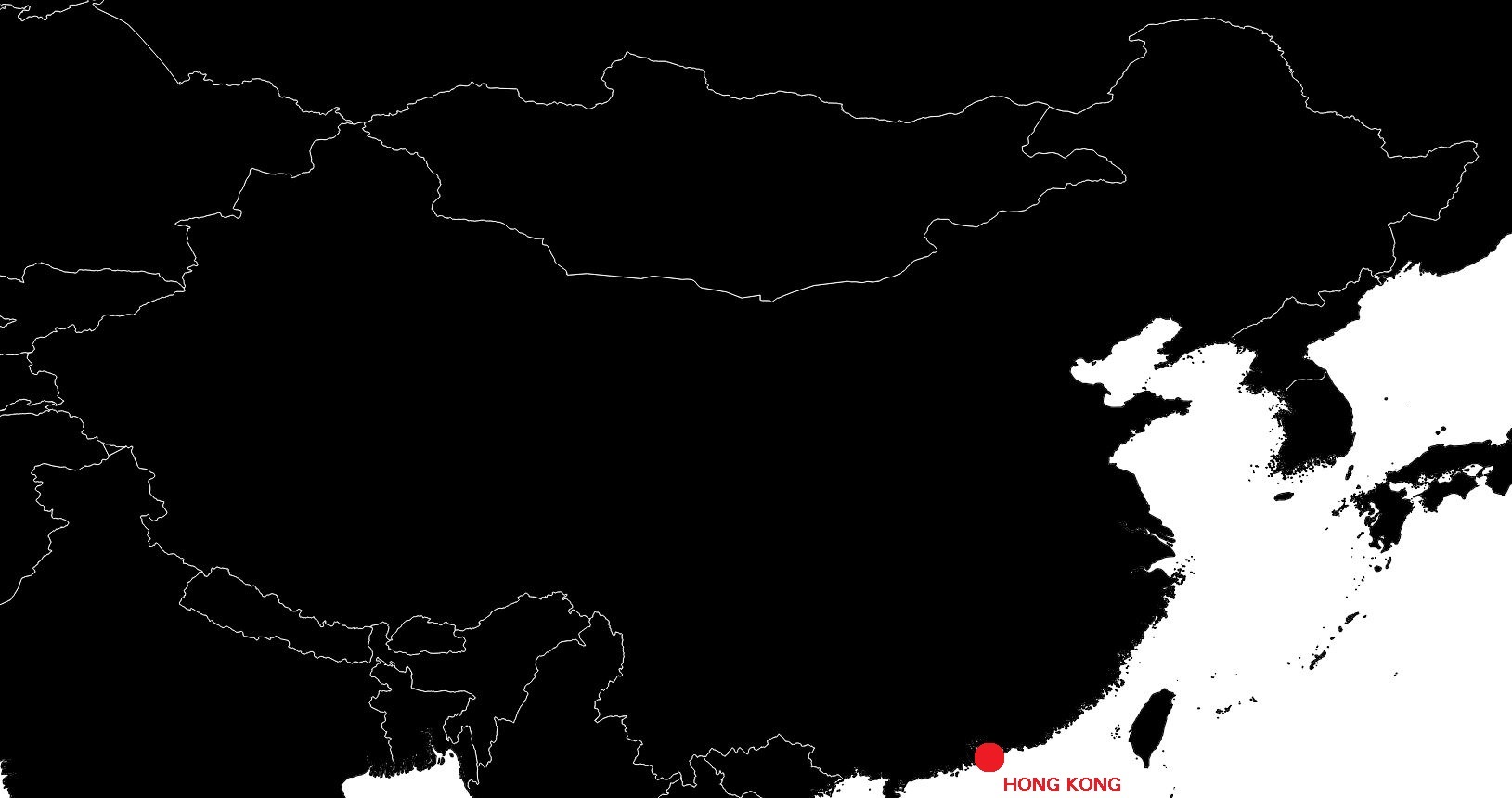
Hong Kong on a map of China – Credit Actualitix
Chinese people make up the vast majority of the total population, mainly Cantonese and, to a lesser extent, people from Shanghai. The small foreign communities are British, Indian, or American. English and Cantonese are the two official languages, although English remains dominant in business.
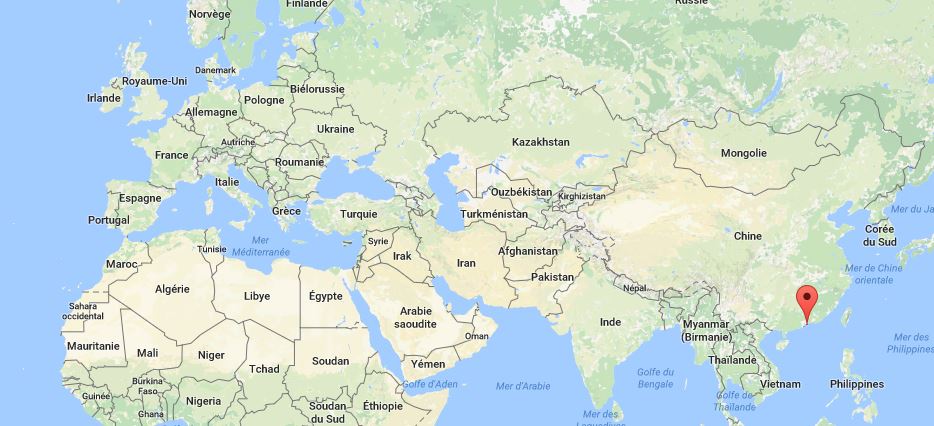
Where Hong Kong is located