
Discover the map of Andorra, one of the smallest countries in the world, which has been independent for more than 1,000 years. It has been an autonomous co-principality for seven centuries.
Despite the changes experienced by its European neighbors, Andorra has managed to preserve its political stability while maintaining its medieval traditions.
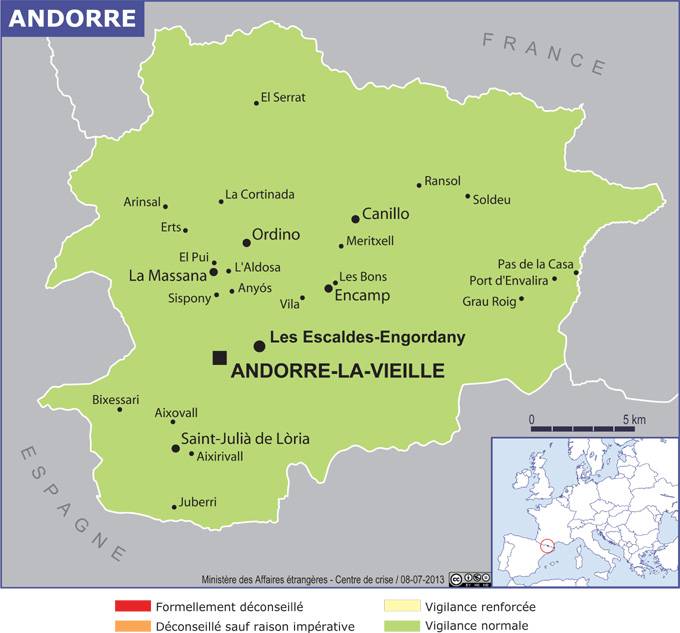
Map of Andorra: geography
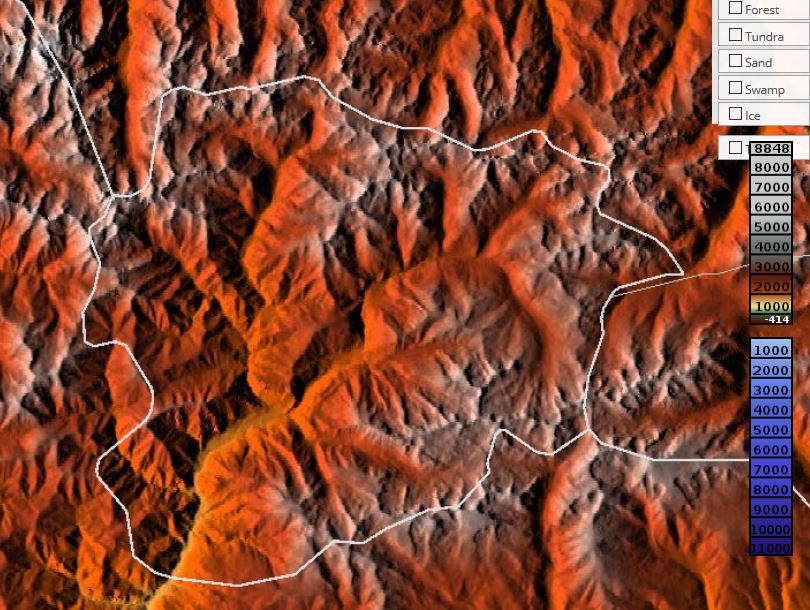
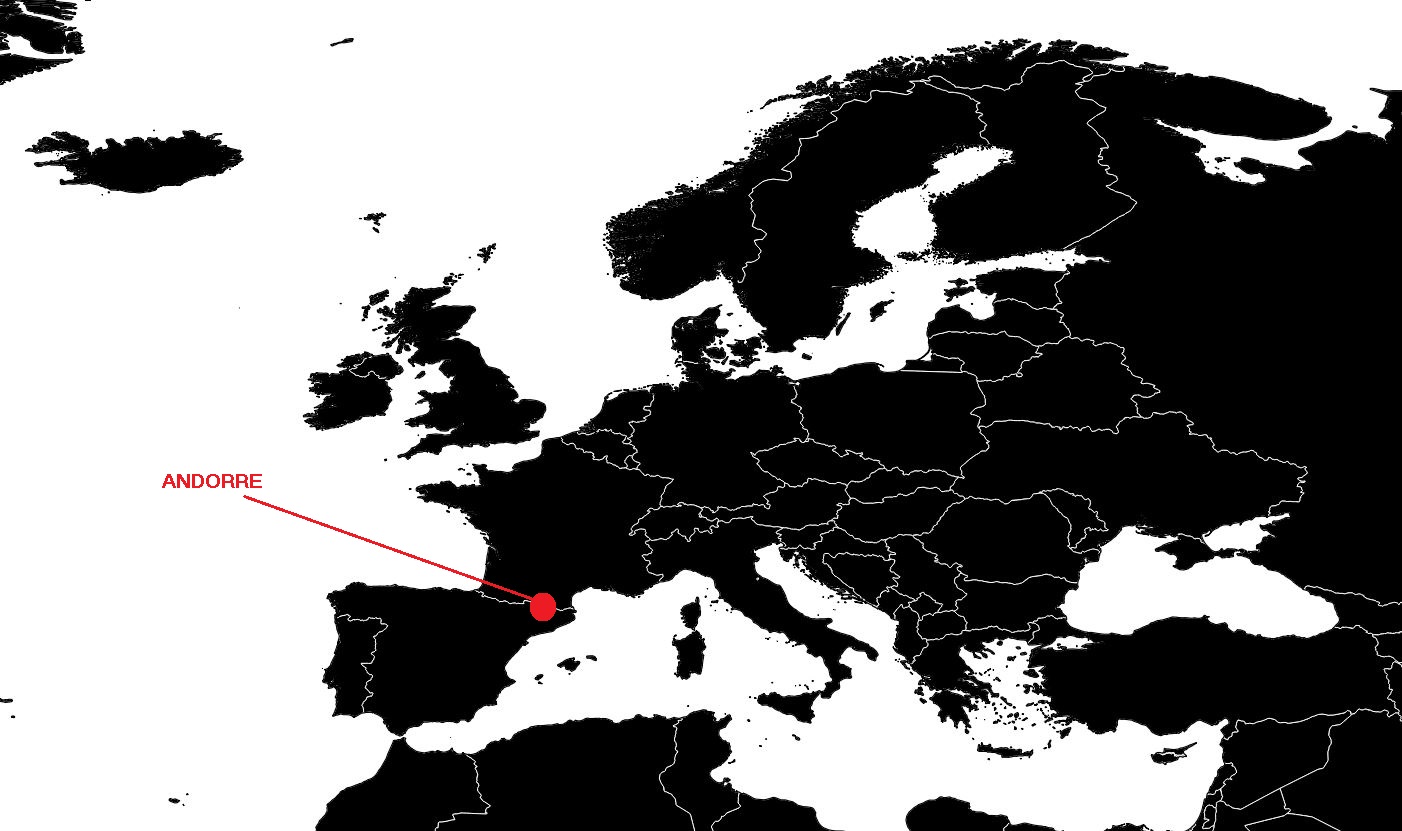
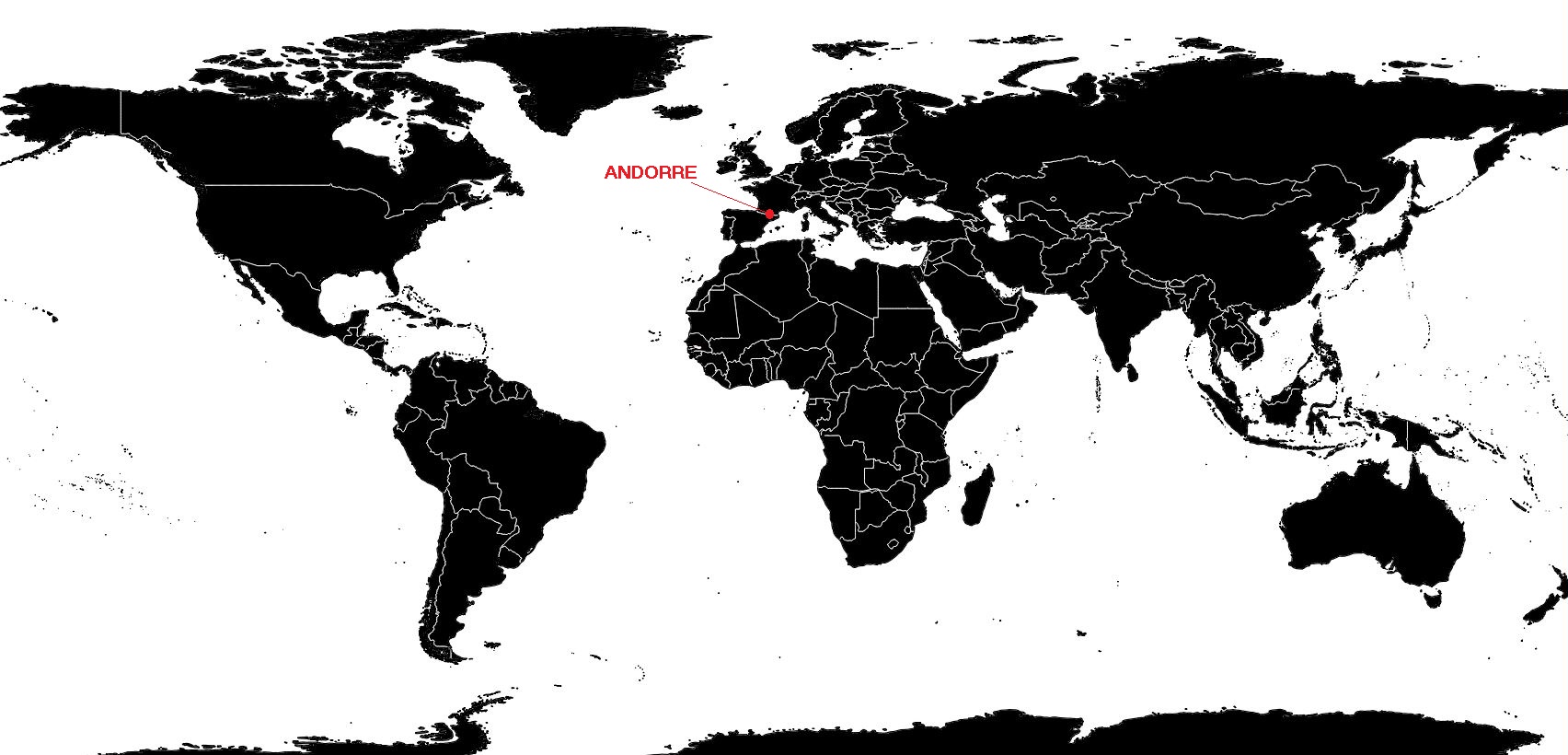
As you can see on the map of Andorra, the country has a small area of 464 square kilometers. It is a harmonious blend of high peaks and deep valleys on the southern slope of the Pyrenees.
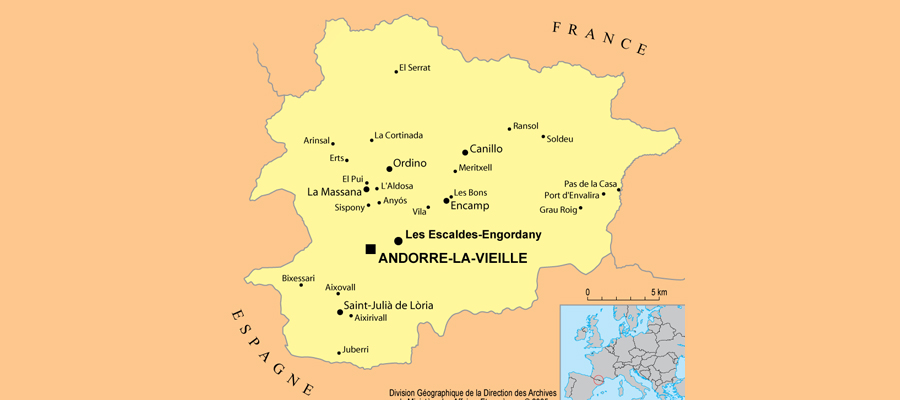
On the map of Andorra, you can see that the country is bordered to the south and west by Spain and to the north and east by France. Its physical characteristics prevent air transport, and there are no railways. However, a road network connecting Andorra to France and Spain allows access by car to even the most remote areas.
The climate is generally dry, with heavy precipitation in spring and autumn. Snow remains on the peaks for several months, and temperatures vary according to altitude.
In the highlands are typical Andorran villages with houses made of granite, wood, and slate. In the valleys, larger towns with modern buildings contrast sharply with traditional architecture.
Learn more about Andorra
In this section, you will understand how the map of Andorra was formed. The country has been an independent state since the early history of Europe. In 819, Louis the Pious, son of Emperor Charlemagne, granted the lands belonging to the counts of Urgel in Spain to the Bishop of Urgel. From that moment, Andorra’s independence is considered to date. In 1278, the principality was placed under the joint control of the Count of Foix and the Spanish Bishop of Urgel. This dual allegiance was only interrupted during the French Revolution.
Although the Principality of Andorra has been governed jointly by the Bishop of Urgel and the President of the French Republic since the late 13th century, it has always remained neutral. In March 1993, citizens voted to adopt a new constitution that significantly reduced the powers of the French and Spanish authorities.
The government is administered by the General Council of the Valleys, or parliament. Its 28 members are elected for four years.
Universal suffrage has existed since 1970, when women obtained the right to vote, although non-citizen residents do not have voting rights. The population is estimated at 65,780 inhabitants.
Discover other articles about Andorra.