
Andalusia is one of the most beautiful regions in Spain, and also in Europe. It is known for its magnificent landscapes that are well worth the trip, as well as for its rich cultural heritage.
If you are planning to visit the region, the map of Andalusia will be particularly useful.
With this map of Andalusia, you will be able to mark the various tourist sites you wish to discover. Indeed, there are countless attractions in the region. But first, let us begin by presenting the region of Andalusia.
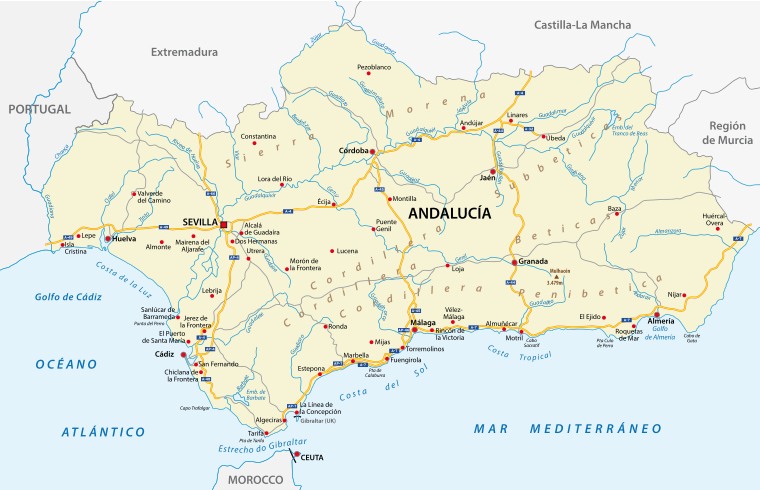
Geography with the map of Andalusia
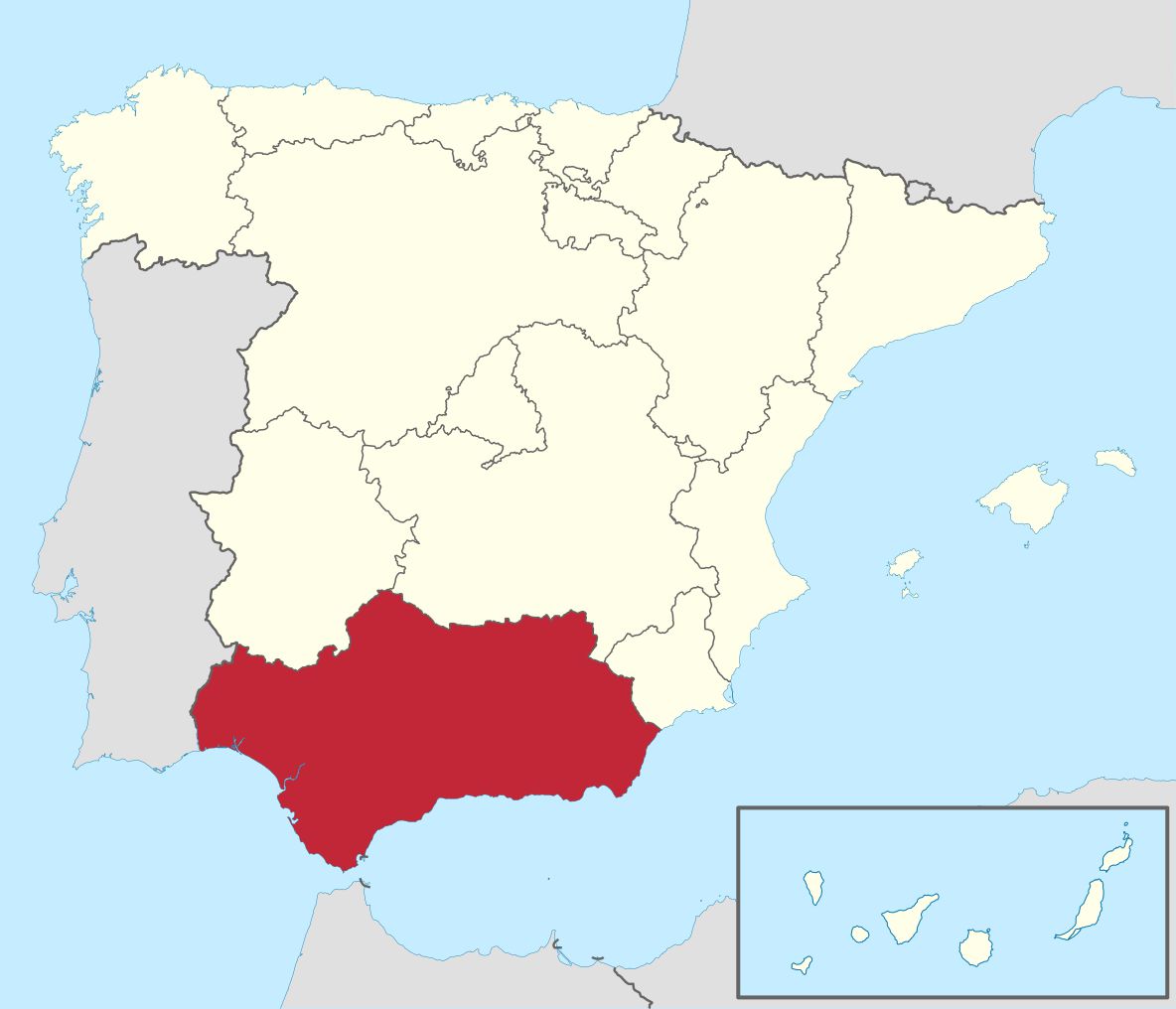
Andalusia is a region located in Spain. It is also one of the largest regions in the country. In terms of area, it covers 87,591 square kilometers. The population density is 96 inhabitants per square kilometer. It is the second largest region in Spain.
In terms of population, it has more than 8 million inhabitants, making it the most populated region in the country. The map of Andalusia is divided into eight provinces: Almería, Cádiz, Córdoba, Granada, Huelva, Jaén, Málaga, and Seville.
The region was disputed for many years by different peoples and was successively occupied by them, which explains its great cultural richness.
When to visit Andalusia?
If you are wondering when to visit Andalusia, the map of Andalusia will not necessarily help you. In this section, we will look at the best time to travel to the region.
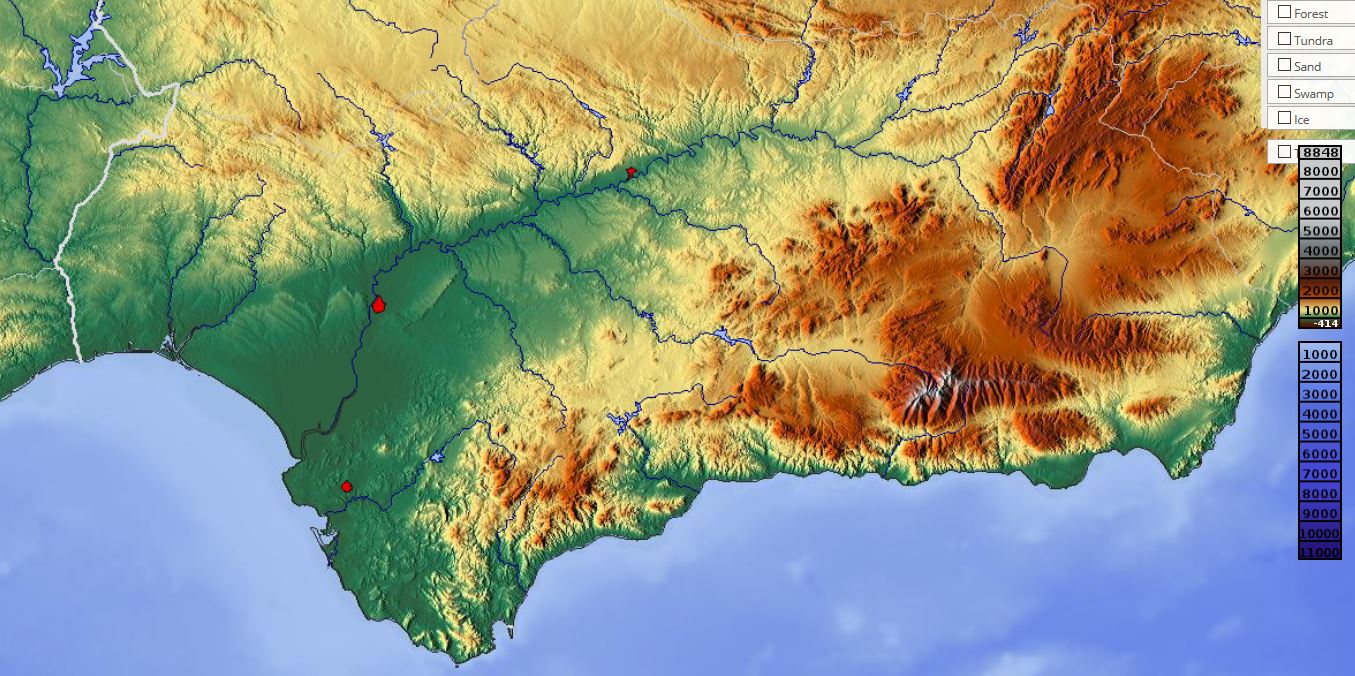
First of all, the region is located in the south of Spain. Spain already enjoys relatively warm weather throughout the year, but since Andalusia lies in the south, temperatures can rise quickly.
If you travel during the summer months such as July or August, temperatures can reach 40°C. If you prefer visiting during the winter season, it is not uncommon to experience average temperatures of around 17°C in the city of Seville.
This makes winter temperatures very pleasant. Generally speaking, the best time to visit—both to avoid large tourist crowds and very high temperatures—is during April and May, or September and October, although September can still be quite warm.
One thing is certain: if you do not like rain, Andalusia is the perfect destination for you, as it does not rain often in the region.
Places of interest in Andalusia
As for the destinations you can discover, you will have the opportunity to visit some of the most beautiful cities in Spain. For example, the city of Seville with its Gothic cathedral, its medieval Jewish quarter, and the Alcázar Palace.
You should also not miss the city of Granada and the Alhambra, with its famous palace listed as a UNESCO World Heritage Site. In Granada, you will also find the 16th-century cathedral and its renowned university.
If you prefer coastal cities, you can visit Málaga. You may even land here if you travel by plane. It is also known as the birthplace of Picasso and is located on the famous Costa del Sol with its beautiful beaches.
Of course, there are many other places to discover in Andalusia, as the region is full of cultural treasures and breathtaking views. For example, Marbella, Cádiz, and Almería are also worth visiting. Andalusia offers the perfect combination of cultural enrichment and the pleasure of exploration.