
The country is a constitutional republic which, as you can see on the map of Hungary, is located in Central Europe. Its capital is Budapest, its official language is Hungarian, and its currency is the forint.
In the spring of 1989, the Hungarian government symbolically opened its borders by removing the kilometers of barbed wire that had until then formed the famous “Iron Curtain”. The country then became a democratic republic and took the name Republic of Hungary.
Article outline
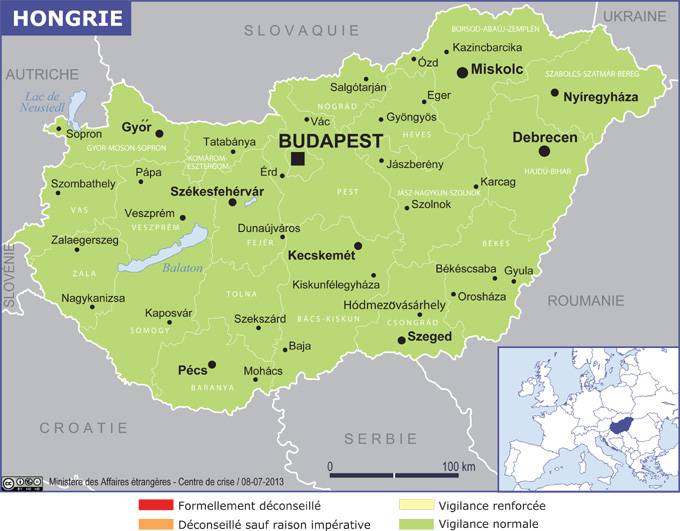
Hungary map – Credit: Ministry of Foreign Affairs
Geography with the Map of Hungary
Hungary covers an area of 93,030 square kilometers. On the map of Hungary, you can see the neighboring countries around it. It borders the Czech Republic and Slovakia to the north, Ukraine to the northeast, Romania to the east, Slovenia, Croatia, and Serbia to the south, not to mention Austria to the west. It stretches 528 kilometers from east to west and 269 kilometers from north to south.
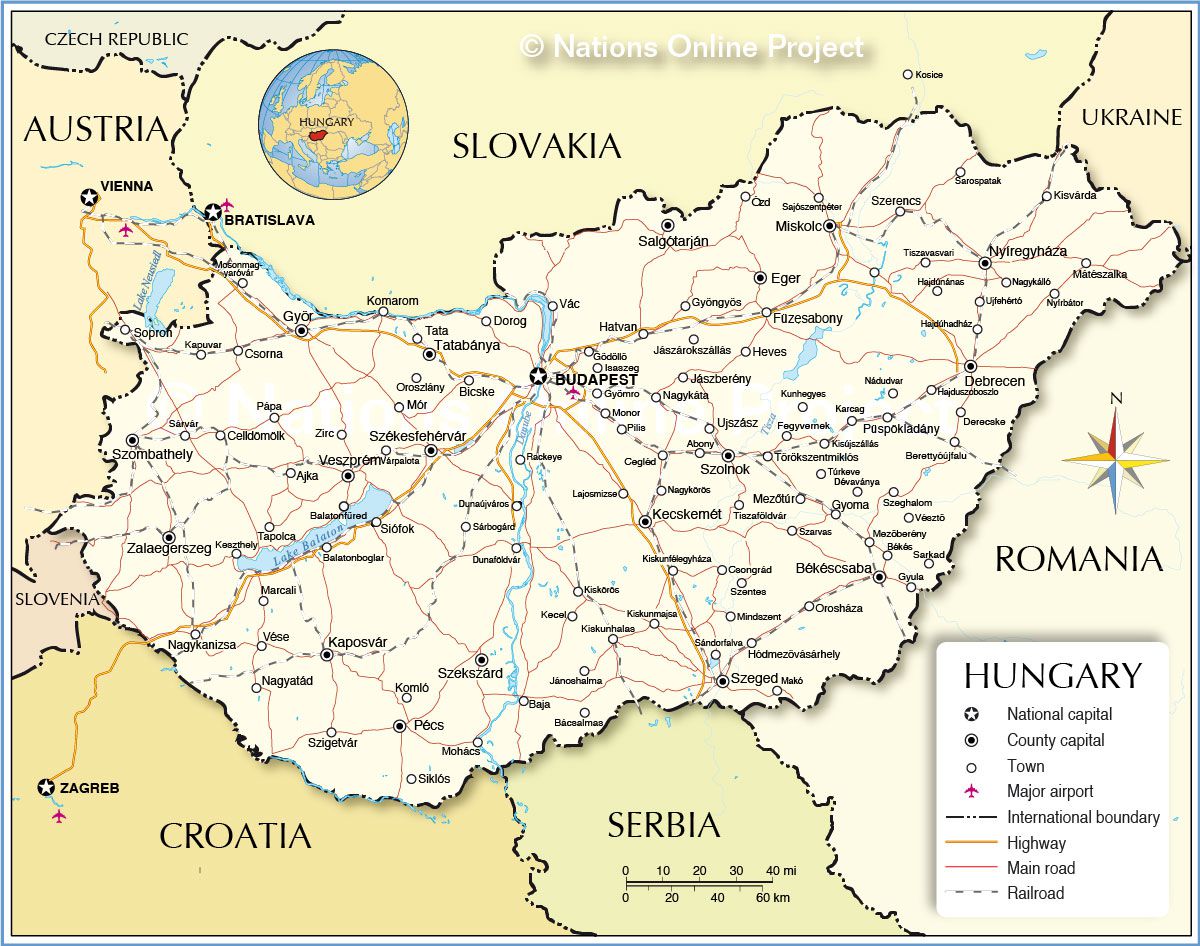
Map of Hungary – Credit: Nations Online
The Great Plain of the East, the Alföld, lies as an extension of the Pannonian Plain. In the northwest, a low mountain range separates the Great Alföld from the Little Alföld. The mountainous region of Transdanubia occupies the southwest of the country and includes, in the west, the last foothills of the Alps. Hungary’s northern borders are lined by a mountain range. The highest peak in the country, Kékes, rises to 1,014 meters in the Mátra Mountains.
The Danube, the largest river in the country, crosses Hungary for nearly 410 kilometers (it can easily be recognized on the map of Hungary). The Tisza rises in the northeast of the country and flows south for 580 kilometers. Lake Balaton is by far the largest lake in the country. It is very deep and reaches a length of 77 kilometers.

Blank map of Hungary – Credit: Actualitix
Soil types are very varied. The plains benefit from very fertile alluvial soils, and sandy soil areas are quite rare. In mountainous regions, soils are brown and moderately fertile.
Climate of the Country
The climate is relatively uniform thanks to the gentle relief. Hungary has a continental climate, defined by harsh winters and hot summers. In January, average temperatures are generally below 0°C, while in July the average temperatures recorded on the plains are around 20°C.
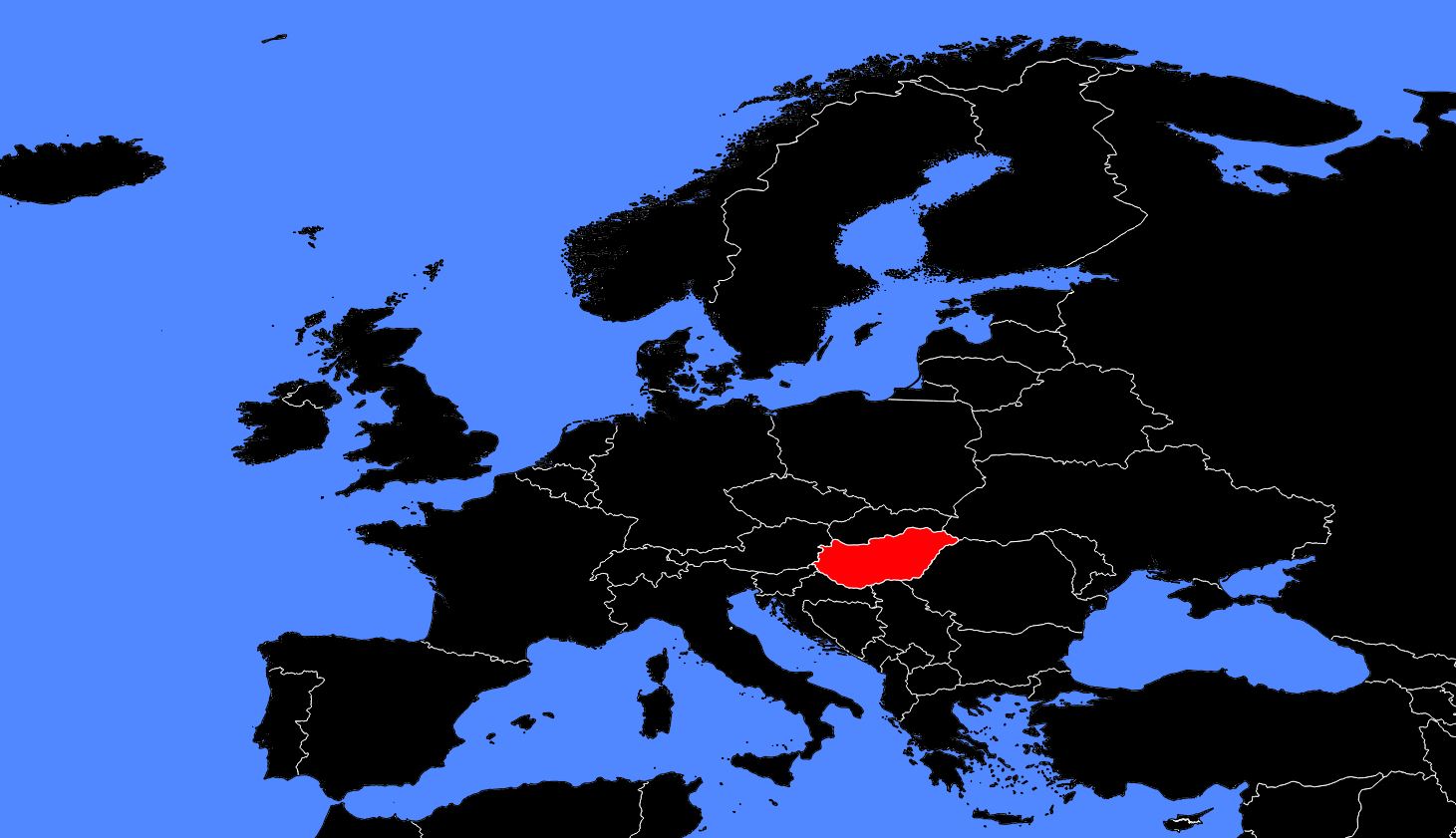
Hungary on a map of Europe – Credit: Actualitix
In Budapest (in central Hungary, see the map of Hungary), the average temperatures in January and July are -0.6°C and 22.2°C respectively, and annual rainfall reaches 63.5 centimeters.
Resources of Hungary
Hungary’s mineral resources are limited and largely dominated by coal. The main coal mines are located in the southwest of the country, but production remains insufficient and cannot meet the needs of Hungarian industry.
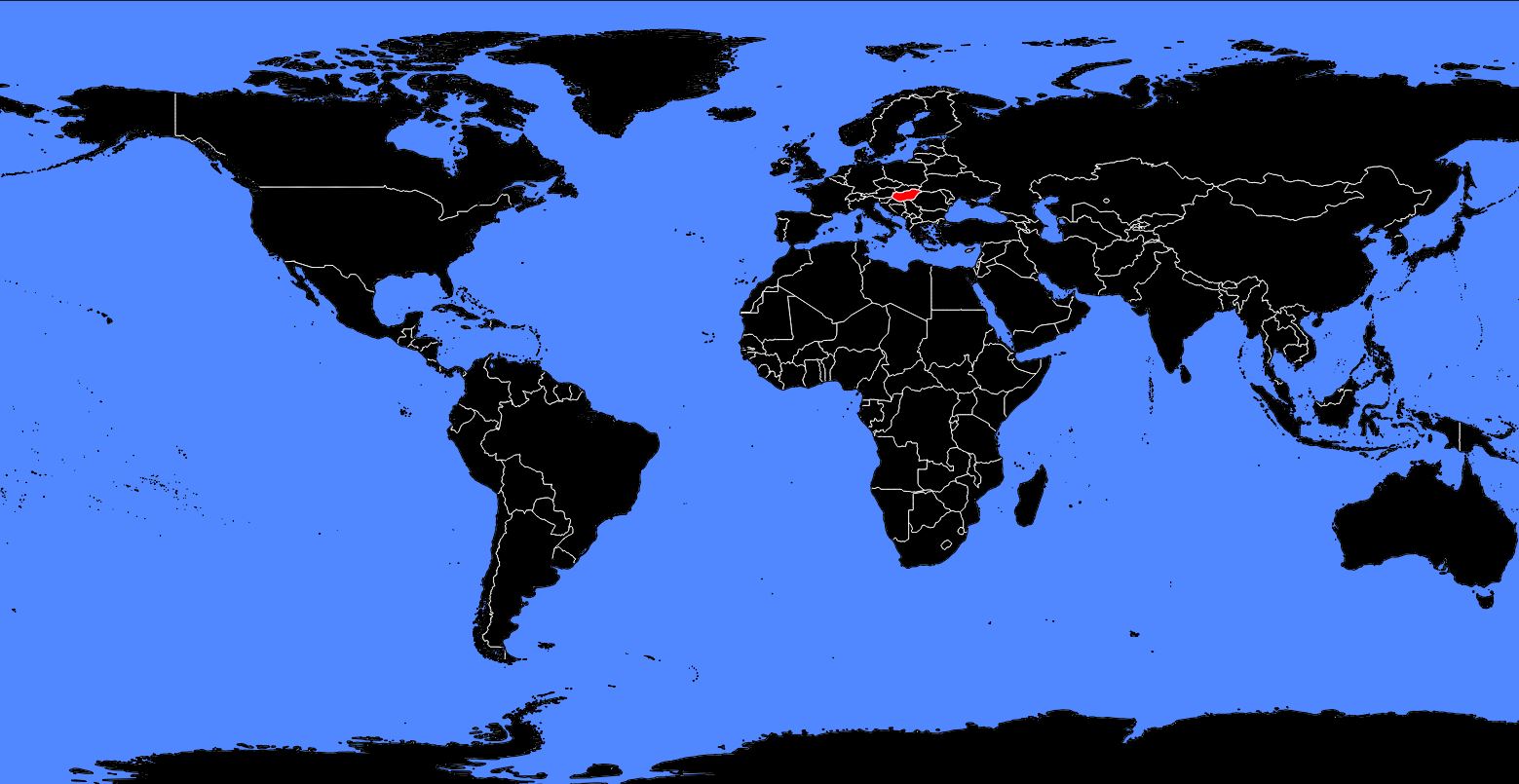
Hungary on a world map – Credit: Actualitix
Some lignite deposits are exploited in the northern mountain ranges, and several oil and natural gas fields have been discovered in the west and south of Hungary. The largest natural gas field is, however, located in the east. Bauxite is the country’s main metallic ore. Part of the production is then exported.
Vegetation and Wildlife
Hungary’s natural vegetation can be divided into three different groups. In the past, the great Alföld prairie was dotted here and there with small groves of trees that have since almost entirely disappeared. In other regions, acacias, oaks, and beeches grow alongside scrubland. Beech forests are typical of Transdanubia. The densest forests are found on the mountain slopes in the north of the country. They consist mainly of beeches, oaks, maples, and hornbeams.
The most common animal species are undoubtedly deer, foxes, squirrels, hares, bears, wolves, jaguars, lynx, and badgers. Many bird species nest along the shores of Lake Balaton. The waters of lakes and rivers are also full of carp, perch, and pike.