
In this article you will find a map of Scotland. The English translation of the country is Scotland; it is the northern part of the United Kingdom and covers no less than one third of Great Britain.
Article outline
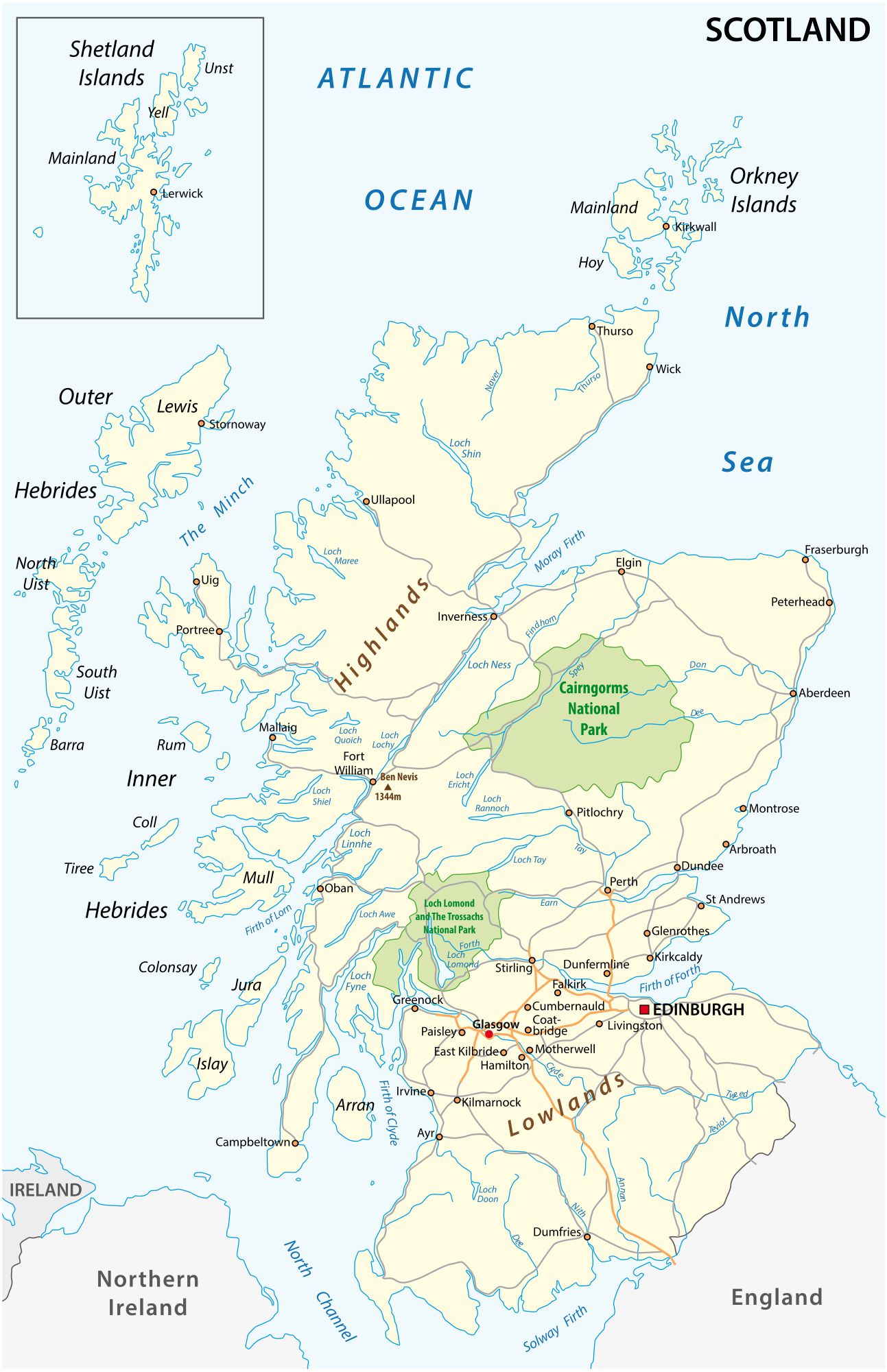
Map of Scotland – © lesniewski – stock.adobe.com
Geography with the Map of Scotland
As we can see on the map of Scotland, the northern boundary of the country is bordered by the Atlantic Ocean; to the east, it is the North Sea. Moving to the southeast, we find England; to the southwest and west, we find the North Channel and the Atlantic Ocean, respectively. The area of Scotland, which also includes three archipelagos—Hebrides, Orkney and Shetland—totals 78,770 km2. The capital is Edinburgh (see the map of Scotland), while the city of Glasgow is the major economic hub.
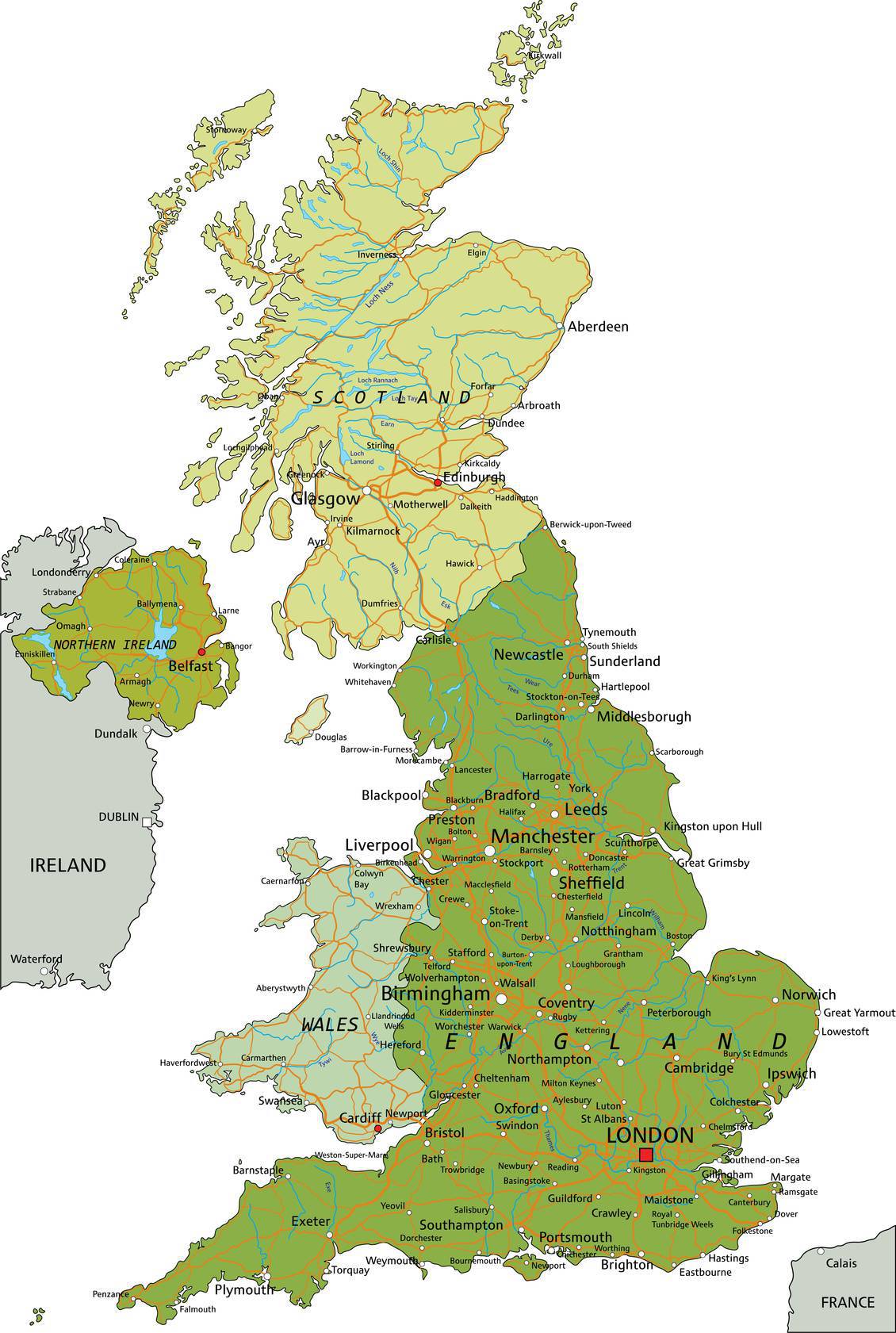
Map of Scotland – © pbardocz – stock.adobe.com
Scotland’s natural environment is mainly mountainous. It can be divided into several parts from north to south. Thus, in the north we find the famous Highlands, the Central Lowlands, and finally the Southern Uplands. It is worth noting that a little more than half of the country’s surface area is made up of the Highlands. This region is also the most rugged in all of Great Britain, and it is home to the island’s main peaks (including Ben Nevis, at 1,345 meters, which is the highest summit in Great Britain).
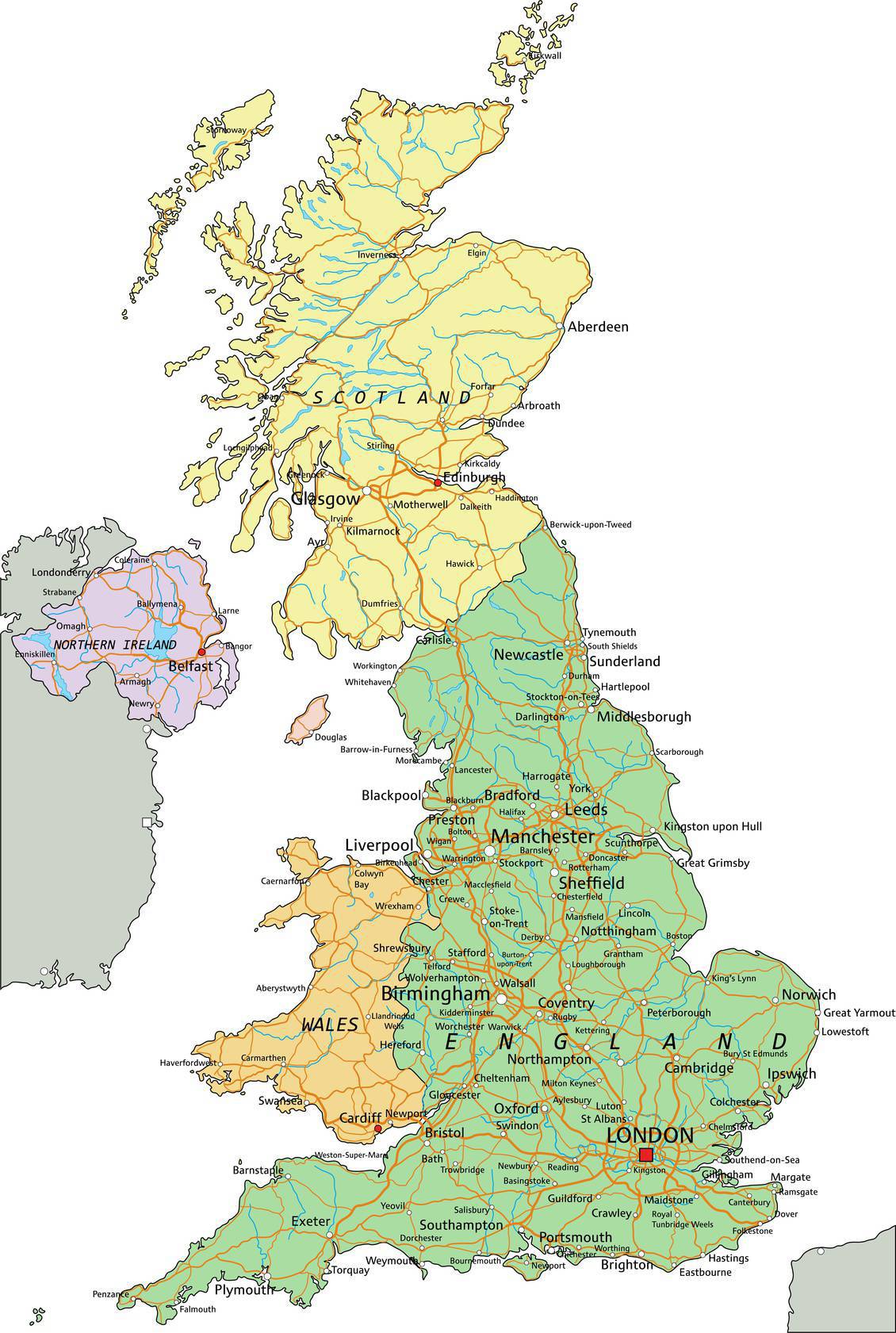
Scotland map – © pbardocz – stock.adobe.com
These different mountain ranges, which we can see on the map of Scotland, formed during the Paleozoic era; their general orientation is northeast to southwest. They are separated by the Great Glen (Glen More) depression, which starts in the northeast at the Moray Firth and runs to Loch Linnhe in the southwest. To the northwest of this depression, we find the Highlands again, while to the southeast we find the Grampian Mountains, which are part of the Lowlands.
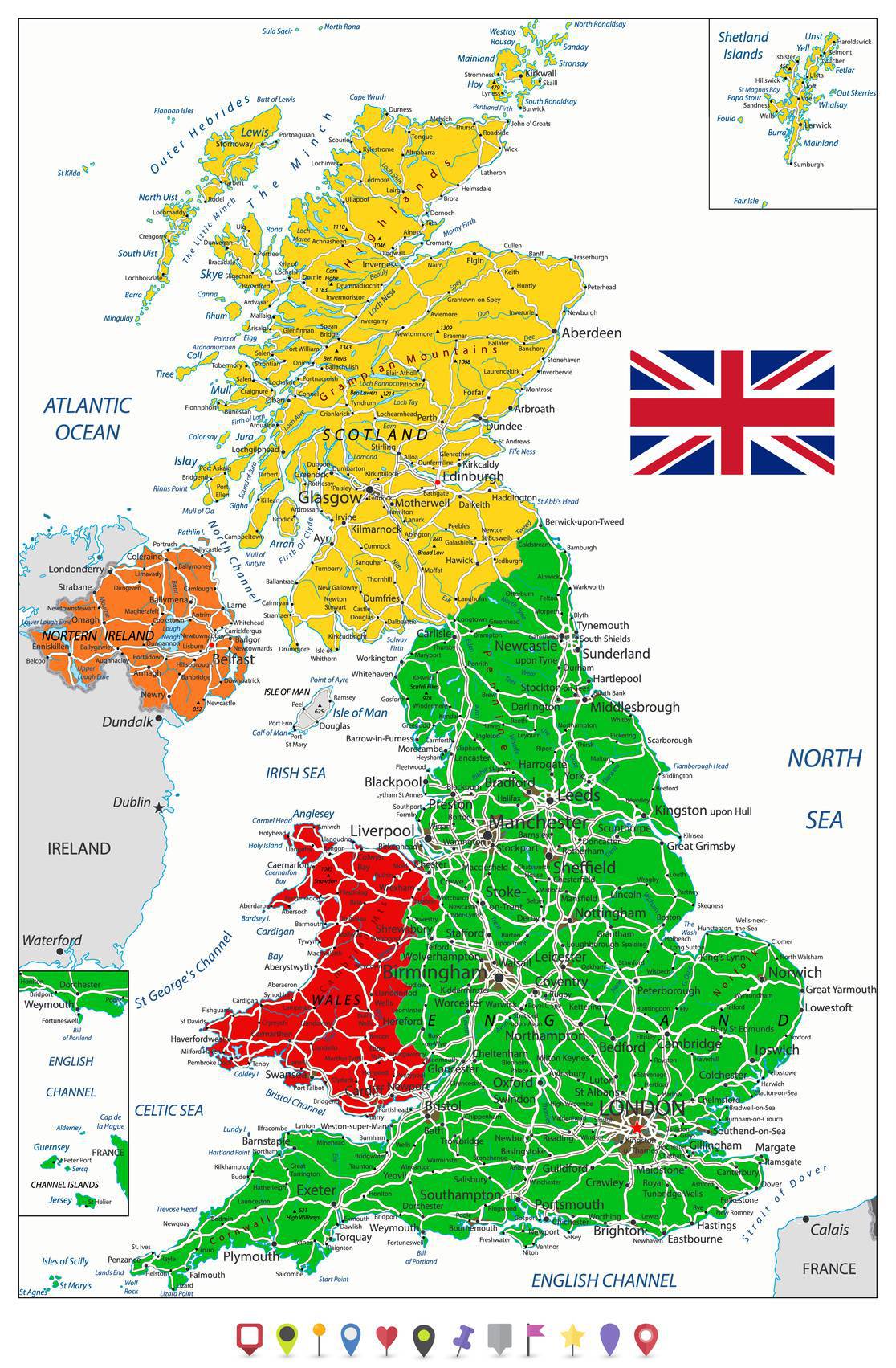
Detailed map of Scotland – © cartarium – stock.adobe.com
A large part of Scotland’s population (nearly three quarters) lives south of the Highlands, in the Central Lowlands, a rather narrow strip of land. Yet there are also many hills there, including the Ochil and the Sidlaw, as well as the country’s three main rivers: the Clyde, the Forth, and the Tay.
The Firth of Forth is also found there. The Clyde estuary is also located there; it cuts off the Highlands to the south from the rest of the country.
Another part of the country you can discover is the Southern Uplands, which are clearly lower and less rugged than the Highlands. Indeed, the peaks there are under 900 meters; the highest is Merrick at 843 meters.
Rivers and Lakes
Let’s now look at the different rivers and how they shape Scotland’s landscape. The map of Scotland makes it easy to explore the hydrographic network. The country has a network that was shaped by glaciations, which created valleys (glens). In these valleys we find lakes or fjords, as well as lochs, whose distinctive feature is that they can be impressively deep.
Among these lochs—numerous in both the Central Lowlands and the Highlands—we can mention Loch Lomond (the largest), Loch Ness (needless to say why it is the most famous), Loch Tay, and Loch Katrine. Scotland’s longest river is the Tay, but it was above all the Clyde that played an important role in the country’s development. Glasgow’s port lies at its mouth. As for other rivers, we can mention the Tweed, the Dee, and the Spey, which are among the main ones.
As for its climate, Scotland is under oceanic influence. Winters are mild and summers are very cool and rainy. Temperatures are low, and heavy snowfall is common in winter in the mountainous regions of the country’s interior. Rainfall can vary from 3,800 mm per year in the Highlands to nearly 650 mm in the more eastern regions.