
Discover a map of the Middle East (Near East). The Middle East is a region whose boundaries are defined only approximately. The criteria taken into account to define it are geography, culture and politics. It is a group of countries located between the eastern part of the Mediterranean Sea and the north-west of the Indian Ocean. It covers an area of about 5,000,000 km².
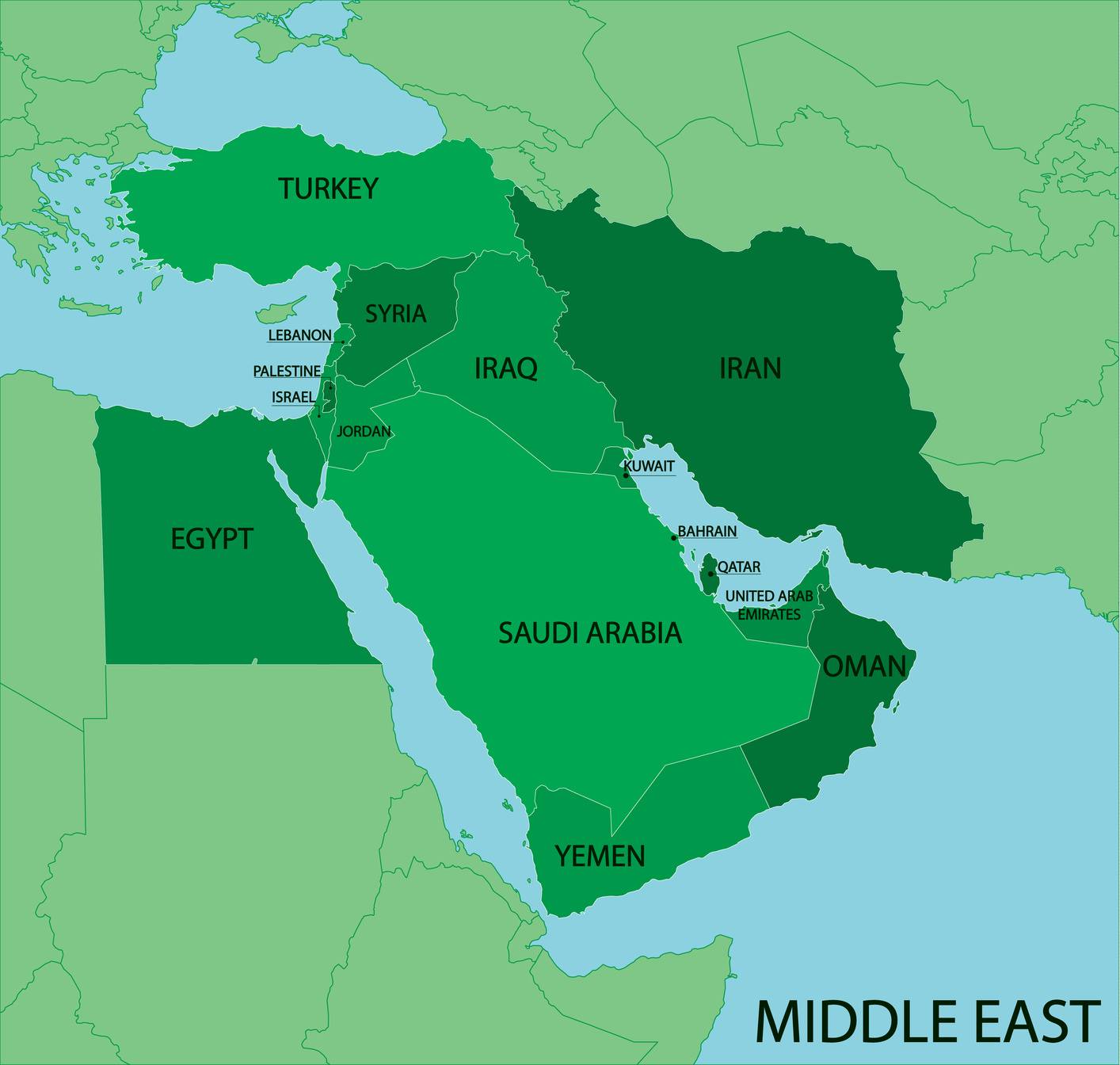
Map of the Middle East (Near East) – © Itan1409 – stock.adobe.com
Geography with the map of the Middle East (Near East)
The expression “Near East” found its way into our vocabulary towards the end of the 19th century. At the time, it referred to the part of the Ottoman Empire that matched France’s strategic interests.
Why do we use the adjective “near”? It made it possible to divide things into several parts: on one side the “Far East”, located in East Asia, and therefore a “Near East”, located east of the Mediterranean basin. Nowadays, the terms “Middle East” and “Near East” are generally used interchangeably. It is simply the translation of the English “Middle East”, which favors the first term when referring to countries bordering the eastern Mediterranean.
As you can see on the map of the Middle East (Near East), in its French sense the region includes the following countries: Egypt, Israel, Jordan, Lebanon, Syria and Turkey. You can then identify the countries of the Arabian Peninsula — with Saudi Arabia, Bahrain, Oman, Qatar, the United Arab Emirates, Kuwait, Palestine and Yemen — as well as Iran and Iraq. The island of Cyprus (located near Turkey) is also included.
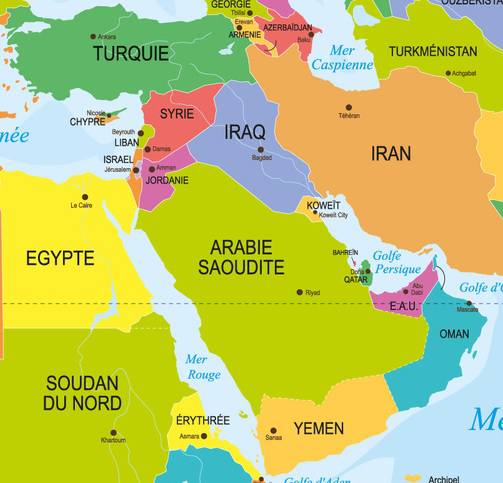
Map of the countries of the Middle East – © Neyriss – stock.adobe.com
As you will notice on the map of the Middle East (Near East), the region does not include the various countries located in North Africa. Libya sits at the hinge between the two regions, but it is generally considered part of North Africa.
Climate and rivers
The Middle East lies in a hot zone and is characterized by very low rainfall. The region’s seaboard is subject to a Mediterranean climate with mild winters and very hot summers.
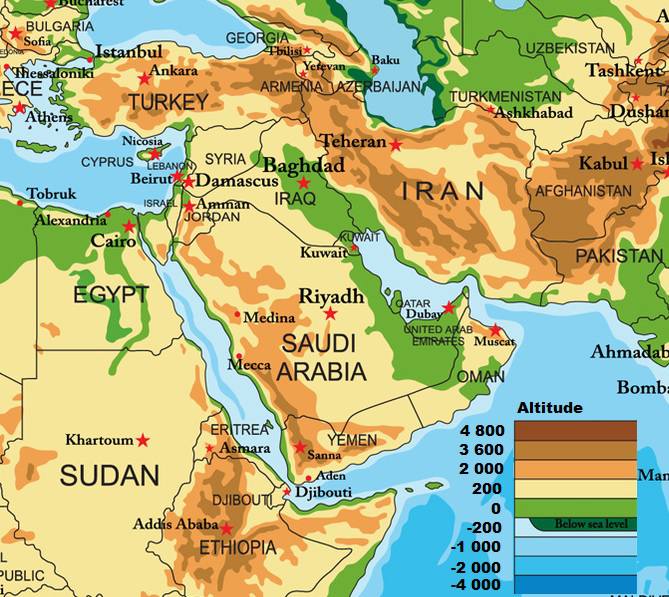
Map of the Middle East – Relief – © bogdanserban – stock.adobe.com
After this narrow coastal strip, the landscape changes and is mainly made up of steppes and deserts. The climate becomes very harsh, with temperatures soaring to very high levels, especially during the day. Conversely, they can drop very low at night.
Fortunately, this climatic contrast is softened in certain places thanks to the presence of several life-giving rivers such as the Nile in Egypt, and the Tigris and Euphrates in Iraq and Syria. These rivers are among the most important, as they make it possible to develop the land through irrigation. As you can see on the map of the Middle East (Near East), the region has uneven relief, with mountainous areas. These are found mainly in the north and west of the region, in Turkey and Iran, or in Lebanese and Yemeni territory.
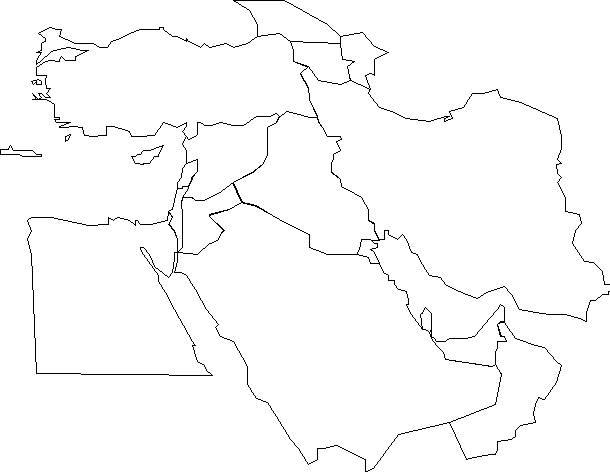
Blank map of the Middle East
Oil and gas
It was in the Middle East that oil was first discovered in large quantities, at the beginning of the last century. The region is also a major strategic issue when it comes to raw materials. Since these discoveries, the Middle East has never contradicted its status as the “largest oil field in the world”.
Several countries are among the world’s leading producers of gas or oil, including: Saudi Arabia, Iran, Iraq, Kuwait and the United Arab Emirates. Hydrocarbon reserves are among the most promising, especially natural gas—an extremely important energy source, like oil.