
Discover the map of Norway. Land and sea are inseparable in Norway. A harsh climate and difficult terrain led Norwegians to turn toward the sea for their livelihood. Hardworking Norwegians have built a high standard of living from limited resources.
The discovery of oil in Norwegian territorial waters has contributed to the country’s growing wealth.
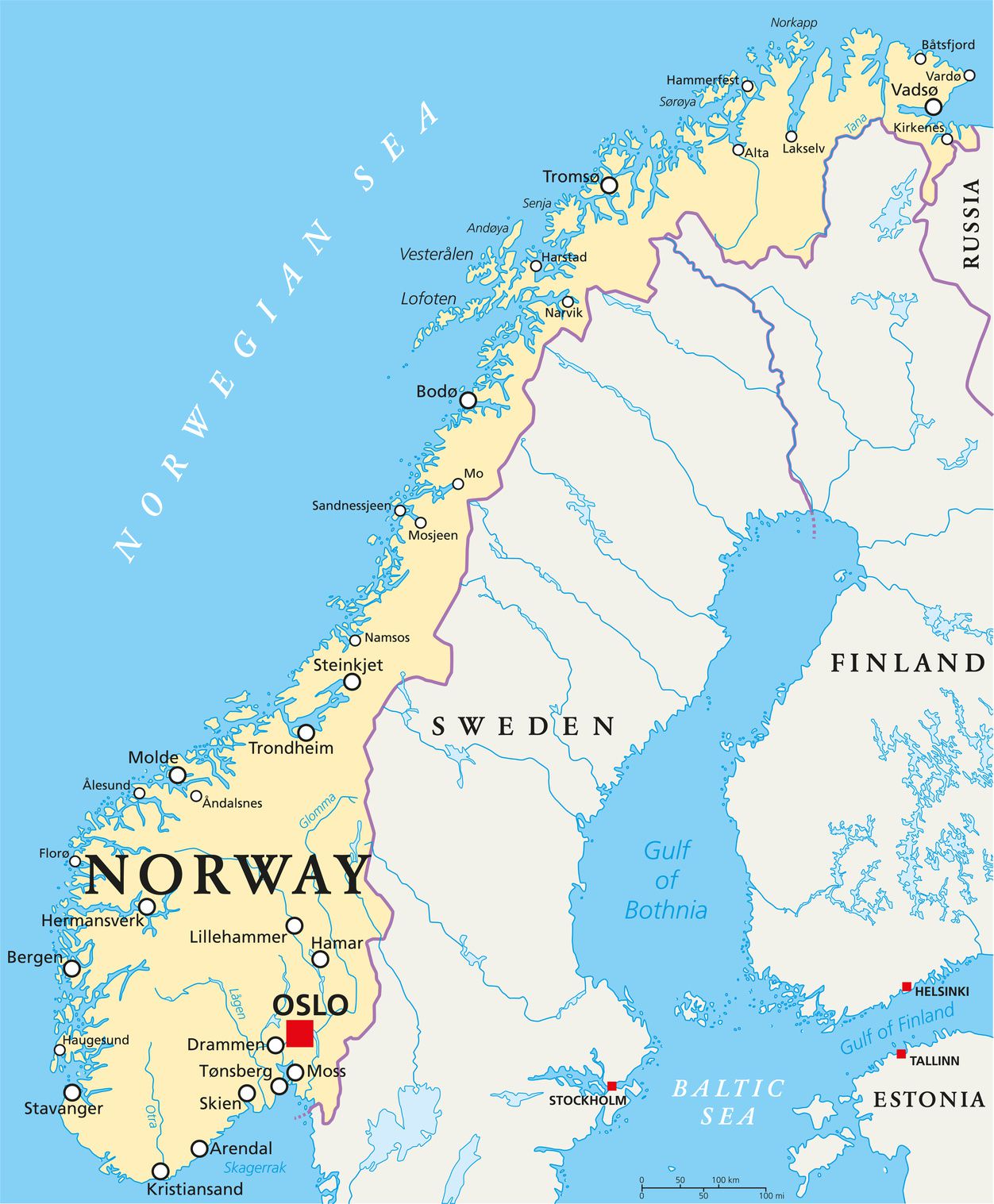
Map of Norway – © Peter Hermes Furian – stock.adobe.com
Territory and climate on the map of Norway
Norway covers an area of 324,220 square kilometers and includes many inlets of the sea penetrating the land known as fjords. Norway is bordered to the north by the Arctic Ocean, to the west by the North Sea, to the south by the Skagerrak Strait, and to the east by Sweden, Finland, and Russia, as shown on the map of Norway. The coastline, excluding fjords and islands, is about 3,200 kilometers long.
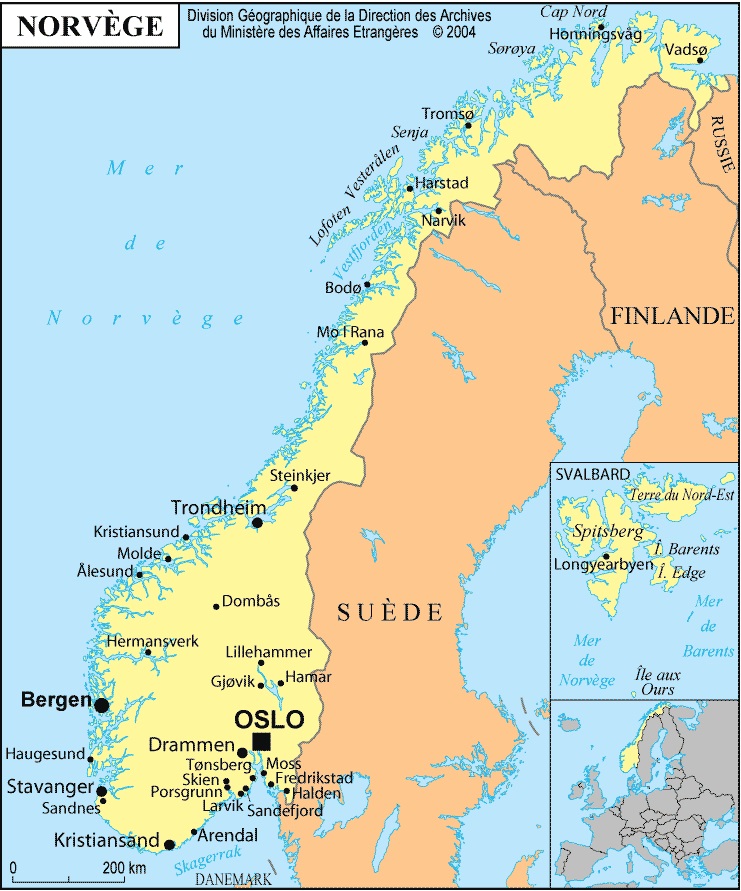
Norway map – Credit: Ministry of Foreign Affairs
Norway is mainly a mountainous country with small areas of plains. About 80% of the country lies above 460 meters in elevation. Much of the southern region consists of a high plateau cut by fjords and valleys.
Fjords were created by glaciers and are therefore very deep. On the plateau, there are high mountain regions. Norway has more than 1,500 glaciers, the largest being Jostedalsbreen, west of Jotunheimen.
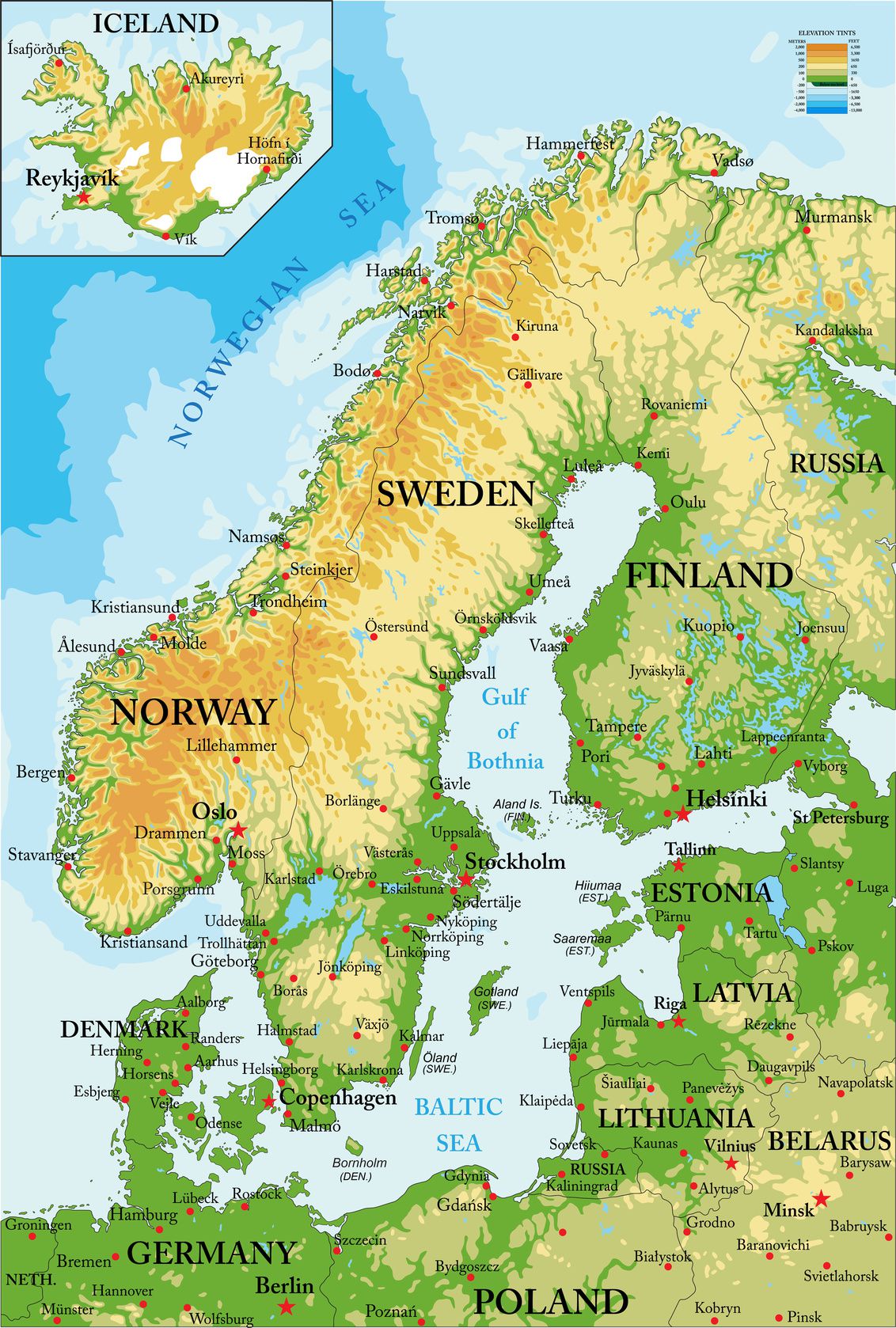
Relief map of Norway – © bogdanserban – stock.adobe.com
The southeast is almost flat. Long valleys, such as Gudbrandsdal, end in plains near the Oslofjord. There are also lowlands along the southern coast. The western coast is dotted with more than 150,000 islands. The largest group is the Lofoten Islands, located north of the Arctic Circle. Farther north lies Nordkapp (North Cape), the northernmost point of Europe.
There are many rivers. In the west, the slopes feature spectacular waterfalls. Lake Mjøsa is the largest of Norway’s 160,000 lakes.
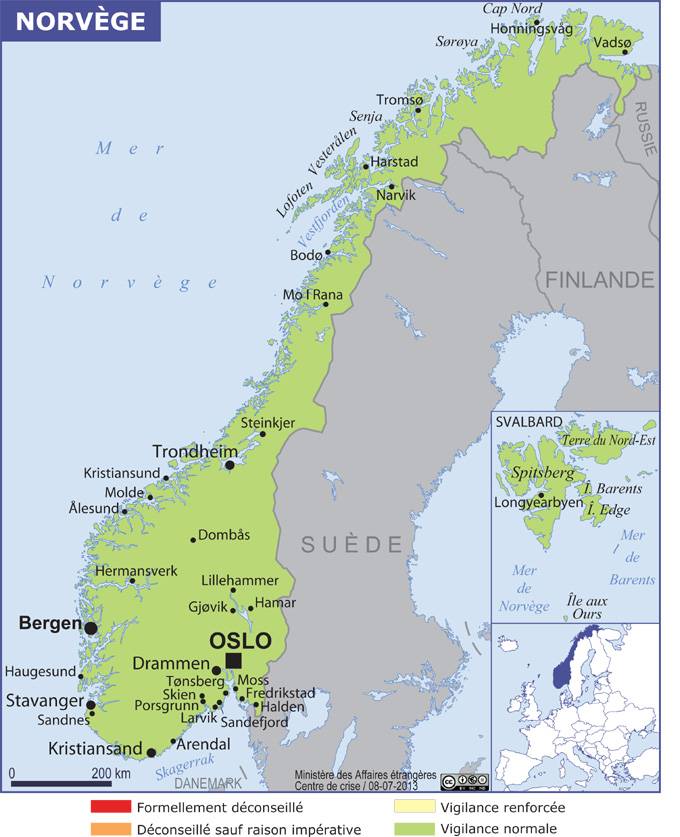
Map of cities in Norway – Credit: Ministry of Foreign Affairs
Norway also controls the Svalbard archipelago (see the map of Norway), located in the Arctic Ocean near the polar ice cap. The Spitsbergen Islands form the largest group, covering an area of 62,406 square kilometers. They are mountainous and almost entirely covered with ice.
The climate of Norway is much milder than its geographical position might suggest. The North Atlantic currents bring warm water from the Gulf of Mexico across the Atlantic Ocean to Nordkapp. This current prevents ice formation along the coast and is responsible for relatively high temperatures, even in winter. Prevailing southern winds bring oceanic humidity. The climate of western Norway is typical of maritime regions.
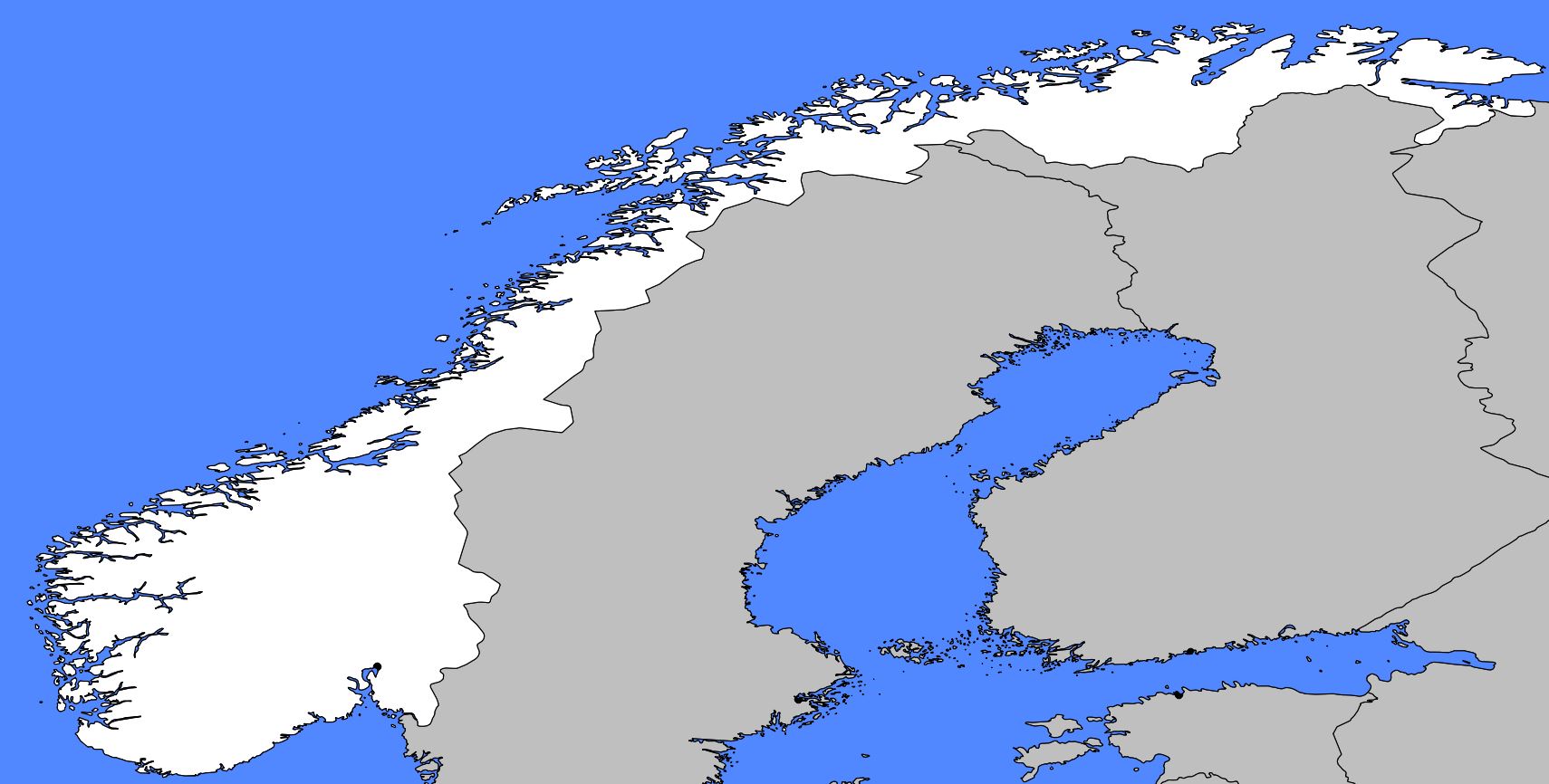
Blank map of Norway – Credit Actualitix
Bergen has average temperatures of about 1.7°C in January and 16°C in July. Oslo, farther east on the map of Norway, is colder in January (-3.9°C) but warmer in July (17.2°C). Average annual rainfall is about 69 cm. Temperatures in northern Norway are lower than in the south, but even in Tromsø, at 70° north latitude, winters are milder than in New England at 45° north latitude.
Natural resources, fauna and flora
Norway’s main natural resources are the sea, water power, oil, and gas. The sea has always played a vital role in Norway’s history. Wherever one is in Norway, the sea or a fjord is never far away, as shown on the map of Norway. Many people make their living from the sea as fishermen or sailors. Mountain torrents are ideal for hydroelectric power, which provides almost all of the country’s energy at low cost.
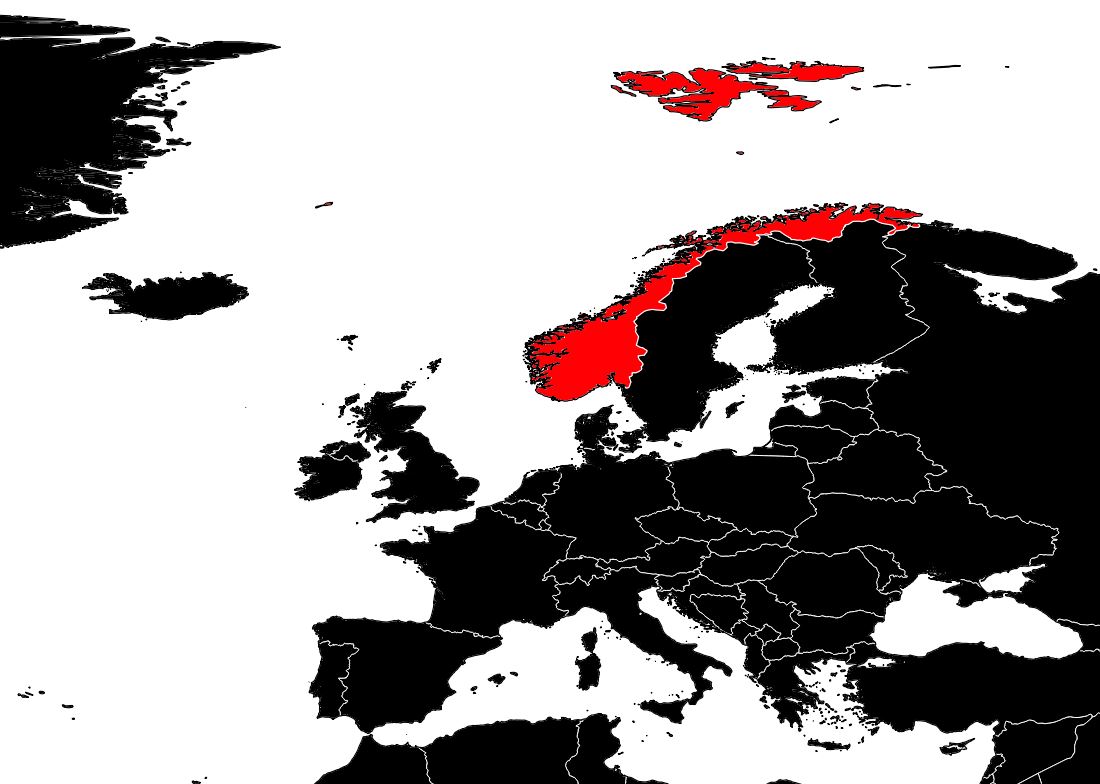
Norway on a map of Europe – Credit Actualitix
Oil was first exploited by Norway in the North Sea in 1966. Production is seven times greater than the country’s energy needs, and a significant amount is exported. Due to deep trenches along the western coast, pipelines cannot be used to transport oil easily, so most Norwegian crude is shipped to northern Scotland. Natural gas is also produced and largely exported. In the north, small deposits of iron ore, copper, lead, zinc, magnesium, titanium, and nickel are mined.
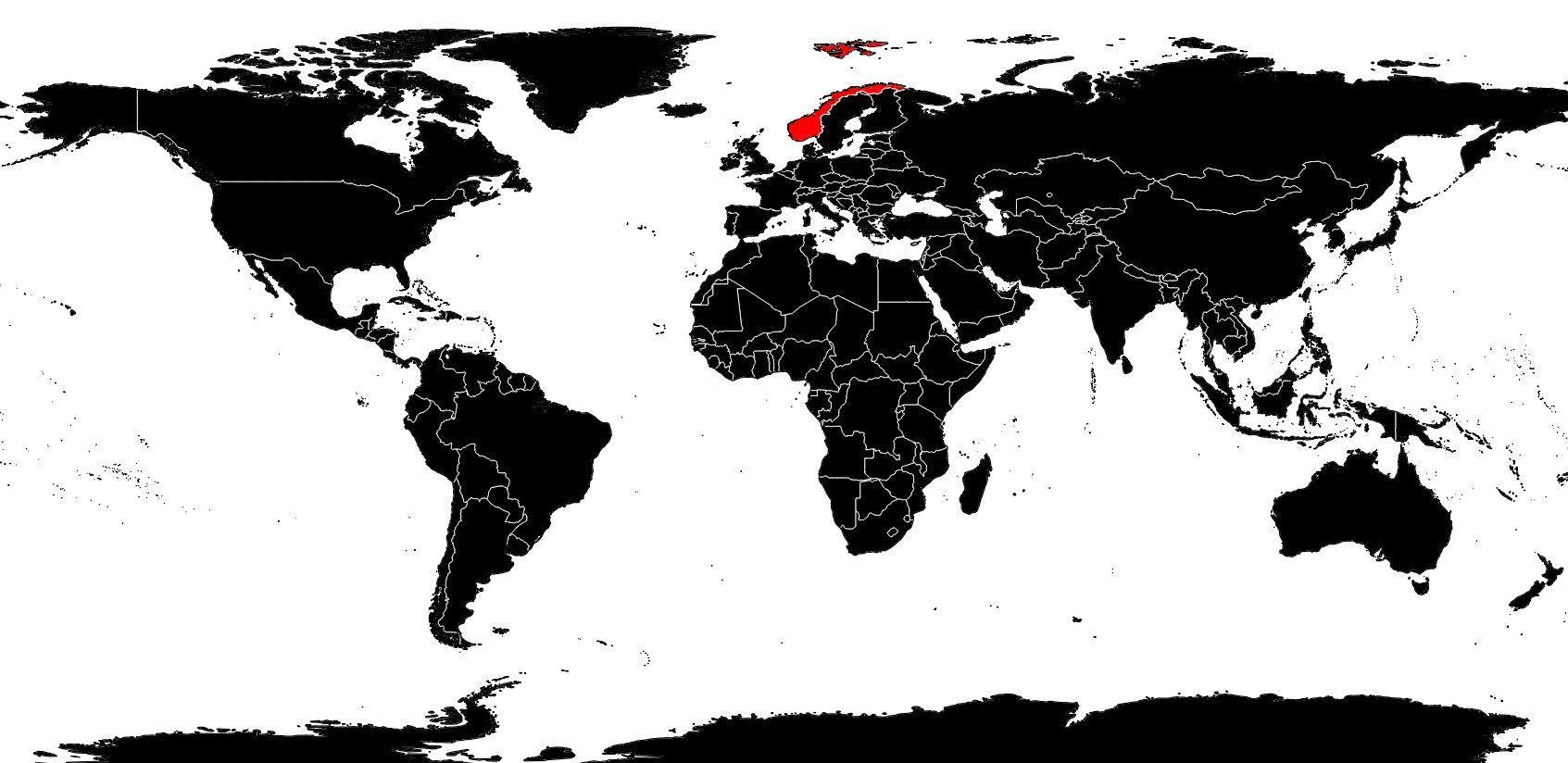
Norway on a world map – Credit Actualitix
About 20% of the country is covered by forest. Common animals include hares, foxes, hedgehogs, and badgers, with bears and beavers less frequently seen. Seabirds inhabit the coast, and the waters are rich in trout and salmon.
Population and culture
The population is about 5.2 million inhabitants. Norway is one of the least densely populated countries in Europe, with about 13 inhabitants per square kilometer. Most Norwegians are of Nordic descent.
A small community of Russians lives in Spitsbergen in Svalbard. Few foreigners live in Norway because immigration laws for workers are very strict. Almost all Norwegians belong to the Lutheran Church of Norway. The largest city, Oslo (see the map of Norway), is also the capital.
Norwegian belongs to the Scandinavian language group and is similar to Danish and Swedish. There are many dialects.
Transport in Norway
Mountains and fjords make the construction of railways and highways difficult.
The railway line connecting Oslo and Bergen passes through 184 tunnels. Fjords are often crossed by numerous ferries. Main roads from Oslo follow valleys and the coast. The road system has improved thanks to oil revenues, and several four-lane highways have been built in the Oslo region.
Many maritime services operate along the coast. Waterways are sheltered by chains of islands along the shoreline. The Norwegian merchant fleet is one of the largest in the world.
Norway, however, is not ideal for air transport, but the long distances between cities have led to the development of domestic air services.