
In this article you will find a map of Libya. Located in North Africa, on the southern coast of the Mediterranean, Libya is both one of the world’s leading oil-producing countries (especially before the internal unrest) and a nation with a very strong Islamic tradition.
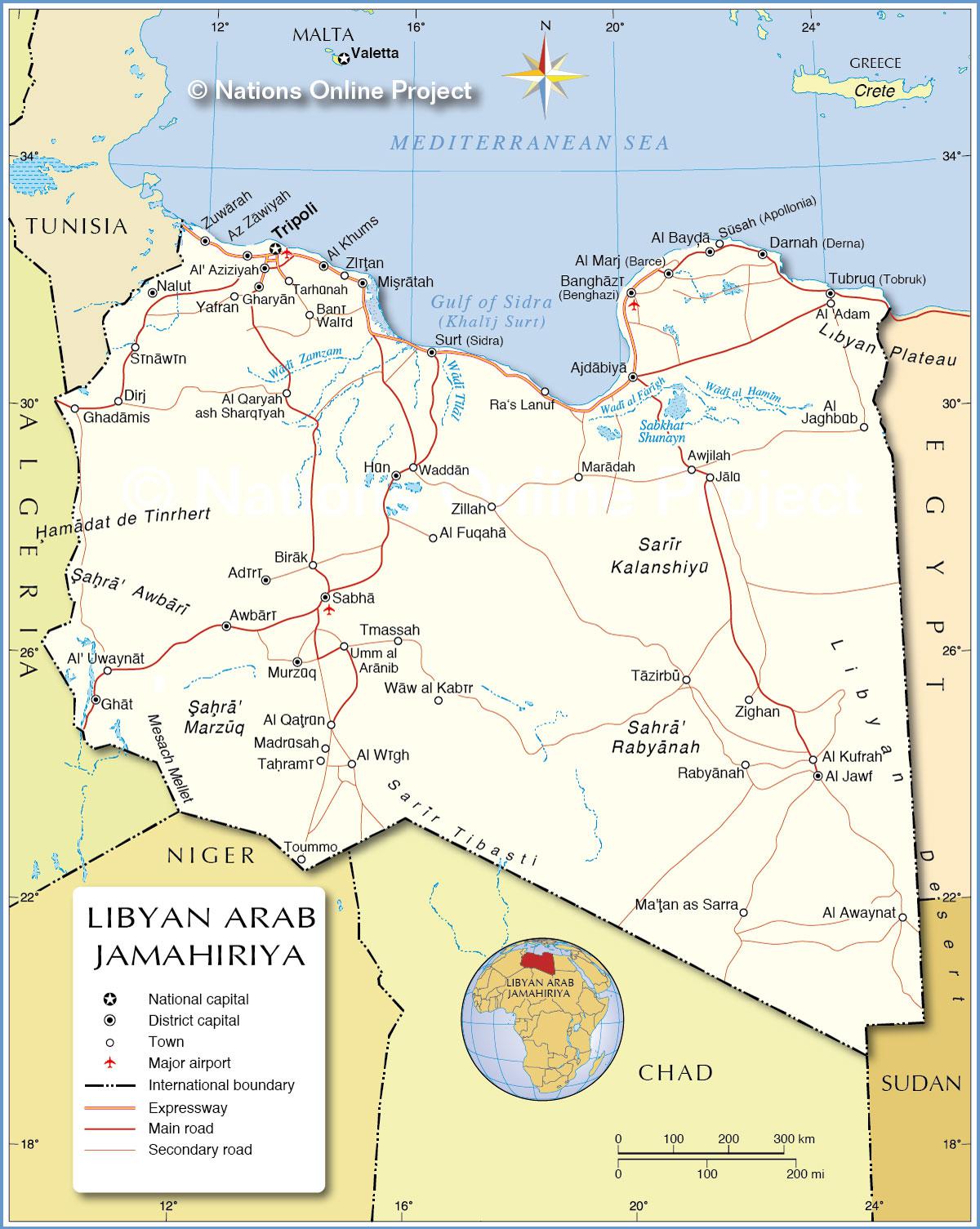
Map of Libya – Credit Nations Map
In the capital Tripoli, nomadic shepherds live alongside construction engineers and imams, Islamic spiritual leaders. In rural areas, herds of camels, goats, and sheep graze along very modern highways.
The official name of Libya is the Great Socialist People’s Libyan Arab Jamahiriya. The Arabic word Jamahiriya means “socialism” or “brotherhood”. The fourth largest country in Africa by size, Libya stretches southward from the Mediterranean coast. With an area of 1,759,540 square kilometers, the country is bordered to the west by Tunisia and Algeria, to the south by Niger and Chad, and to the east by Sudan and Egypt (see the map of Libya).
Geography with the map of Libya
Libya is a mix of several geographical regions: Cyrenaica in the east, Tripolitania in the west, and Fezzan in the south (see the map of Libya for geography). In Cyrenaica and Tripolitania, coastal rainfall creates excellent conditions for growing cereals, dates, olives, and tropical fruits.
In the much more arid interior of the country, livestock farming predominates. To the south and east stretches the Libyan Desert, one of the largest in the world. Less than 6% of the country’s land is arable.
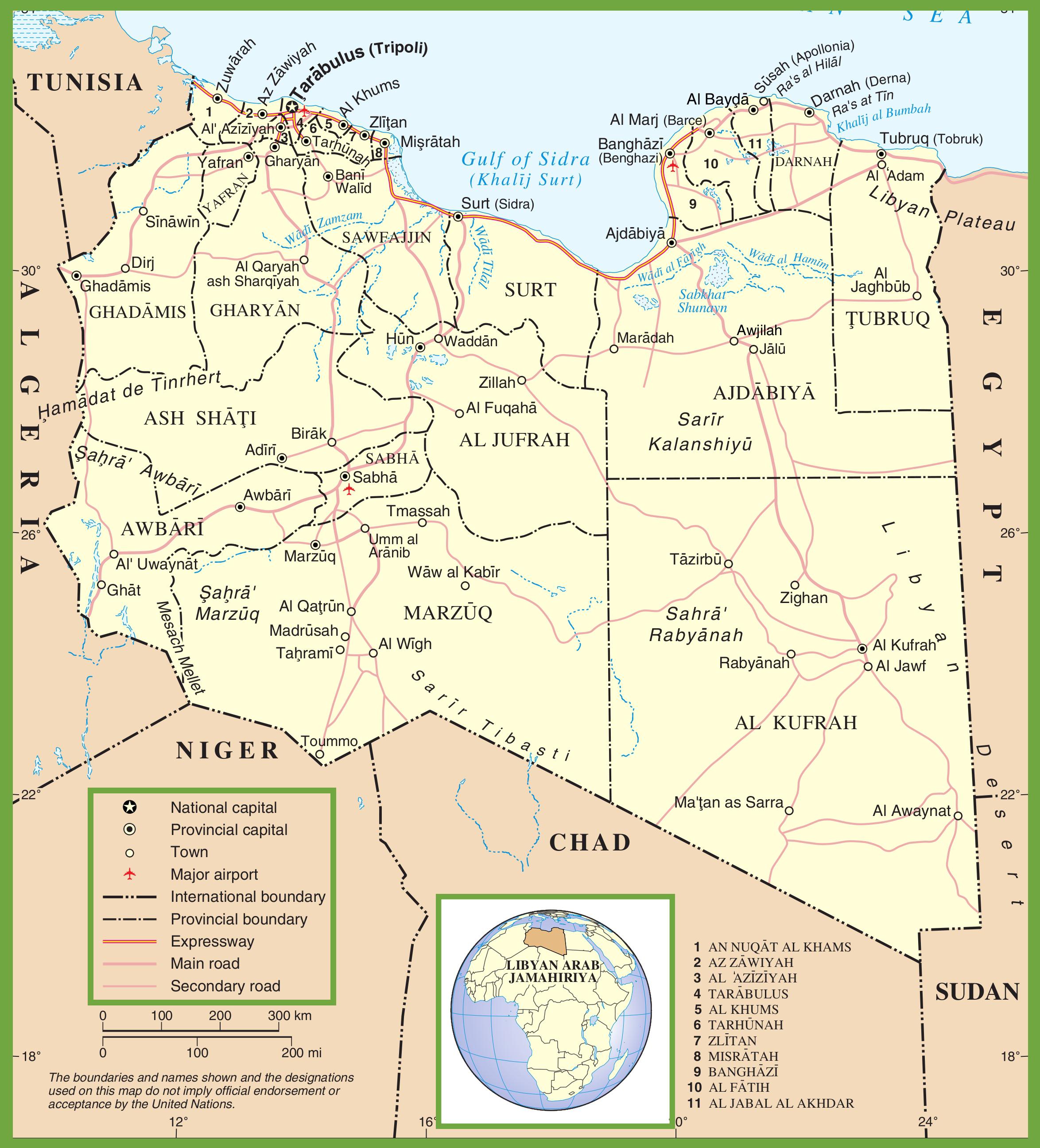
Map of the regions of Libya – Credit Nations Online
A very arid country with no permanent rivers, Libya receives less than 10 centimeters of rainfall per year. In the desert, a few oases provide water for travelers and farmers. When there is no surface water, inhabitants dig artesian wells.
The country’s most important natural resource is oil, the first deposit of which was discovered in Fezzan in 1956. The country also has natural gas, as well as a gigantic iron ore deposit in Fezzan.
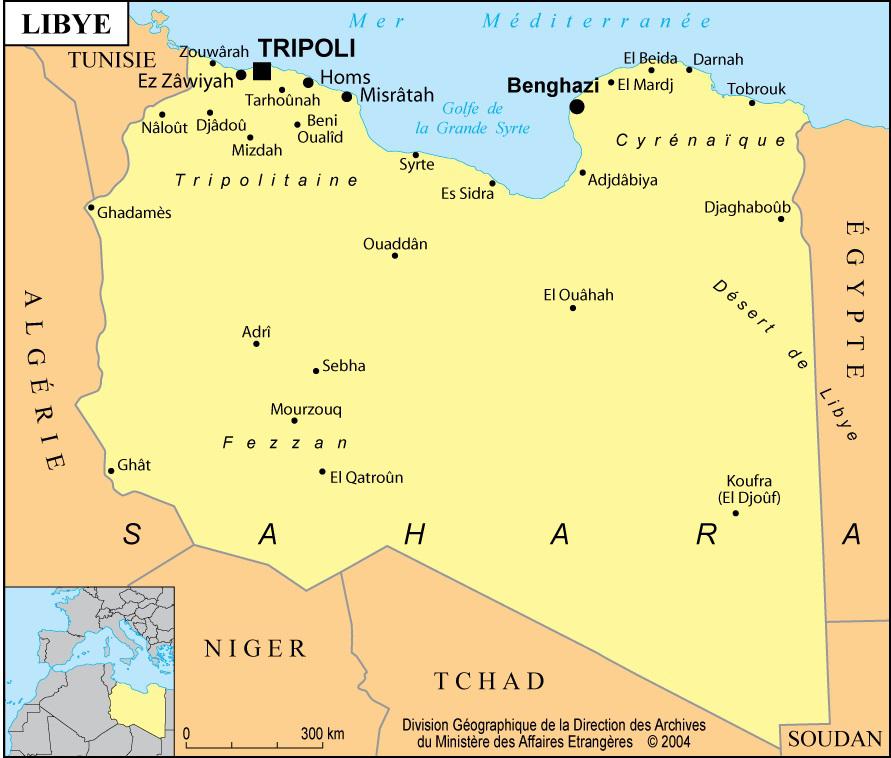
Map of the cities of Libya – Credit Ministry
Population
Libya has about 6.2 million inhabitants, the smallest population among the five North African countries. The vast majority of Libyans live along the coast, and more than 60% of them live in a city of more than 5,000 inhabitants. About two-thirds of the population lives in Tripolitania, one-third in Cyrenaica, and a very small fraction in Fezzan, where inhabitants live in small nomadic groups.
The official language is Arabic, and some nomadic communities, such as the Tuareg, speak Berber dialects. Many Libyans also speak Italian, English, or French.

Libya has a large proportion of foreigners, Europeans or citizens of other Arab countries, who come to work in the country’s oil industry. Religion, art, and music: 99% of Libyans are Sunni Muslims.
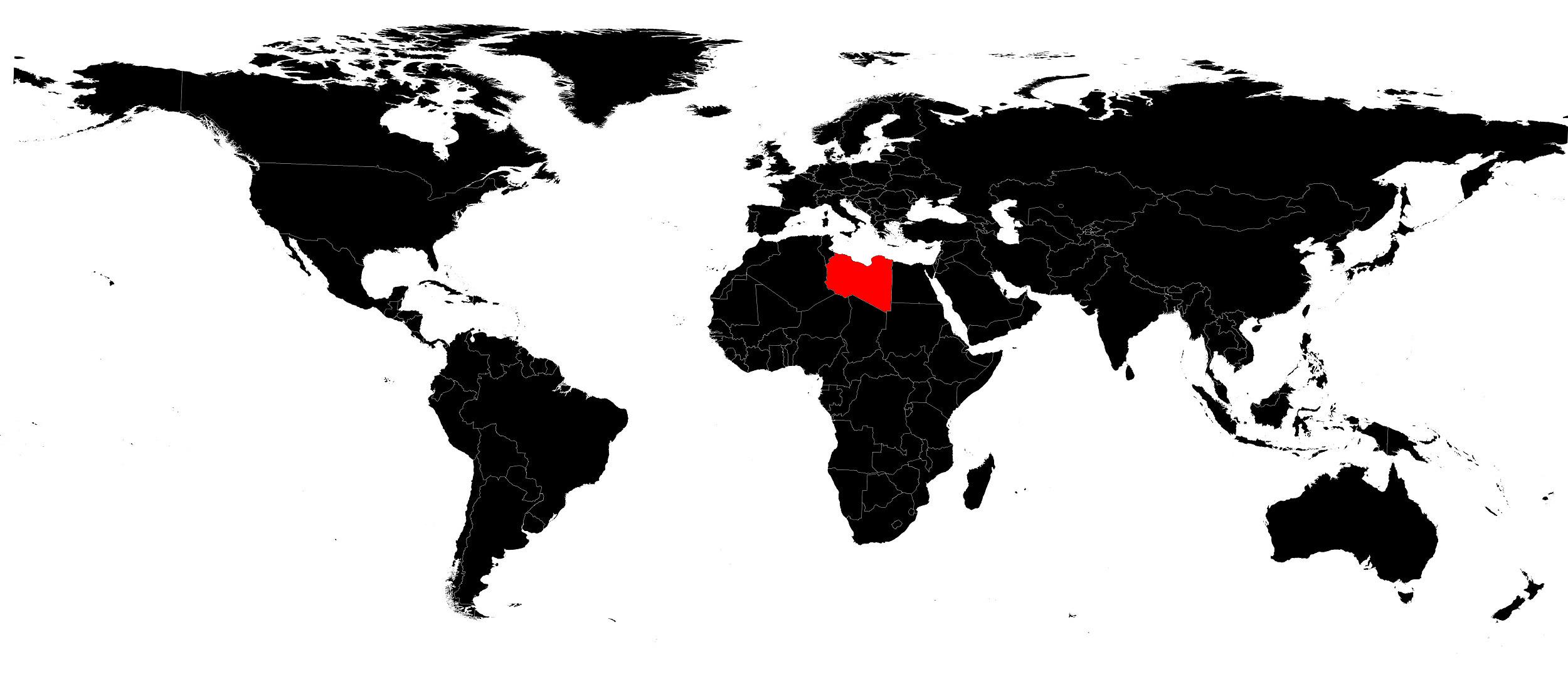
Libya on a world map – Credit Actualitix
Libyan art and music are marked by the country’s Roman and Islamic heritage. Roman ruins contain superb mosaics that once decorated temples as well as the homes of wealthy merchants. Vast, richly decorated mosques reflect the importance of decorative art in Islamic religion. Markets and small shops sell carpets, baskets, leather goods, and jewelry.