
Discover the map of Croatia. The republic was attached to Yugoslavia after the First World War. It was part of this country for 74 years until the proclamation of its independence on June 25, 1991, at the same time as Slovenia.
Table of contents
Map of Croatia: a tourist wonder
Nowadays, tourism in Croatia is an important part of the economy. For example, in 2012 Croatia recorded more than 11 million tourists on its territory. The figures are steadily increasing since in 2013 the country exceeded 14 million visitors and 73 million overnight stays. But the ambition does not stop there, as Croatia hopes to double these figures by 2020.
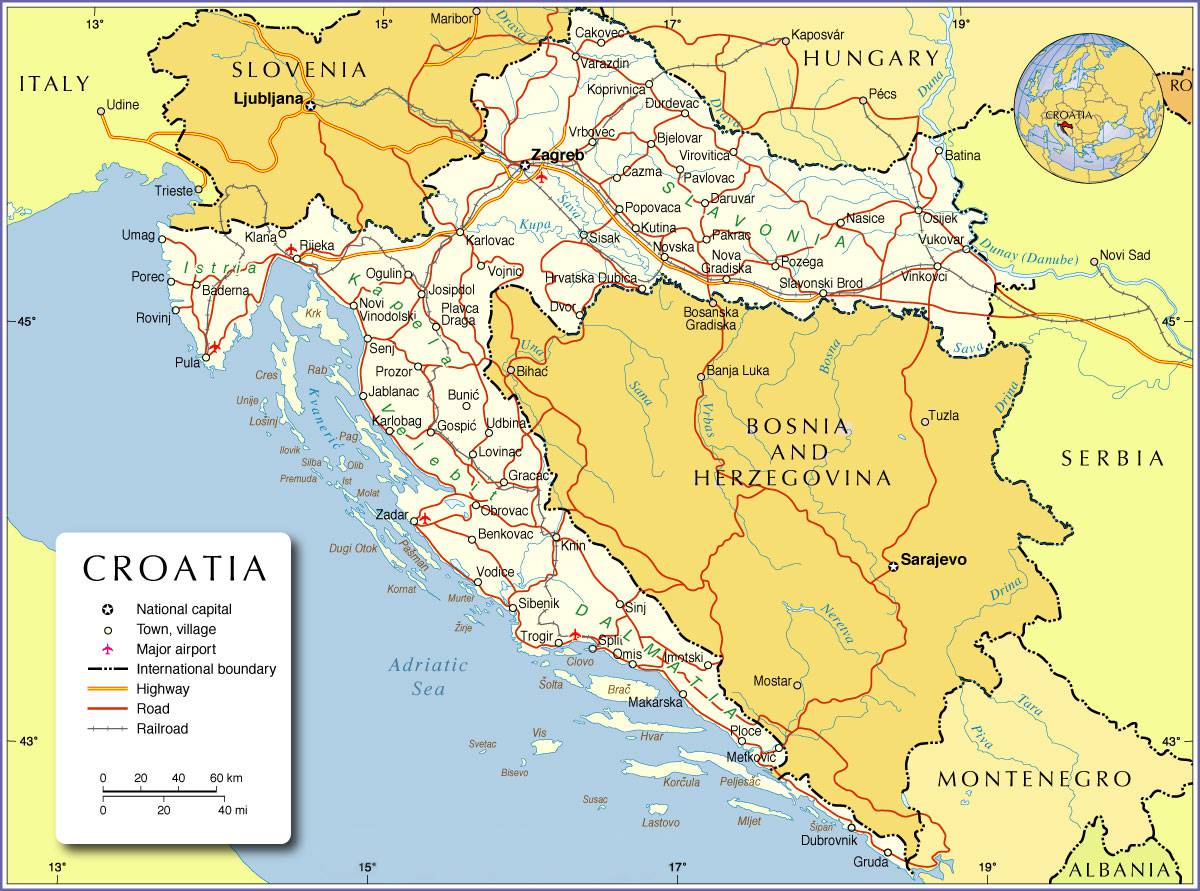
Map of Croatia – Credit: Nations Online
As you can see on the map of Croatia, the country has the advantage of having eight regions designated as national parks. Nature in these areas benefits from additional protection against urban development. When traveling along the coast, it is possible to see fleets of yachts. The country also attracts many divers for its magnificent waters.
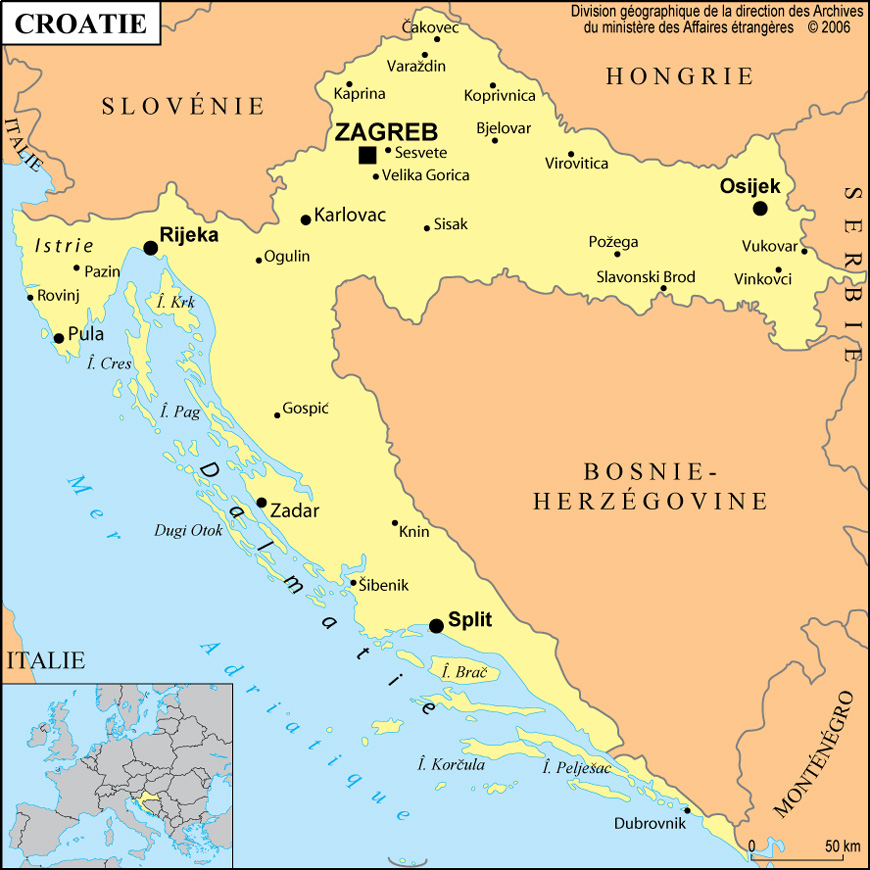
Croatia map – Credit: Ministry of Foreign Affairs
Lonely Planet named Croatia the top destination for 2005, while National Geographic Adventure magazine presented Croatia as Destination of the Year in 2006.
Map of Croatia: more details
Croatia includes the territories of Dalmatia and most of Istria. The northeast of the country is occupied by plains with fertile soils particularly favorable to agricultural development. The relief of southwestern Croatia, on the other hand, is very rugged.
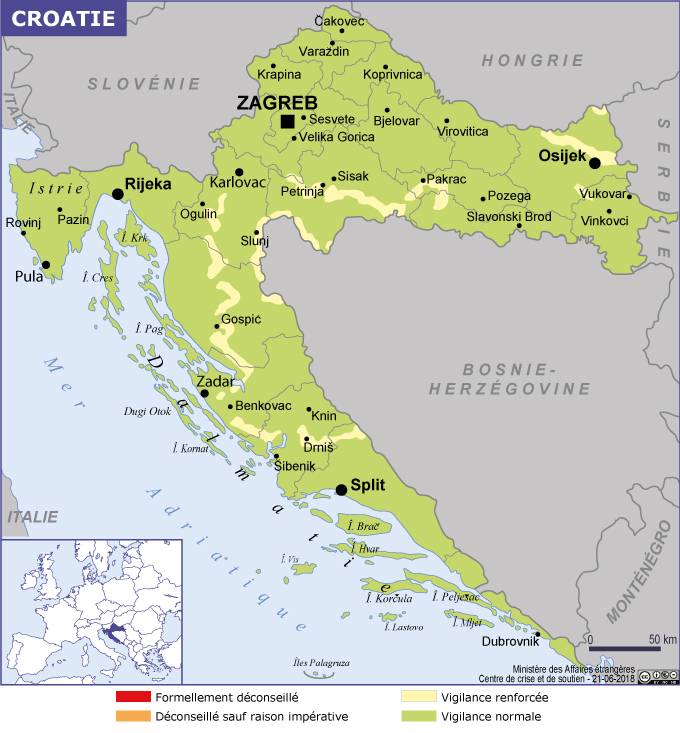
Another map of Croatia – Credit: Ministry of Foreign Affairs
The Sava and the Drina are the two main rivers. On the map of Croatia, we can see that the country is bordered by Slovenia and Hungary to the north; by Bosnia and Herzegovina and Serbia to the east; by Montenegro to the south; and by the Adriatic Sea to the west. Its area covers 56,538 square kilometers. Zagreb, the capital, is located in the north.
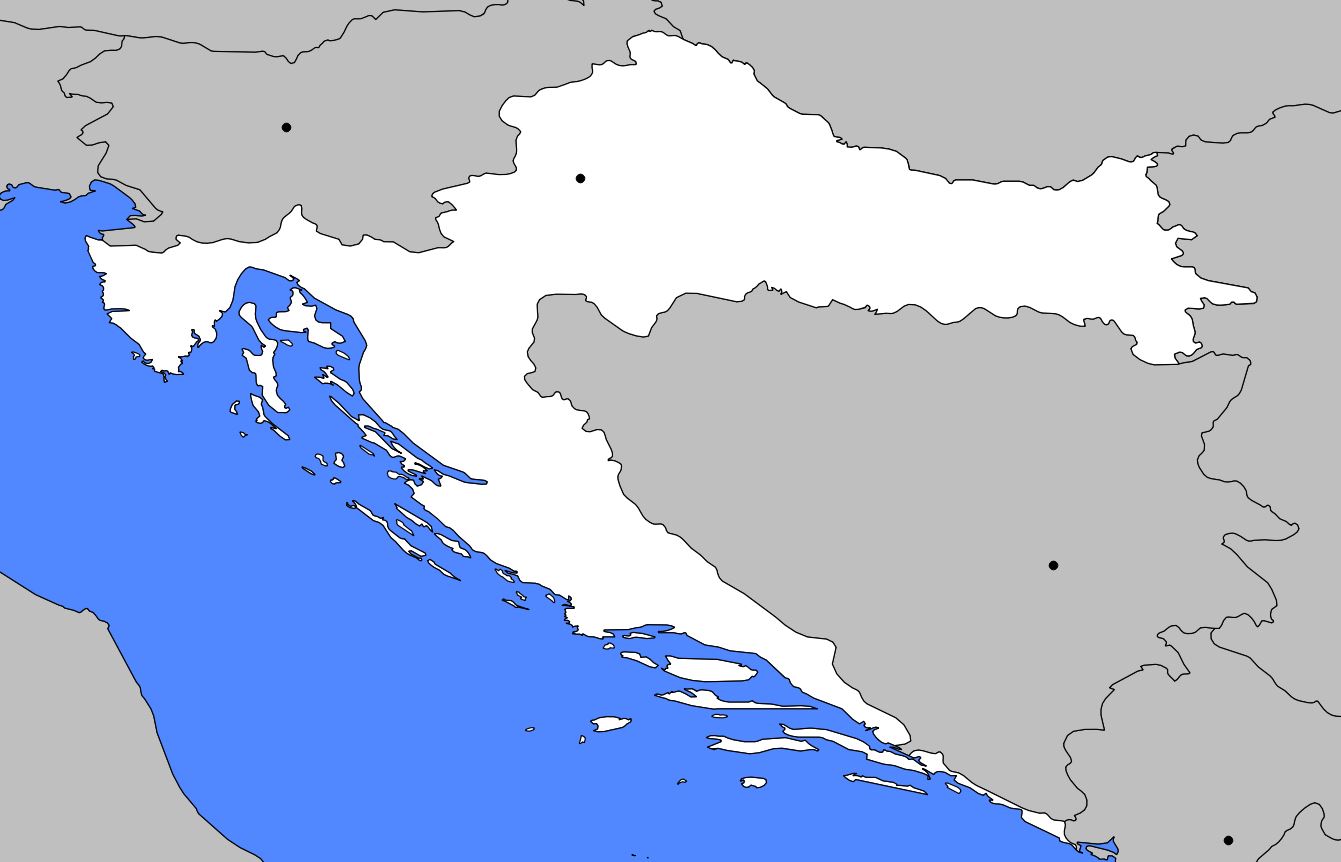
Blank map of Croatia – Credit: Actualitix
Croats (a Slavic people) made up 78% of the total population. They are predominantly Catholic and speak a language related to Serbo-Croatian. Serbs and Muslims represented 12% and 1% of the total population respectively.
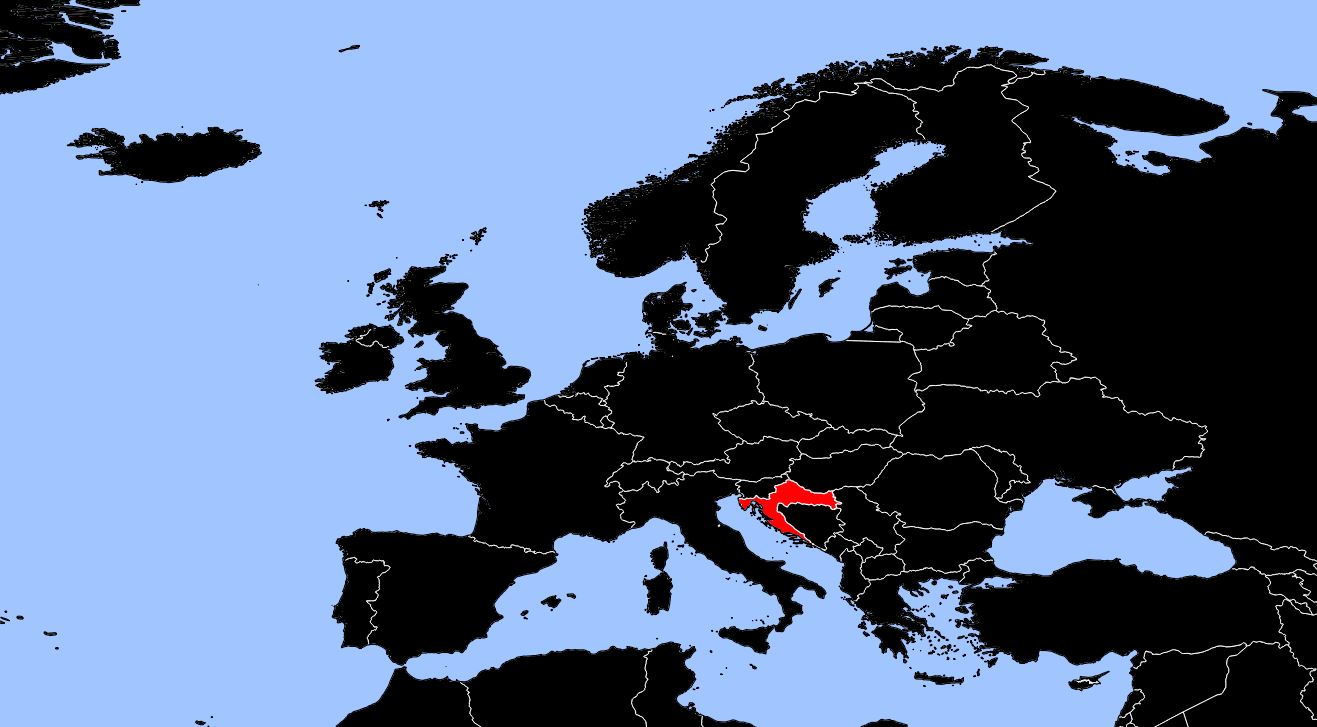
Croatia on a map of Europe – Credit: Actualitix
Before the Second World War, the economy was mainly based on agriculture and livestock farming. Cereals, sugar beet and grapes were among the most widespread crops.
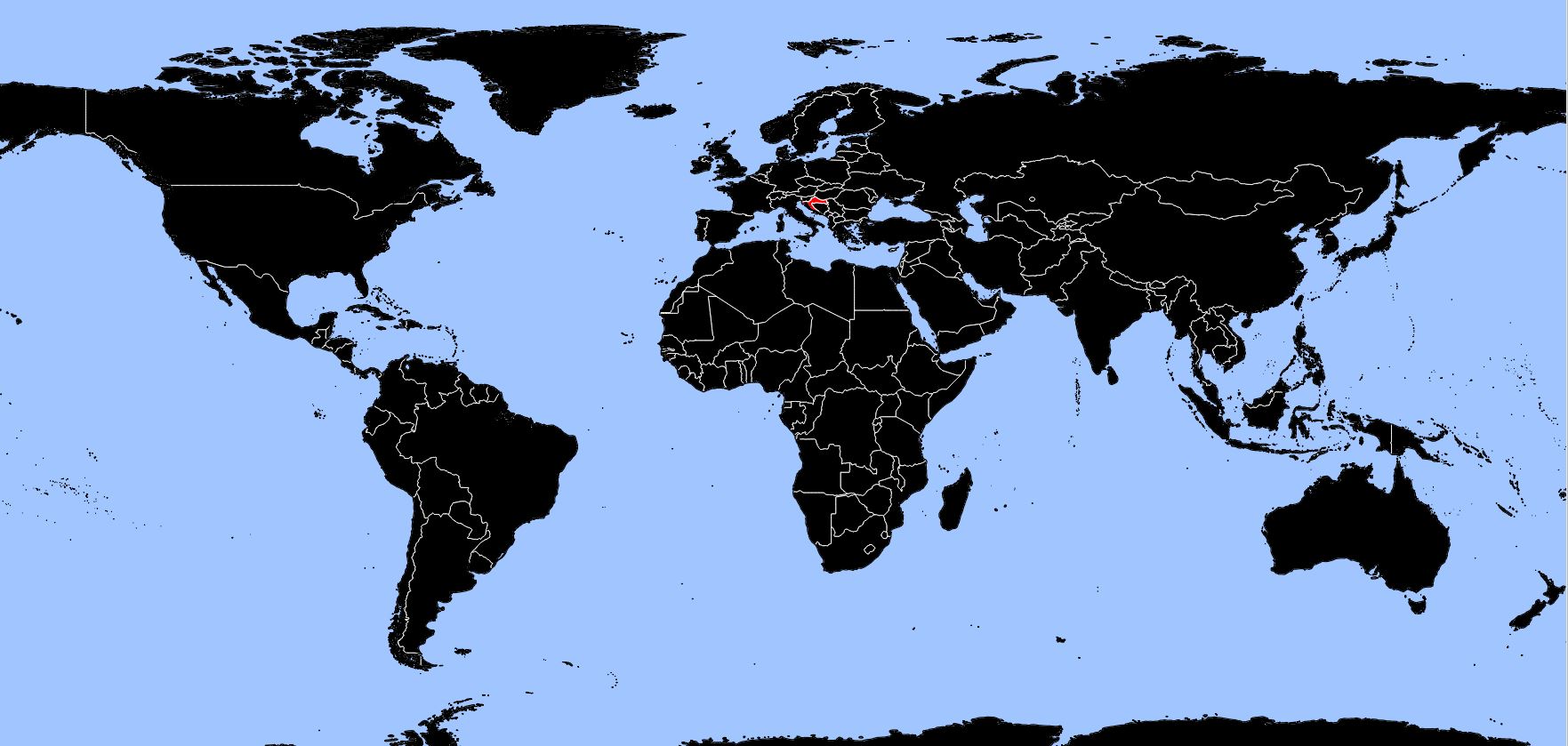
Croatia on a world map
After the war, the discovery of rich oil deposits and the development of light industry had significant effects on the country’s previously agricultural economy. The use of natural resources (hydroelectricity, coal and bauxite) also intensified during this period. The 1960s were marked by the gradual transition from a highly centralized economy to a free market economy.