
Discover the map of Australia; you will find a variety of themes. Although Australia is something like a small continent, it is a truly immense country. Indeed, only Russia, Canada, the United States, China, and Brazil can boast a larger area than its own.
Australia is the least mountainous and flattest continent on the planet. As you will see on the map of Australia below (the relief map), two-thirds of the territory form a plateau whose elevation ranges only between 300 and 600 meters. The country’s few peaks, which do not exceed 2,000 meters in altitude, would be considered mere foothills on any other continent. Mount Kosciuszko, the highest summit in the country, rises to 2,228 meters above sea level.
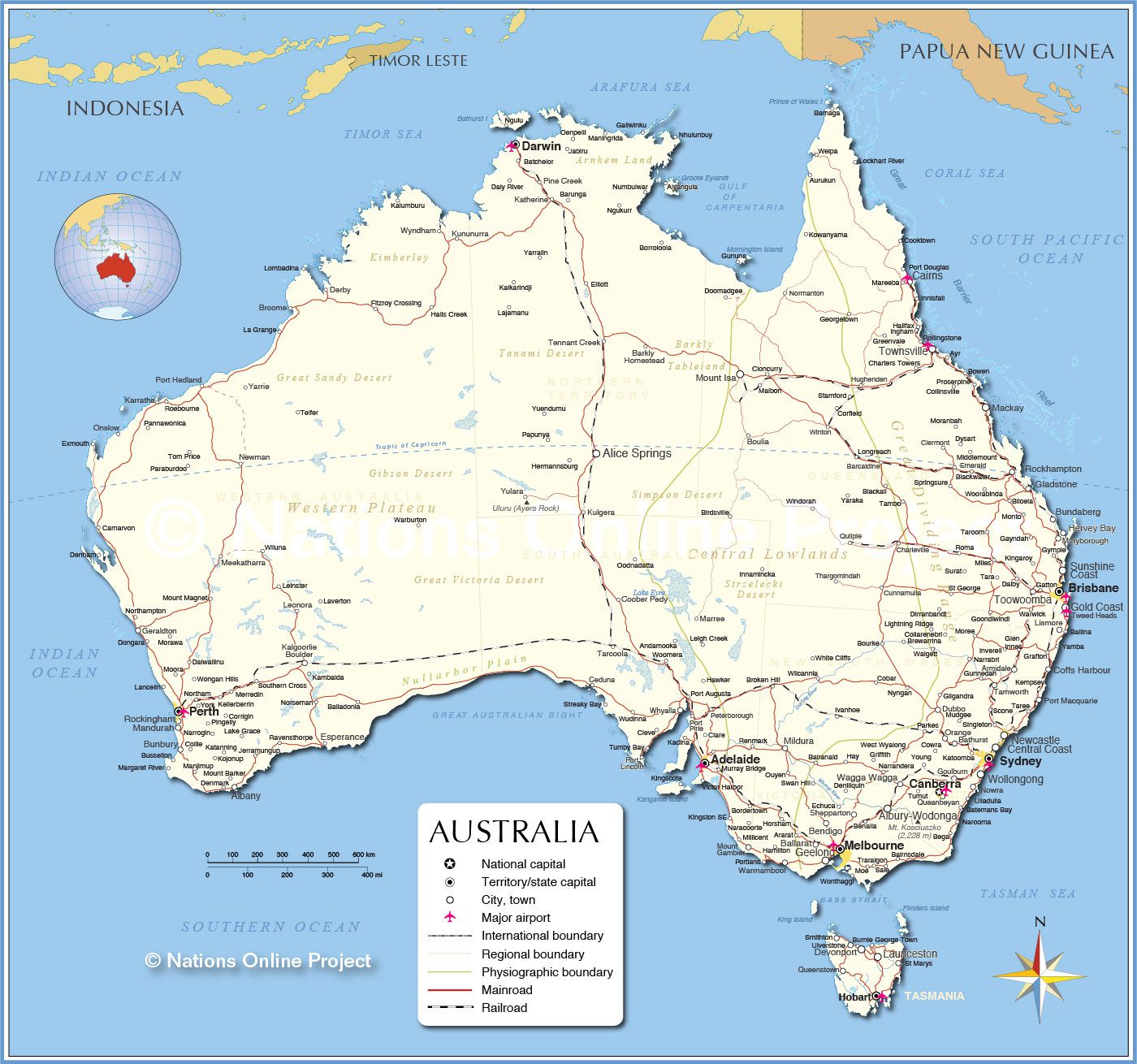
Australia map – Credit: Nations Online
The main relief zones on the map of Australia
As you can see on the map of Australia, the country can be divided into three main topographic regions. The Western Plateau covers two-thirds of the continent.
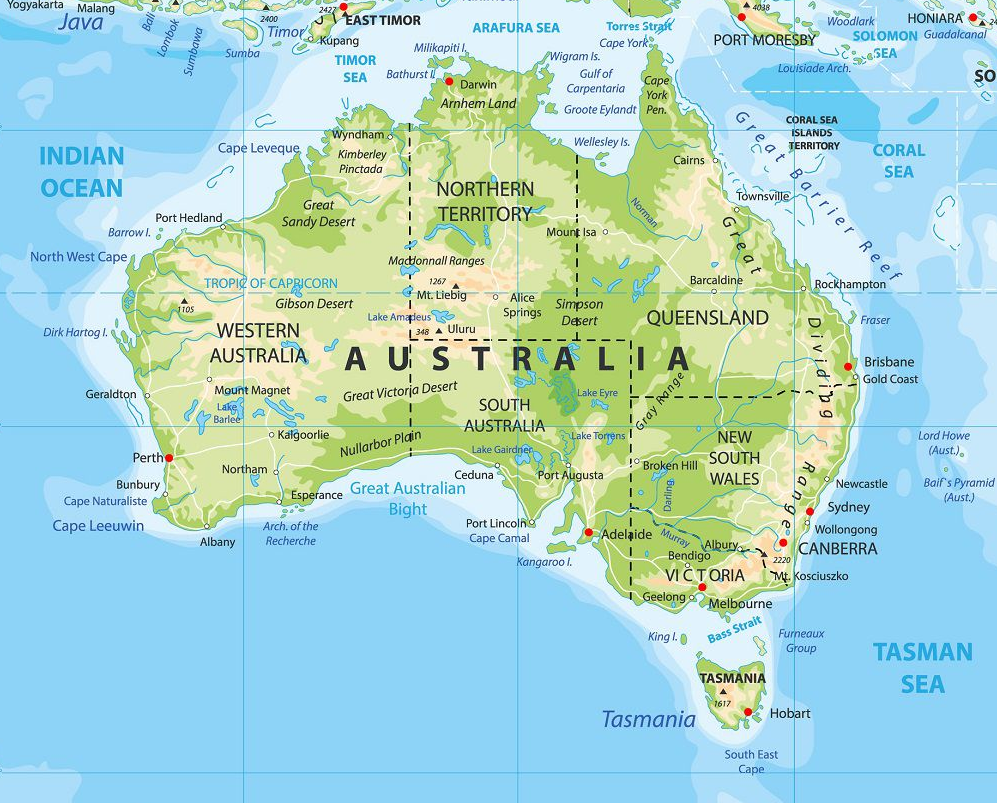
Another map of Australia – © pomogayev – stock.adobe.com
The eastern mountain ranges extend from the Cape York Peninsula to Tasmania and the state of Victoria. These two regions frame the Central Lowlands, which begin in the Gulf of Carpentaria region and stretch to the Murray–Darling drainage basin.
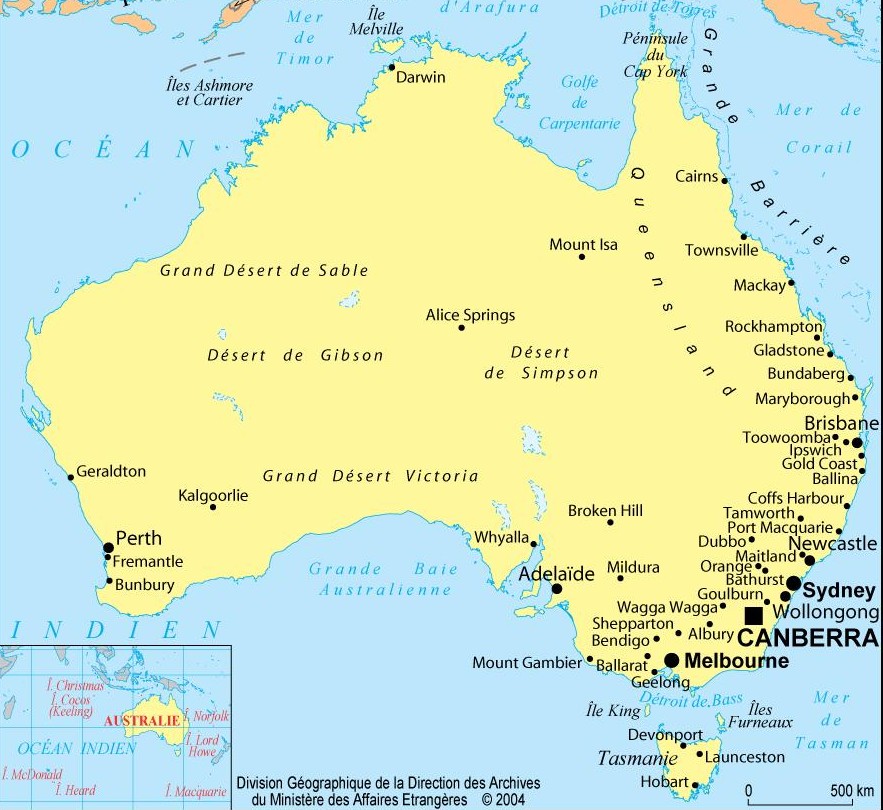
Political map of Australia – Credit: Ministry of Foreign Affairs
The Western Plateau, largely made up of Precambrian rocks, is dominated by the central Macdonnell Ranges. Its desert surface is characterized by the presence of sand dunes.
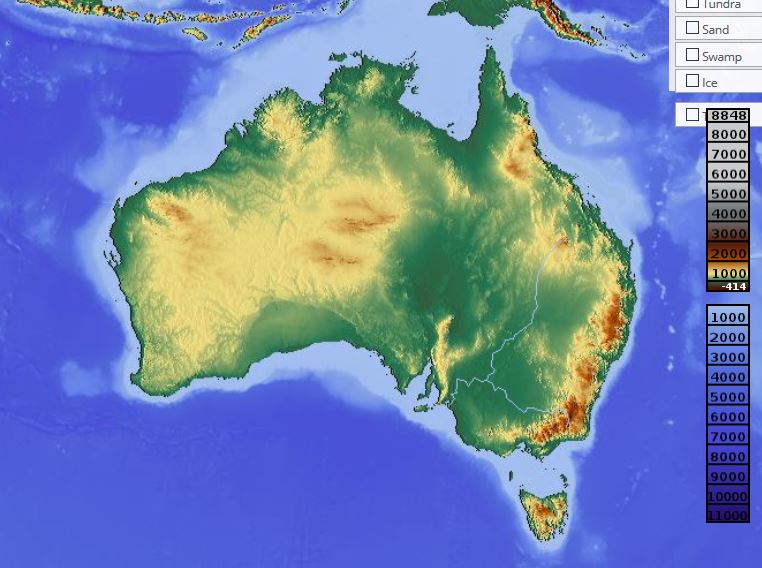
Relief map of Australia – Image extracted from maps-for-free
The mountainous regions are also heavily wooded and have a much more humid climate. They are marked by a succession of isolated high plateaus, mountain escarpments, and low mountain ranges.
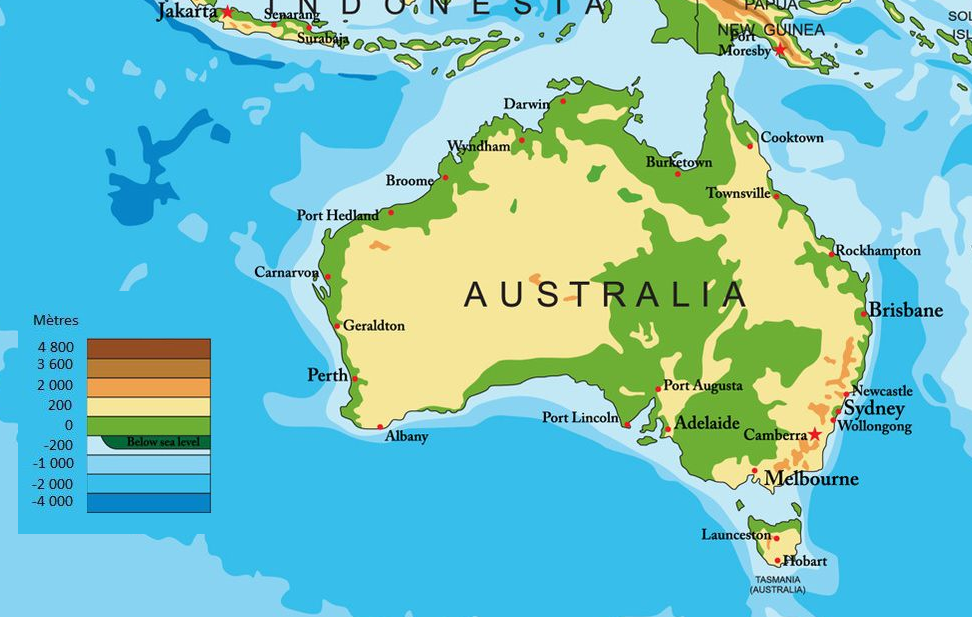
Elevation map of Australia – © bogdanserban – stock.adobe.com
Some of these mountainous areas, such as central Tasmania and the Snowy Mountains, were affected by glaciation during the Pleistocene epoch. Other mountains are of volcanic origin, such as those found between Queensland and New South Wales.
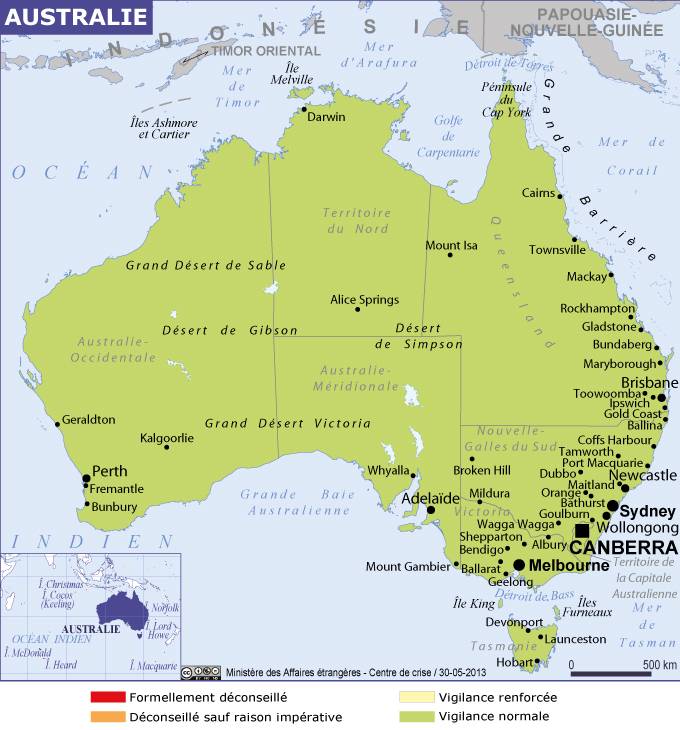
Map of cities in Australia – Credit: Ministry of Foreign Affairs
The Central Lowlands are largely drained by the Murray River and its tributaries. These rivers, with relatively slow flow, then empty into the ocean. The Australian continent is affected by intense evaporation, which explains the formation of many salt lakes such as Lakes Eyre, Torrens, and Gairdner.
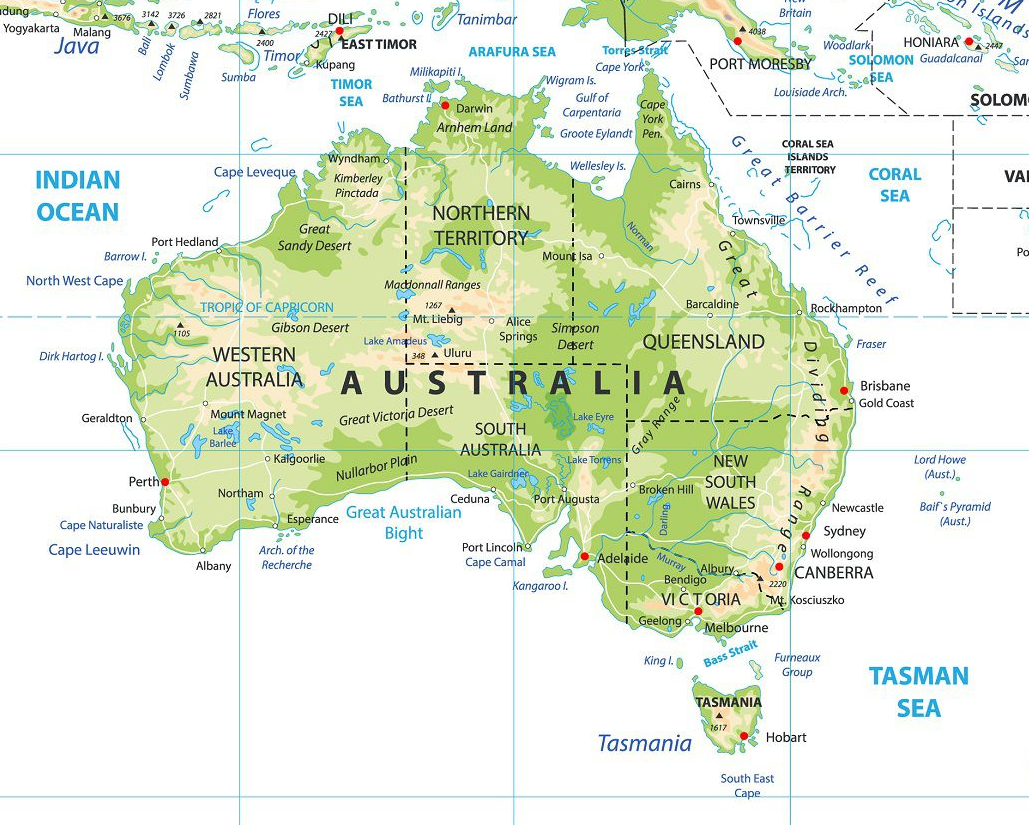
Detailed map of Australia – © pomogayev – stock.adobe.com
Immediately beyond this lowland region lies the largest artesian basin in the world. Many artesian wells have been drilled there so that animals passing through this arid zone can drink.
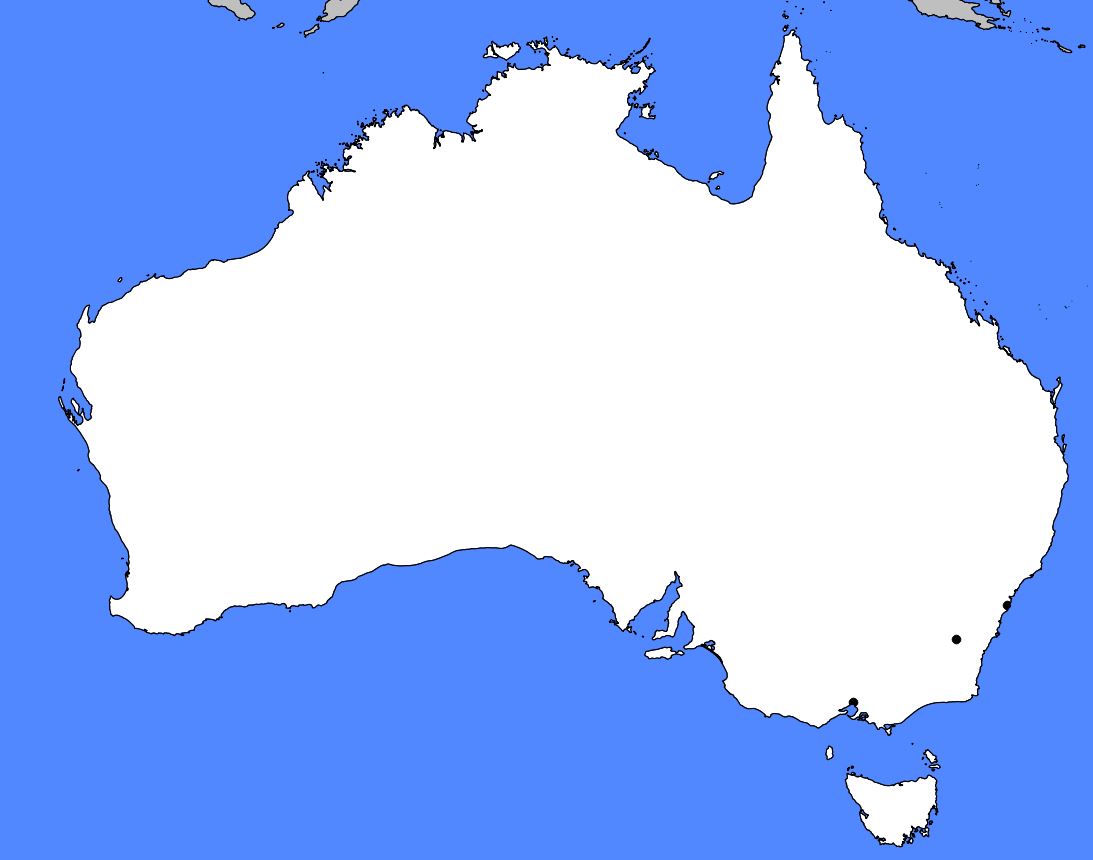
Blank map of Australia – Credit Actualitix
Languages in Australia
This has nothing to do with the map of Australia—just a bit of additional information. English is Australia’s de facto national language, since its use is not imposed by any law. The Australian accent is particularly distinctive, and the country’s slang is very rich. Although there is no true national costume, wearing a soft hat with turned-down brims is quite typical. The expression “Advance Australia,” taken from the national anthem, is widely used and serves as an unofficial national motto.
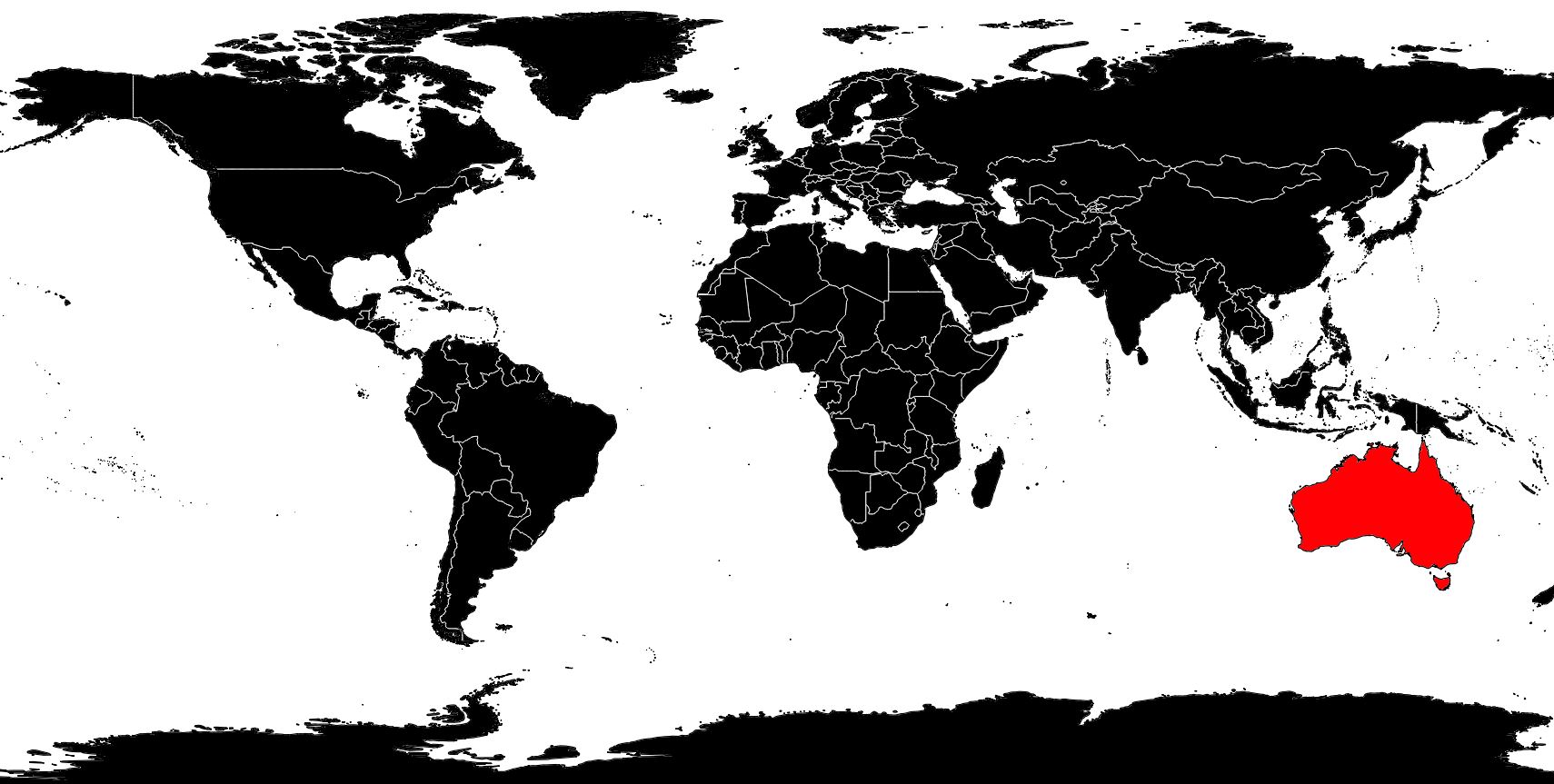
Australia on a world map – Credit Actualitix
Australia is sometimes nicknamed by the English “the land of the antipodes.” Its position in the Southern Hemisphere is almost diametrically opposite that of England, its former metropole. The Australian continent stretches between 113° 9′ and 153° 39′ east longitude and 10° 41′ and 43° 39′ south latitude. It is crossed by the Tropic of Capricorn, and more than a third of the continent lies within the Tropics.