
With this map of the Arctic, we will discover the region of the North Pole. It is a region located opposite Antarctica, which lies in the south of the Earth.
The Arctic is therefore a vast region situated in the north of our globe. Through this map of the Arctic, we invite you to discover this little-known yet beautiful region.
Geography with the map of the Arctic
You may not know it, but the Arctic region is made up of 8 countries. As shown on the map of the Arctic, these include Sweden, Finland, Russia, Canada, Denmark (represented by Greenland), Iceland, Norway, and the United States with Alaska. Together, these eight countries form what is known as the Arctic Council.
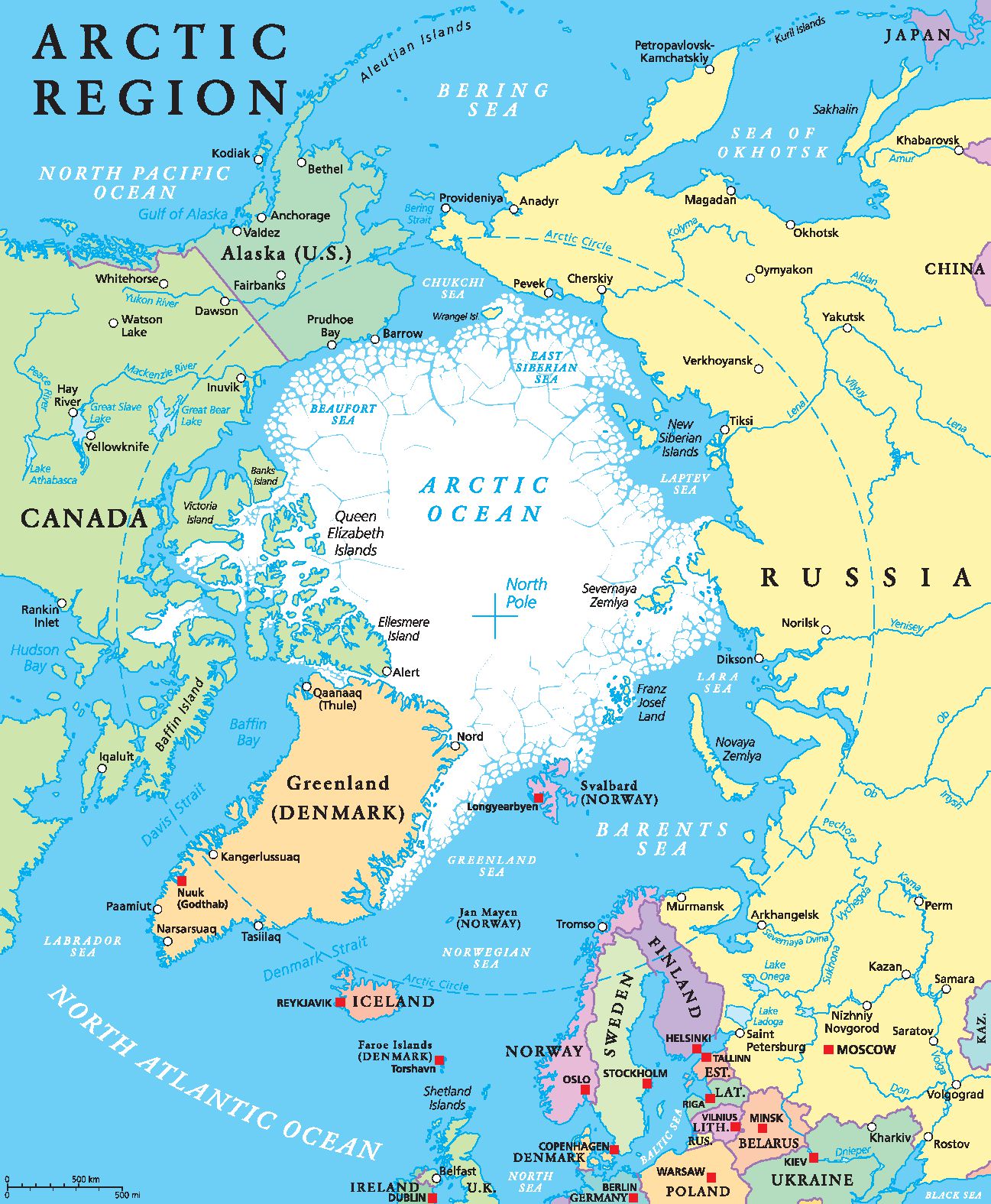
As we can see on the map of the Arctic, it is a very vast region. Its surface area is estimated at about 21 million square kilometers. Simply put, it is immense.
Due to its geographical position, one particular feature stands out: in the Arctic, it can be daylight or darkness for 24 hours at a time. If you plan to explore the region, you must be prepared for significant variations.
For example, in terms of climate, winter temperatures can drop to as low as -40 degrees Celsius. Generally, they range between -40 and 0 degrees during winter, but they can fall even further to around -50 degrees.
During the summer period, temperatures range between -10 degrees Celsius and 10 degrees Celsius, and in some places they may even reach up to 20 degrees Celsius.
Melting ice
As you have probably heard, global warming is affecting the region, and sea ice melts during the summer. This has a significant impact, particularly on the region’s wildlife.
Indeed, in terms of fauna, the region is very rich. Many animal species can be found here, including the famous polar bear. You will also find the Arctic fox, reindeer, Arctic hare, walrus and many others. However, the region is also subject to strong strategic interests and pressures.
Beneath its surface lie many natural resources that countries are competing for. With the melting ice, it is likely that in the coming years some nations will exploit these resources. The map of the Arctic may change over time as the ice continues to melt, making it a major global issue.