
Discover the map of Ivory Coast. The name Ivory Coast refers to the ivory trade carried out in this region by Europeans from the 17th century onward. The Republic of Ivory Coast is located in the western part of the Gulf of Guinea and covers an area of 322,460 square kilometers.
On the map of Ivory Coast, it can be seen that it is bordered by Mali and Burkina Faso to the north; by Guinea and Liberia to the west; and by Ghana to the east. Yamoussoukro became the new capital of the country in 1983, but Abidjan continues to be the economic heart of Ivory Coast.
Article Summary
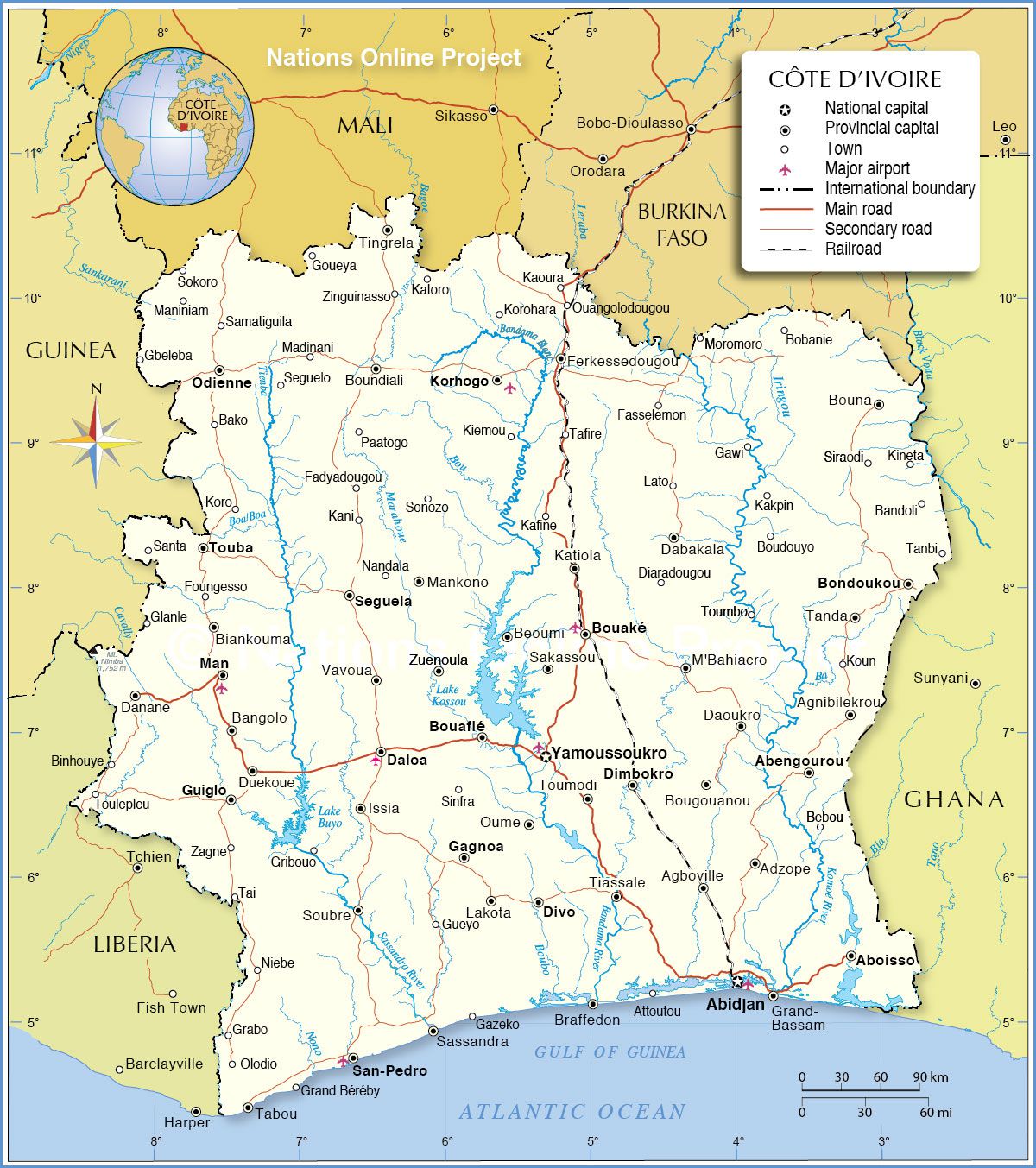
Ivory Coast map – Credit: Nations Online
Features of the Ivory Coast map
The coasts of the Gulf of Guinea are famous worldwide for their high waves, which are particularly suitable for acrobatic surfing, but also for their dangerous ocean currents and the sandbanks that line the shoreline. Until the mid-19th century, European colonization of the territory was largely hindered by poor navigation conditions in this part of the Atlantic Ocean.
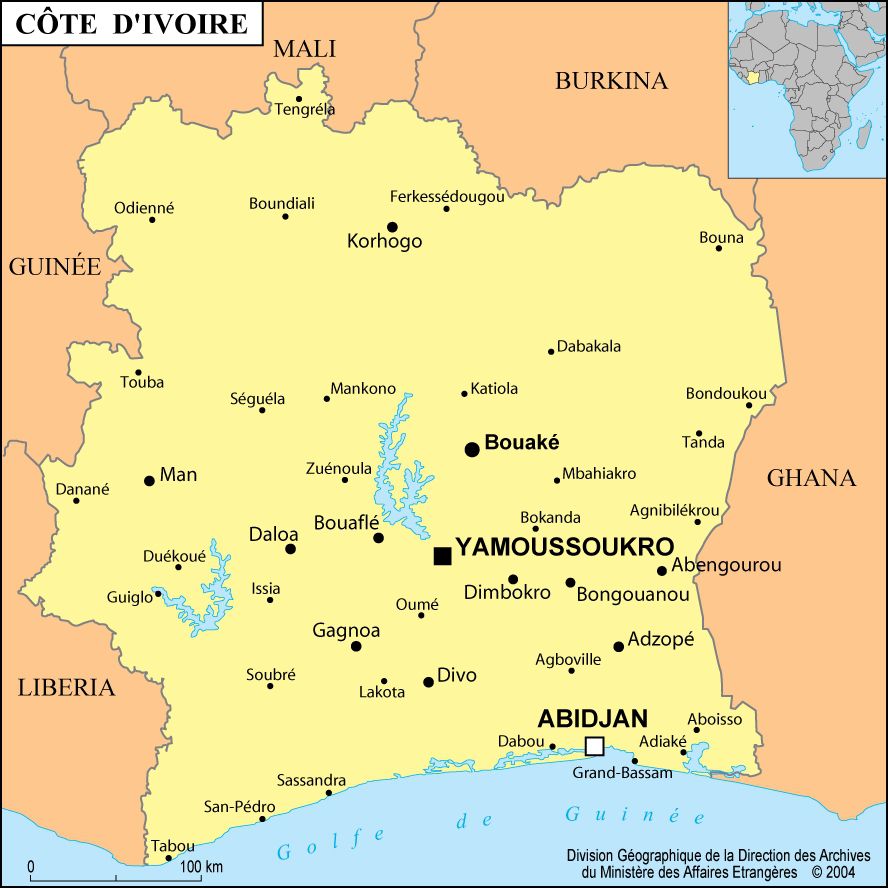
Ivory Coast map – Credit: Ministry of Foreign Affairs
The Bandama is one of the country’s main rivers. The other waterways are shallow and therefore not navigable.
As can be seen on the map of Ivory Coast, the country lies on a vast plateau that includes three vegetation zones. Sandbanks and coastal regions are characterized by mangroves; their vegetation consists almost exclusively of coconut palms and plant species capable of surviving high soil salinity.
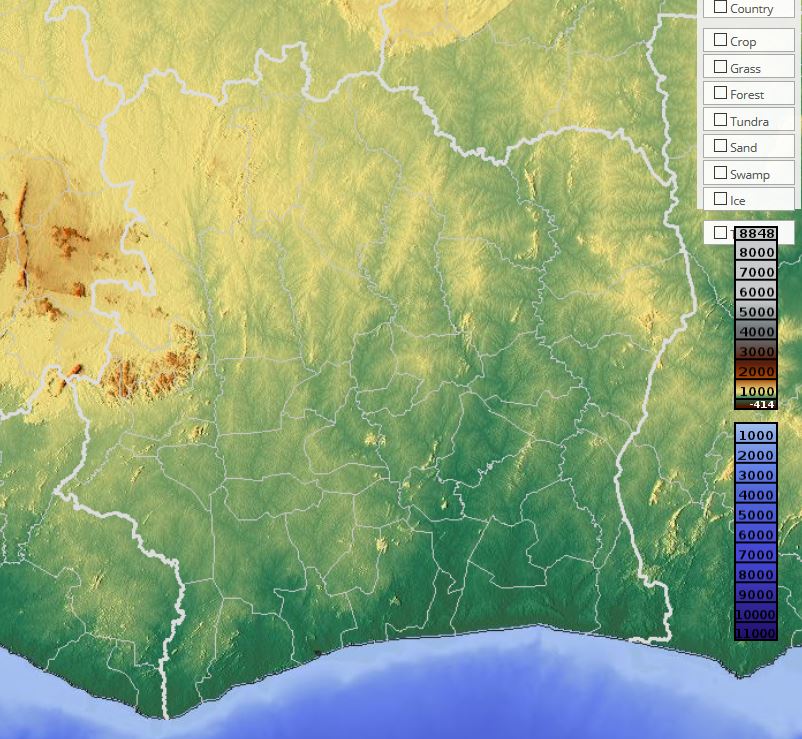
Relief map of Ivory Coast – Image from maps-for-free
This vegetation then gives way to one of the densest tropical forests on the entire African continent. It covers nearly one-third of the territory before becoming more sparse and blending into the savanna in the north of the country. The southernmost forest areas receive between 200 and 300 centimeters of rainfall per year.
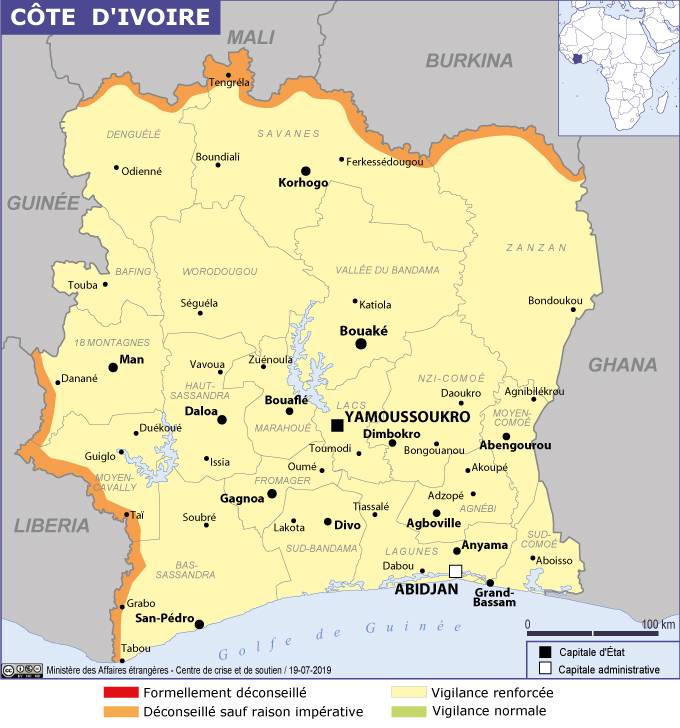
Map of Ivory Coast cities – Credit: Ministry of Foreign Affairs
French is the official language. However, the inhabitants speak more than 60 different languages and dialects. It is estimated that nearly 60% of Ivorians have remained faithful to traditional religions, while Muslims and Christians each represent about 20% of the total population. A national university was founded in Abidjan in 1964.
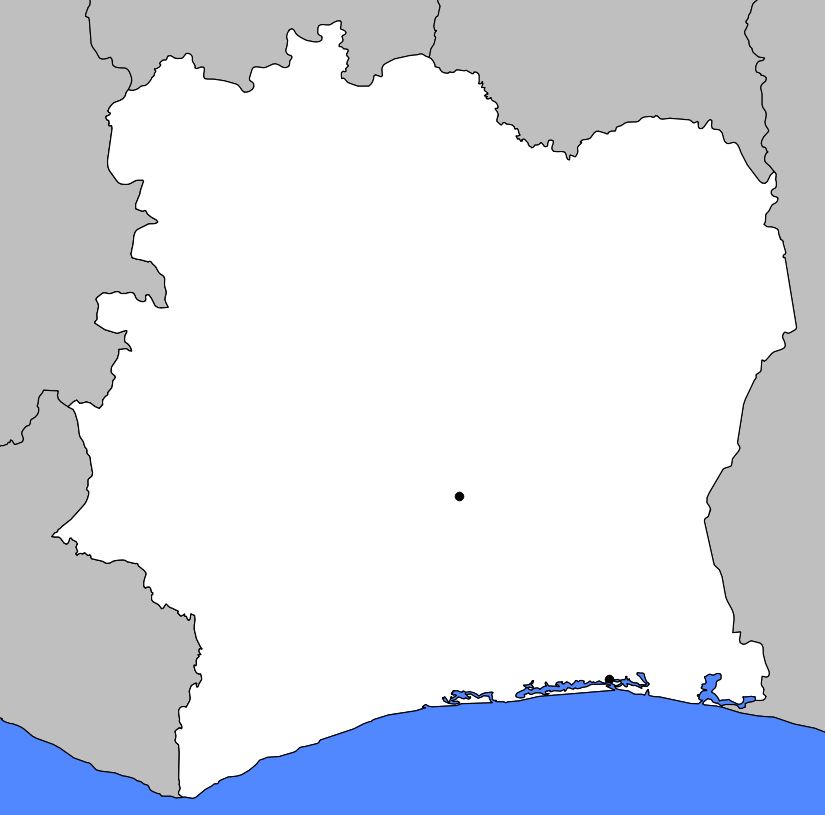
Blank map of Ivory Coast – Credit: Actualitix
Ivory Coast map: roads
With more than 5,000 kilometers of paved roads and 50,000 kilometers of secondary roads, Ivory Coast has one of the best road infrastructures in all of West Africa.
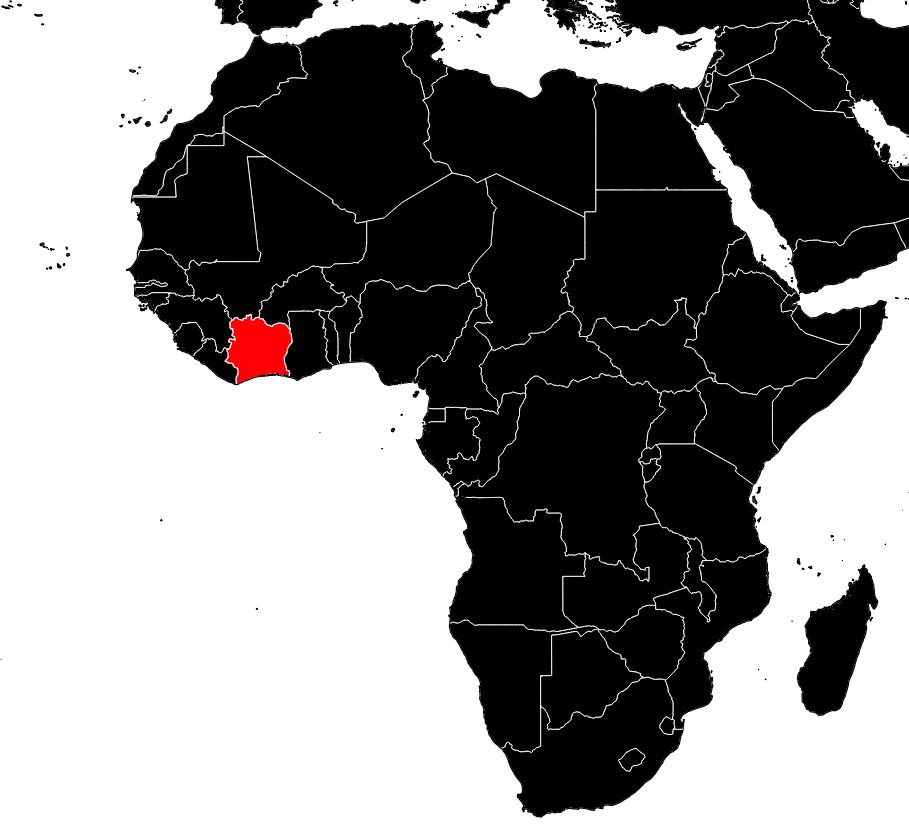
Ivory Coast on a map of Africa – Credit: Actualitix
It also has an international airport located in Port-Bouët. In addition, several dams have been built on the Bandama and Bia rivers to supply the country with hydroelectric power.
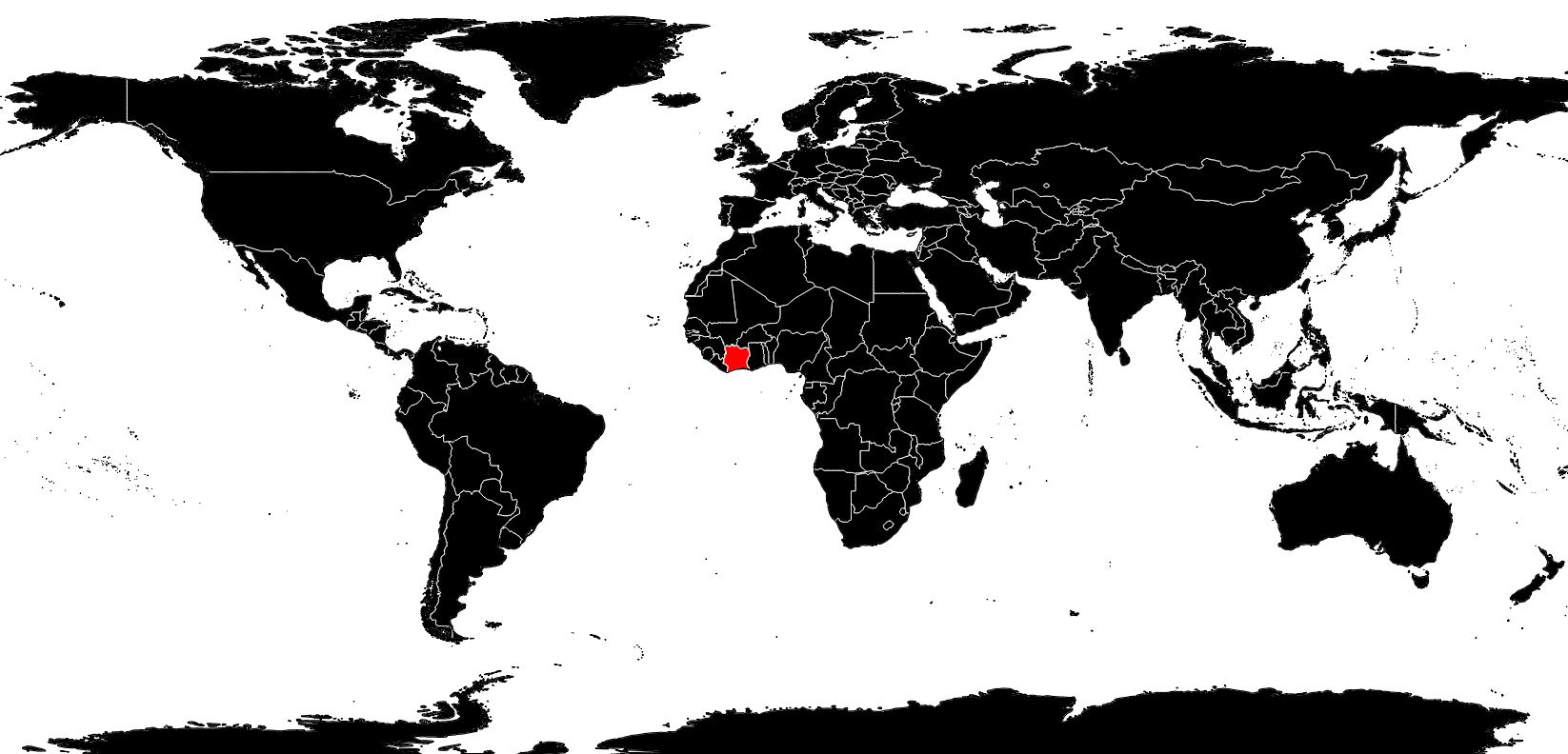
Ivory Coast on a world map – Credit: Actualitix