You will find a map of Lebanon, the Arab state of the Middle East bordered to the north and east by Syria and to the south by Israel. The Republic of Lebanon is located on the eastern shore of the Mediterranean Sea. Covering an area of 10,400 square kilometers, the country has 217 kilometers of coastline and an average width of 48 kilometers. Beirut, the capital, is also the largest city in Lebanon.
Table of contents
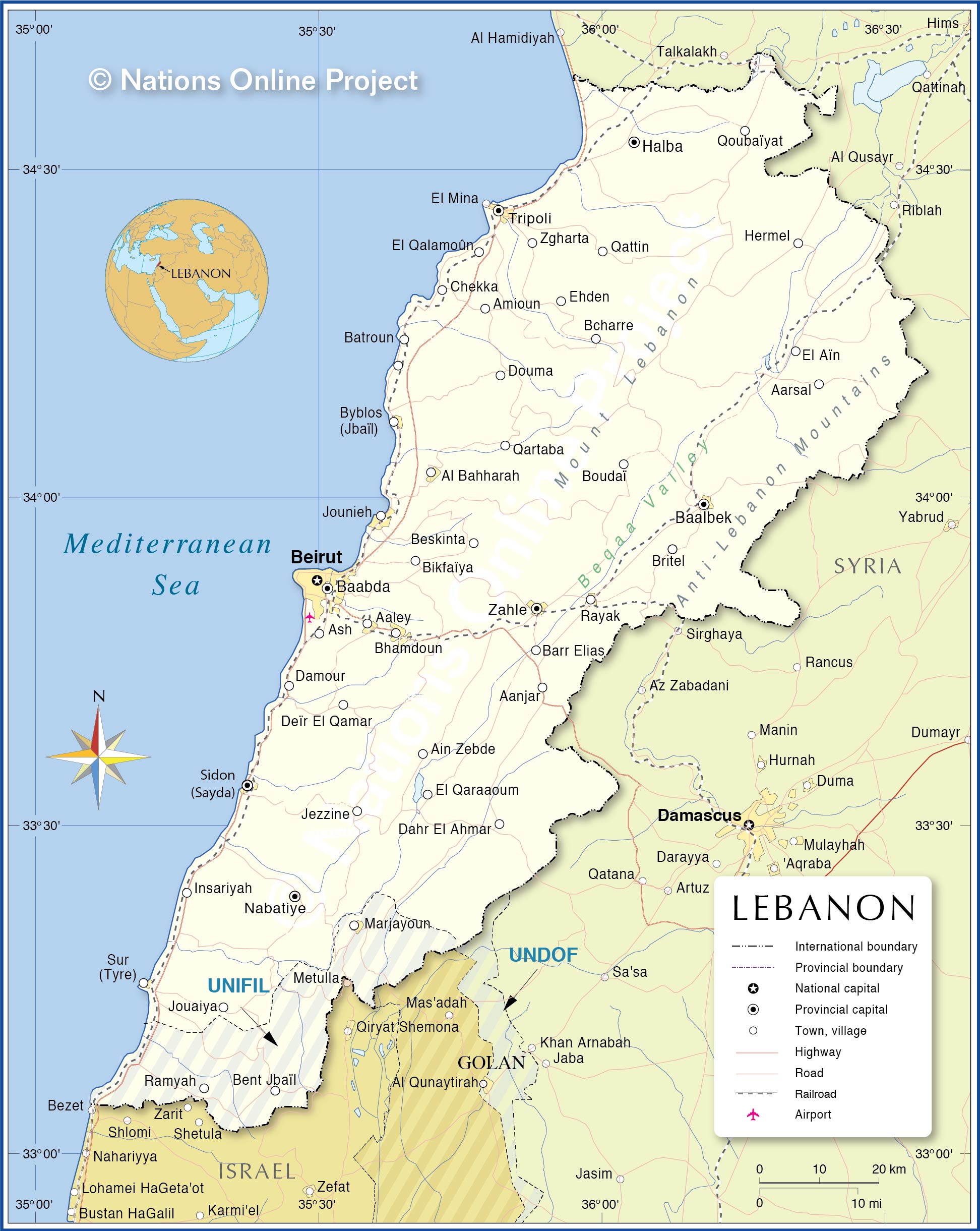
Map of Lebanon – Credit: Nations Online
Geography with the map of Lebanon
A country with rugged terrain, Lebanon is covered by two parallel mountain ranges. The Lebanon range is separated from the Mediterranean by a narrow coastal plain, while the Anti-Lebanon range runs along the Syrian border, as can be seen on the map of Lebanon. Between the two ranges lie the fertile lands of the Bekaa Valley. They are irrigated by the waters of the Litani River, which flows south and then turns sharply west to empty into the Mediterranean after crossing the Lebanon range.
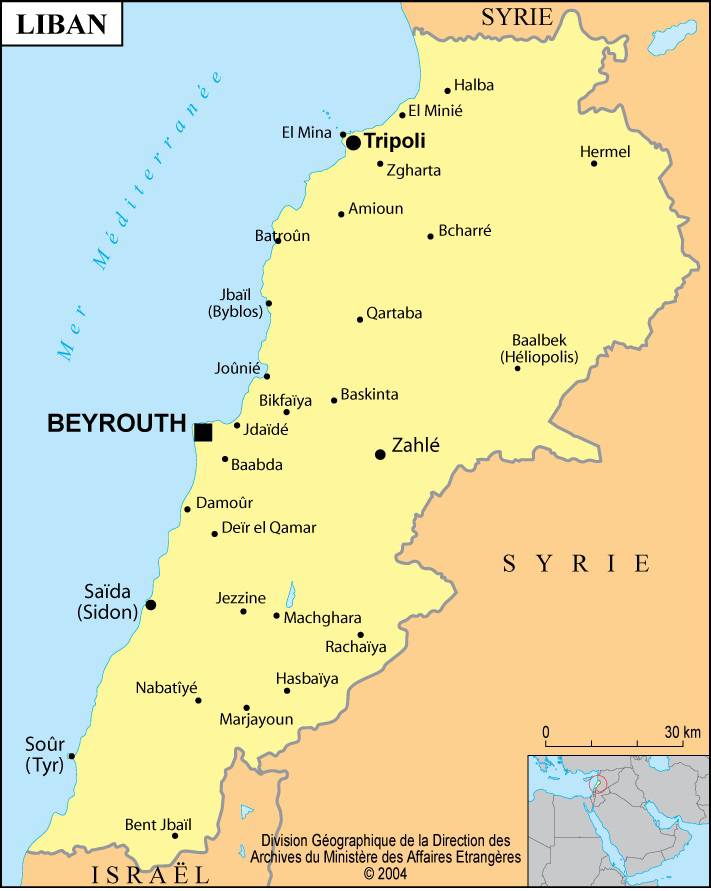
Lebanon map – Credit: Ministry of Foreign Affairs
The coast enjoys hot, dry summers and mild, rainy winters, while the Bekaa Valley experiences very hot summers and cool winters. The mountains receive heavy snowfall and rainfall in winter, especially on the western slopes.
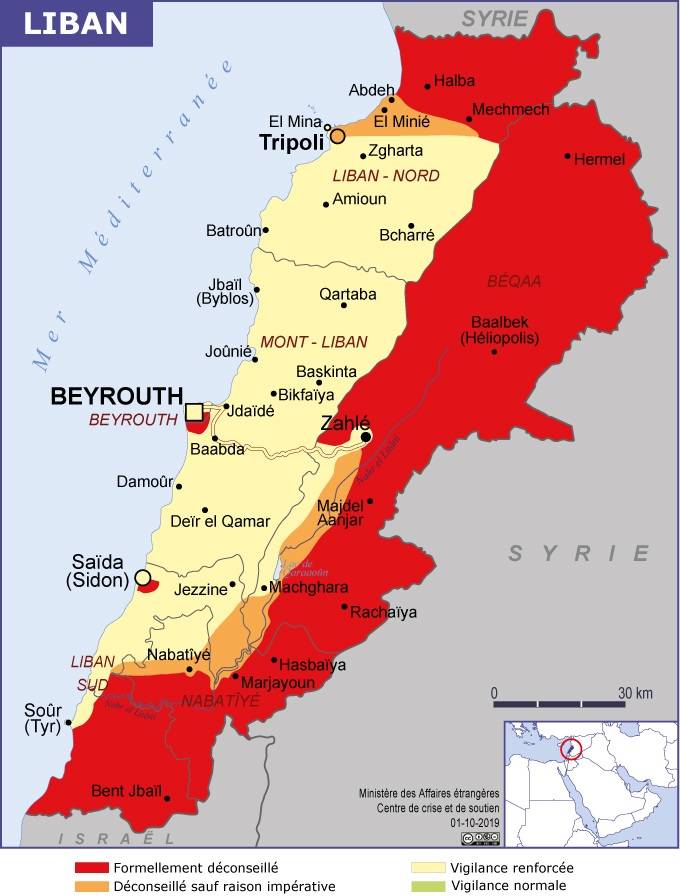
Map of the cities of Lebanon – Credit: Ministry of Foreign Affairs
Vegetation varies with altitude and climate. The rich lands of the coastal plain are suitable for growing oranges, olives, bananas, figs and grapes. At the foothills grow apples and potatoes. The Bekaa Valley, a fertile agricultural region, produces tobacco, vegetables, cotton, cereals and mulberries. The mountains, whose vegetation has been destroyed by erosion, are very arid. The famous cedars of Lebanon are now found only in a few protected areas.
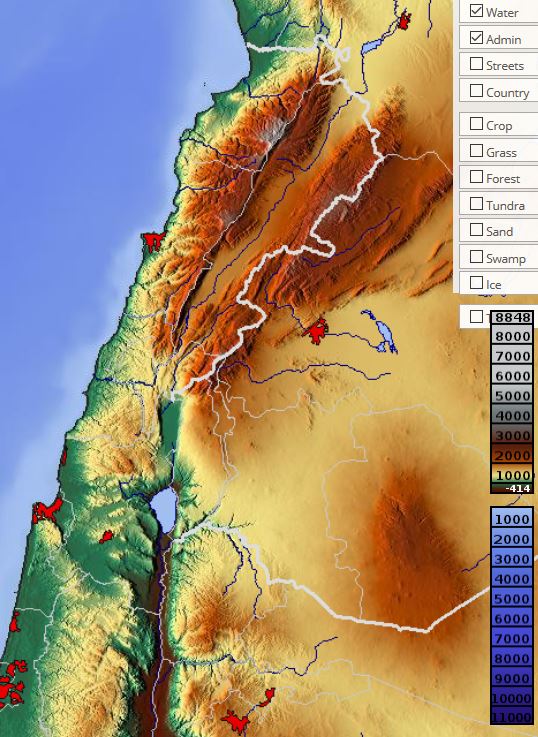
Relief map of Lebanon – Image from maps-for-free
Population
Lebanon has about 6,200,000 inhabitants, the vast majority of whom are Arab. Palestinians represent less than 10% of the population. The official language is Arabic, but French and English are also widely used.
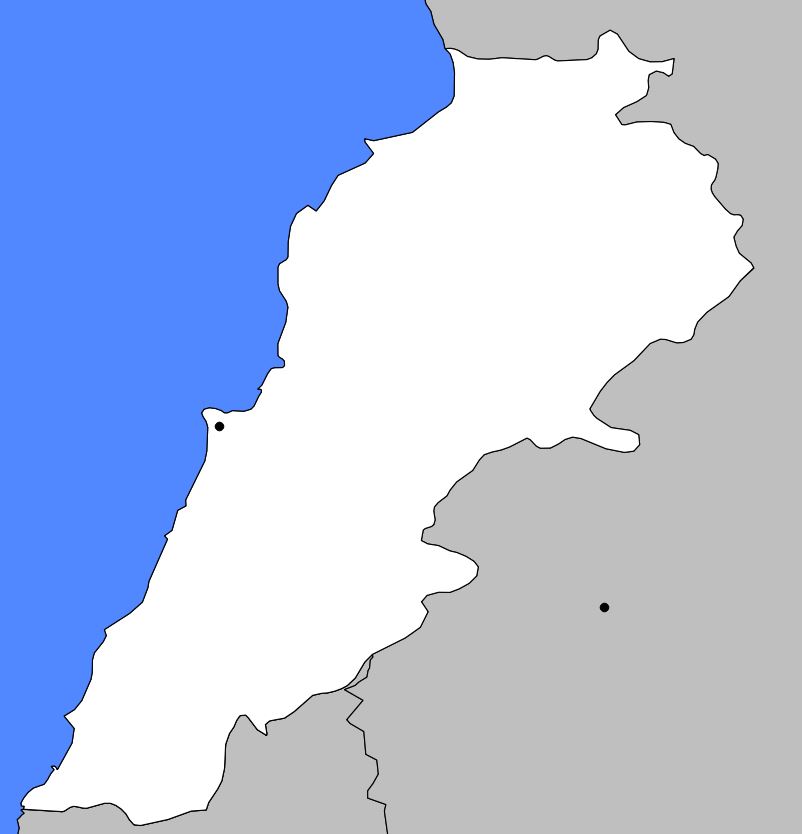
Blank map of Lebanon – Credit Actualitix
More than half of the population is Muslim, while the other half is Christian. The largest Muslim groups are Sunnis and Shiites, followed by Druze. Christians are mainly Maronites, Greek Orthodox or Catholic. The country also has Kurdish, Protestant and Jewish minorities. Several recognized religious communities exist. Most of them speak Arabic, although some also use their own language.
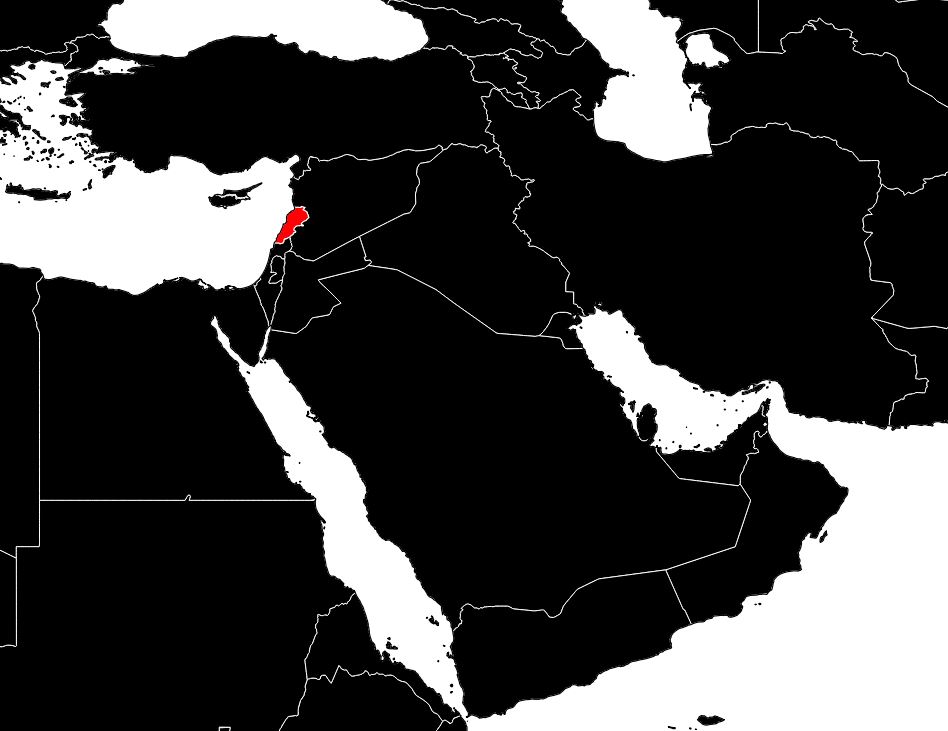
Lebanon on a Middle East map – Credit Actualitix
Economy
The Lebanese economy has traditionally been based on trade, with Beirut long considered the financial center of the Middle East and one of its main ports (which can be seen on the map of Lebanon). Tripoli, Zahlé and Saïda are the other major cities of the country. A railway network connects Lebanon to other Arab countries, as well as to Europe via Turkey.
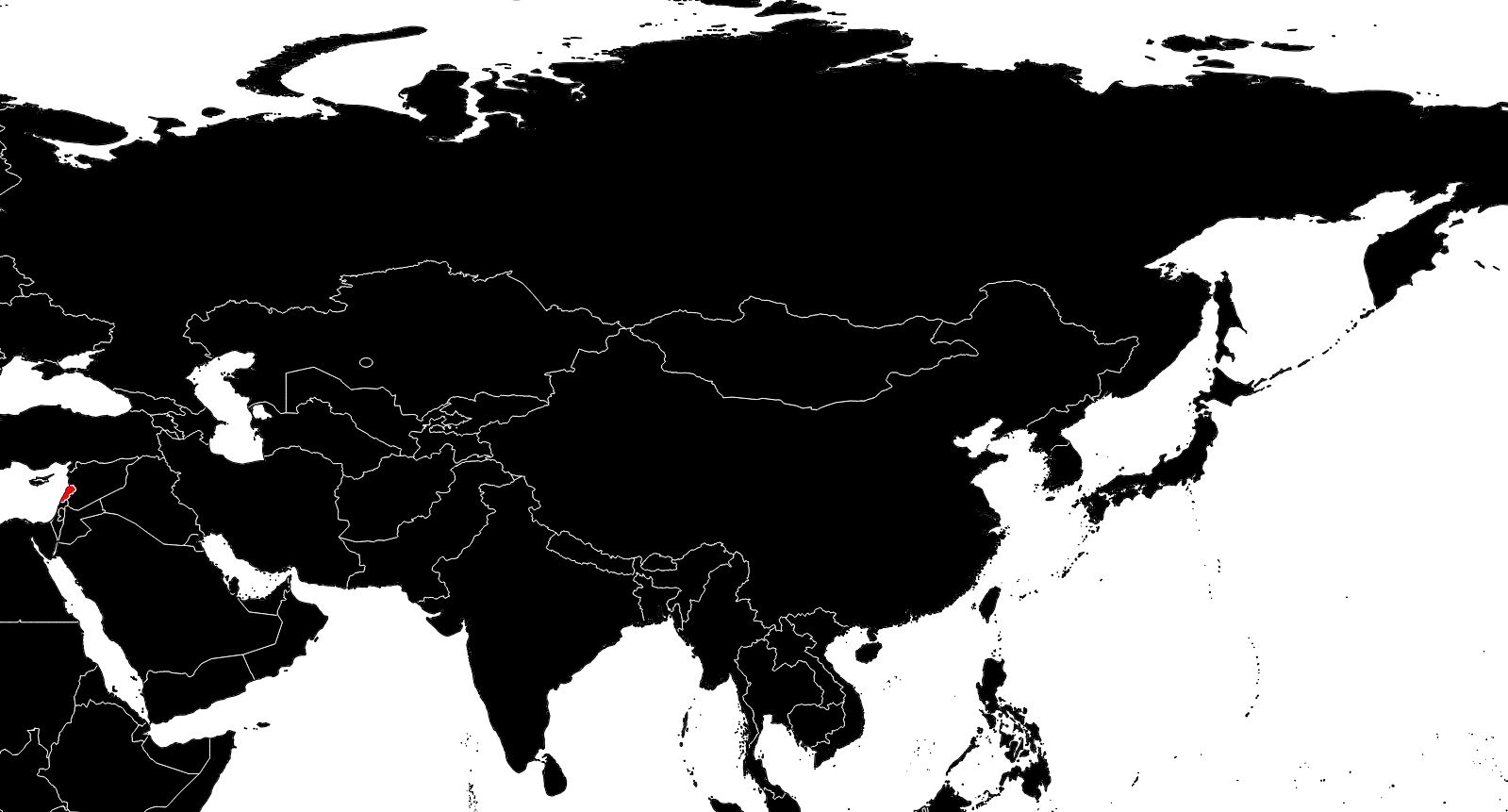
Lebanon on a map of Asia – Credit Actualitix
Economic activity includes oil refining, the food industry, the textile industry, services, the chemical and metallurgical industries, and tourism. The country mainly exports pharmaceuticals, textiles, tobacco, manufactured goods, precious metals and jewelry. The economy suffered greatly from the civil war and foreign occupation in the 1970s and 1980s.
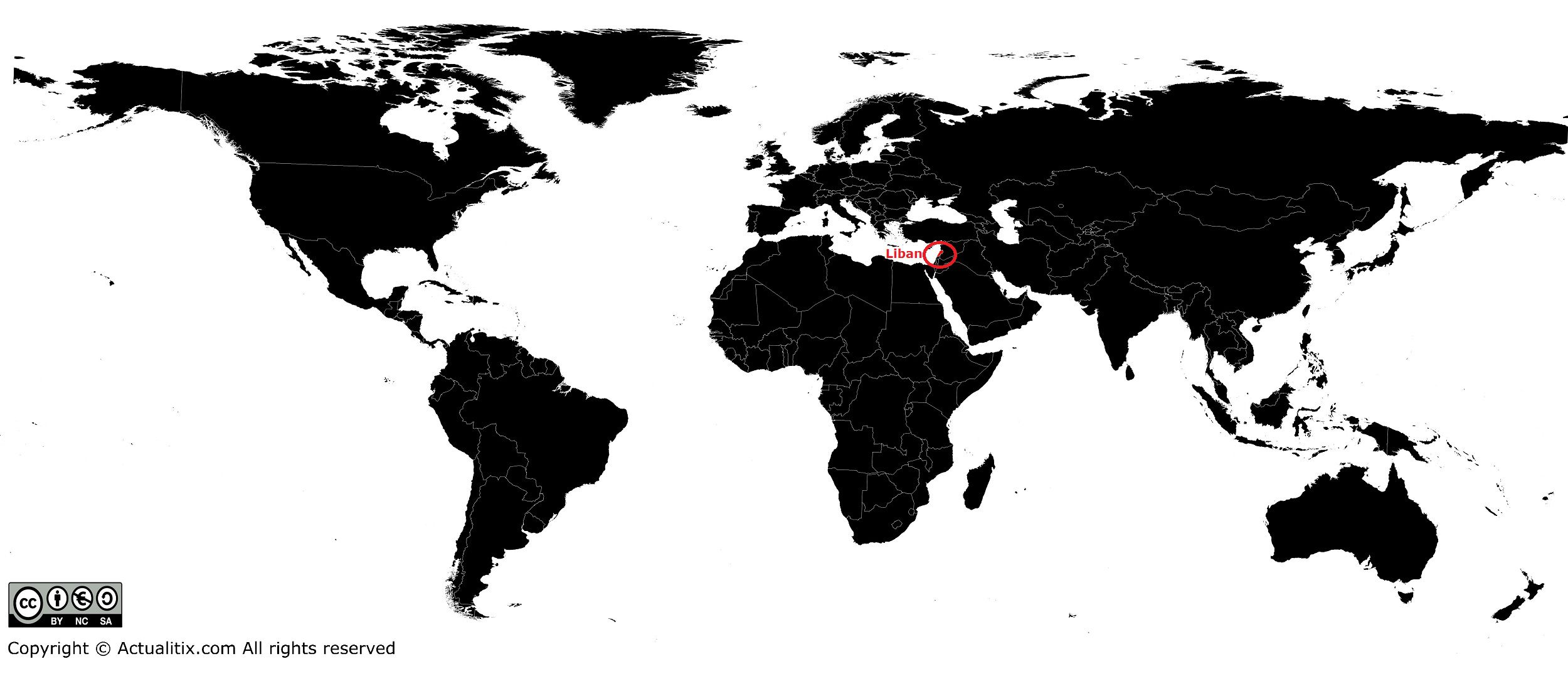
Lebanon on the world map – Credit Actualitix
You can discover all the available maps for the different countries of the world on this page.