
In this article you will find a map of Romania. The country lies at the crossroads of Southeastern, Central, and Eastern Europe. The Carpathian Mountains and the Danube River can be found there. It also has a coastline along the Black Sea.
Having once been part of the Roman Empire, as its name suggests, Romania has a long and eventful history. On many occasions, the country was occupied by Hungarians, Turks, and Russians, and it was not until the end of the First World War that Romania became a unified country.
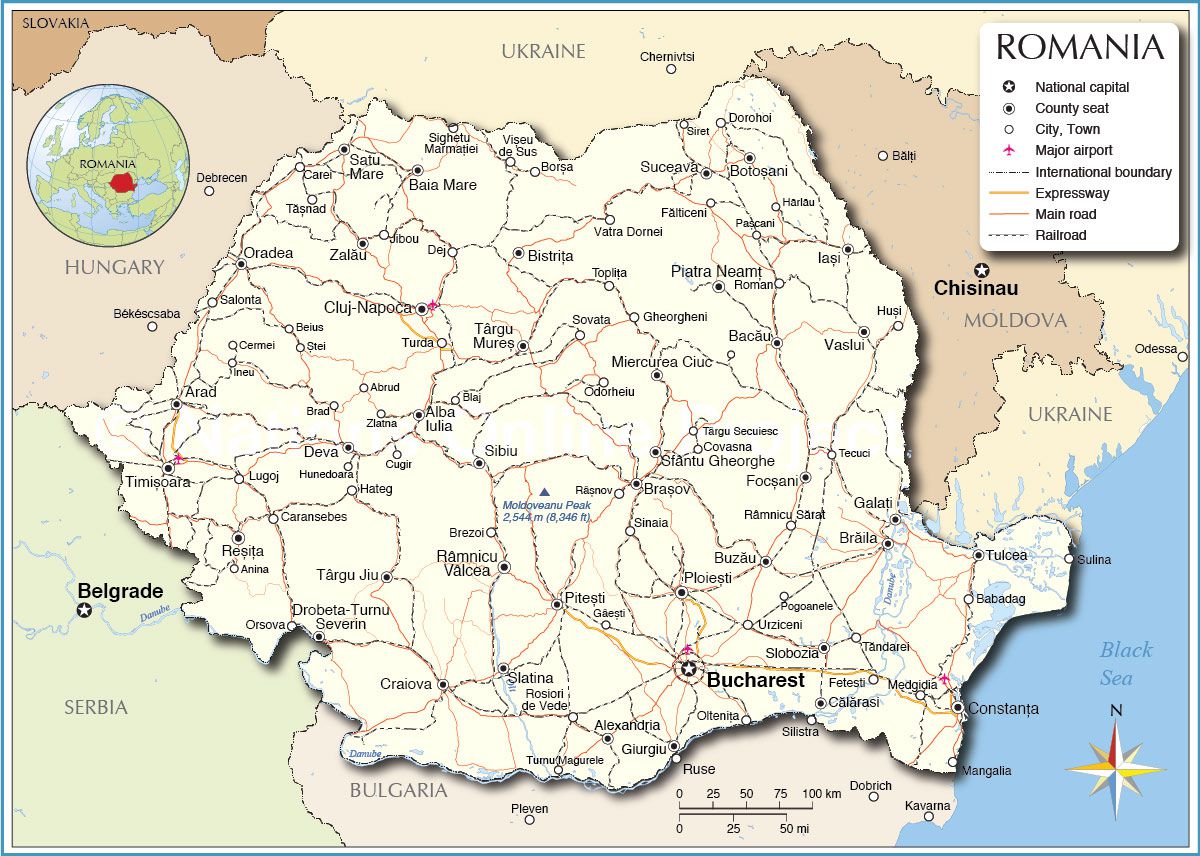
Map of Romania – Credit: Nations Online
A member of the Soviet bloc for more than 40 years, Romania was the last Stalinist-type communist stronghold to fall when a wave of reforms swept across the rest of Eastern Europe in 1989.
Geography with the map of Romania
Romania covers an area of 237,500 square kilometers. As shown on the map of Romania, it is bordered to the north and east by Ukraine and Moldova, to the northwest by Hungary, to the southwest by Serbia, to the south by Bulgaria, and to the southeast by the Black Sea.
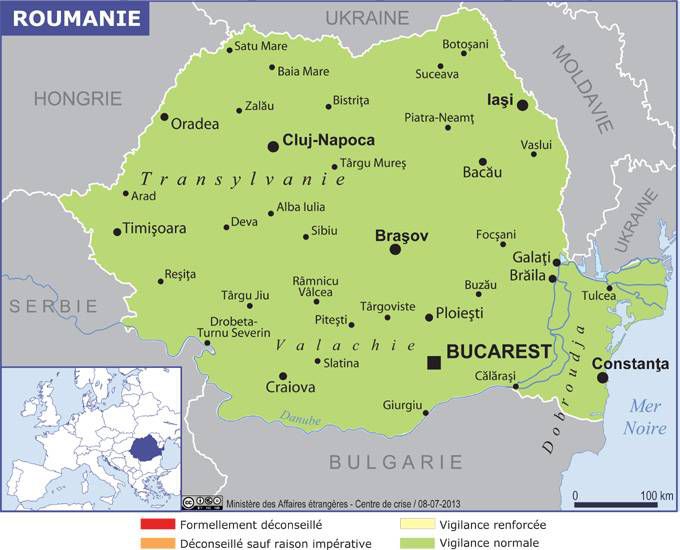
Romania map – Credit: Ministry of Foreign Affairs
Nearly 30% of the country is mountainous. The main ranges are the Eastern and Central Carpathians. Some peaks exceed 2,280 meters, and in the Southern Carpathians, Moldoveanu Peak, the highest mountain in the country, rises to 2,544 meters. To the west, a smaller mountainous area is known as the Western Carpathians. Around these massifs are regions of hills and plateaus.
The largest river is the Danube (easily identifiable on the map of Romania), which flows through the country for more than 1,075 km before emptying into the Black Sea. There are no large lakes.
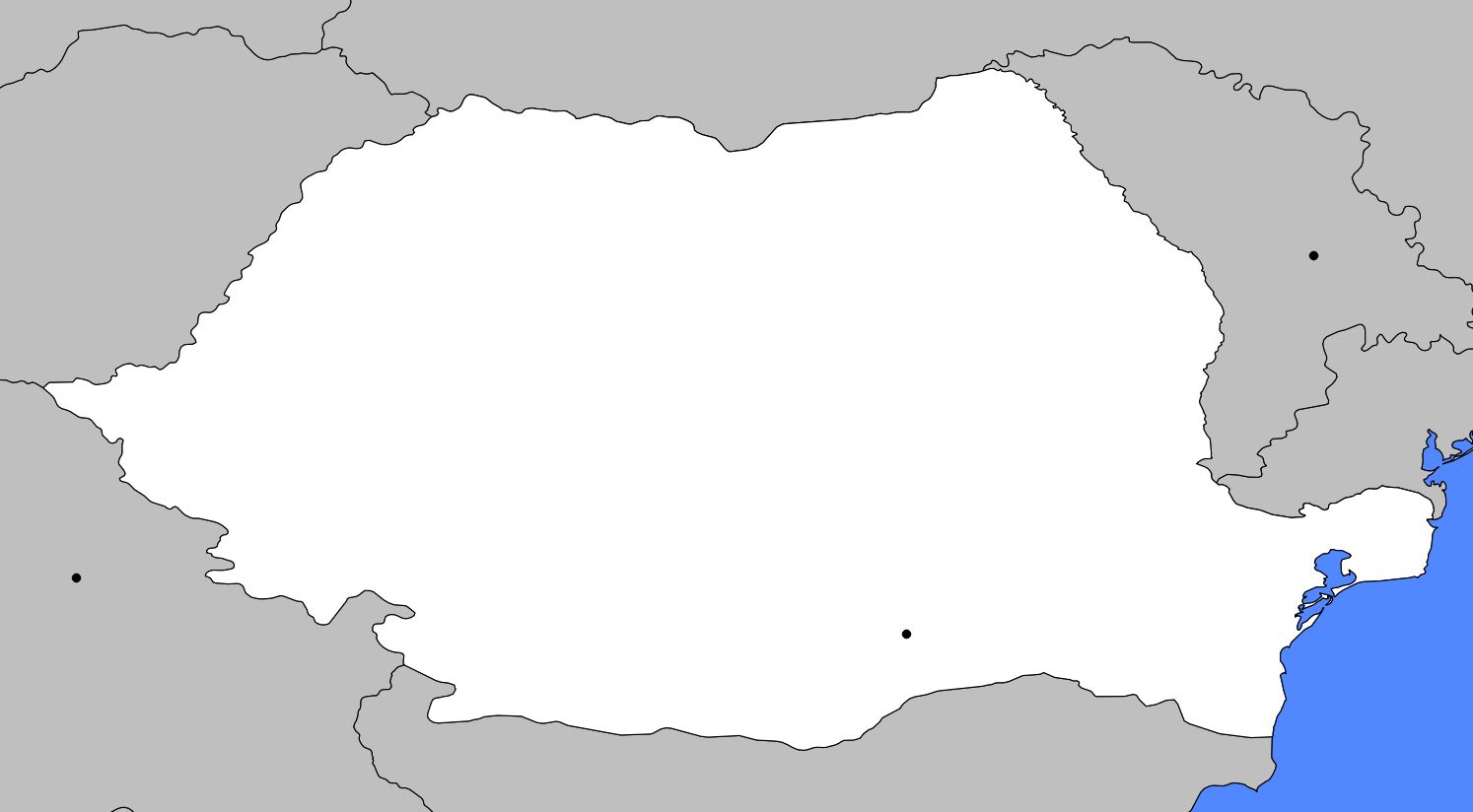
Blank map of Romania – Credit Actualitix
Soils vary greatly depending on the region. The most fertile are the black soils of the plains, but most of the country is covered with moderately fertile brown forest soils. Mountain soils are less fertile.
Romania has a wide variety of mineral resources. The main energy sources are oil and natural gas. Oil exploitation began around 1850, and reserves are now almost depleted. Natural gas reserves are larger. Coal is also limited and includes anthracite and lignite.
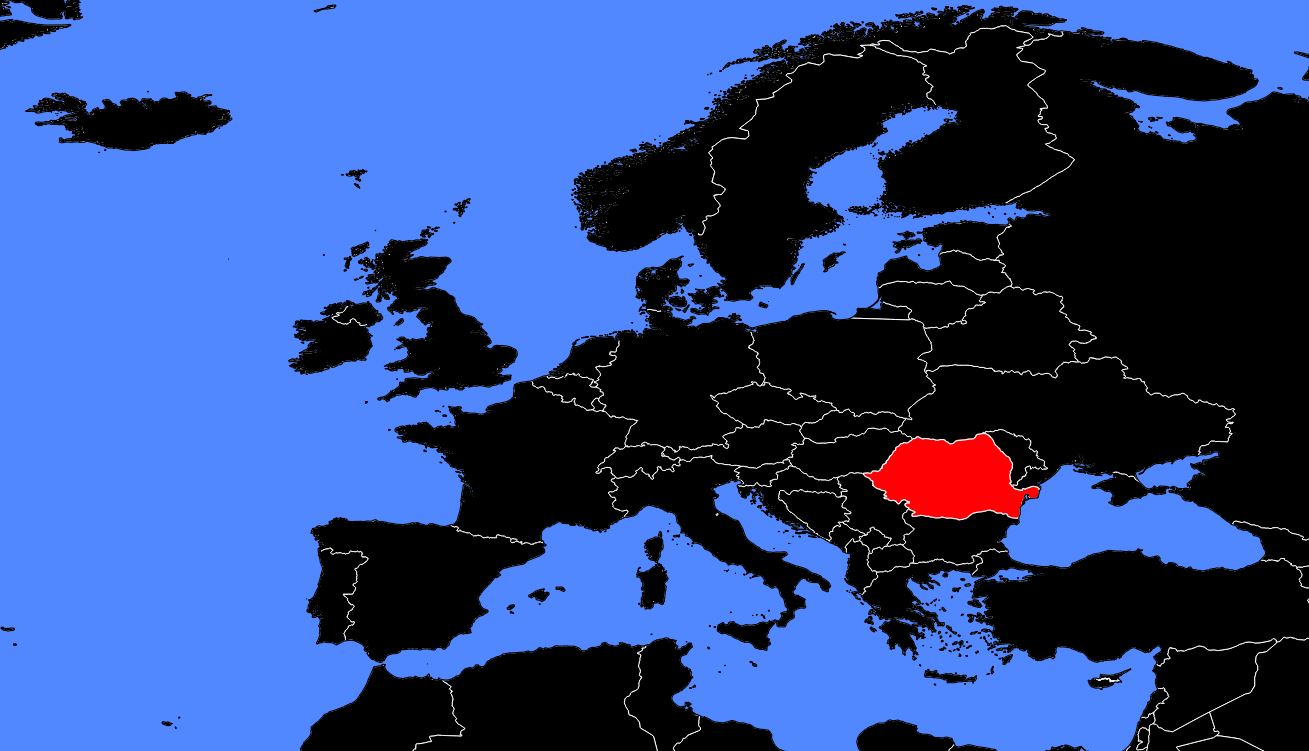
Romania on a map of Europe – Credit Actualitix
Among the minerals are copper, lead, zinc, bauxite, iron ore, chromium, manganese, and uranium. There are also some precious metals such as gold and silver. Most of these deposits meet domestic consumption needs, with the exception of iron ore, some of which must be imported.
Climate in Romania
Romania has a continental climate characterized by hot summers and cold winters. Winters are particularly harsh in the mountains. Rainfall varies by region, with the heaviest occurring in mountainous areas.
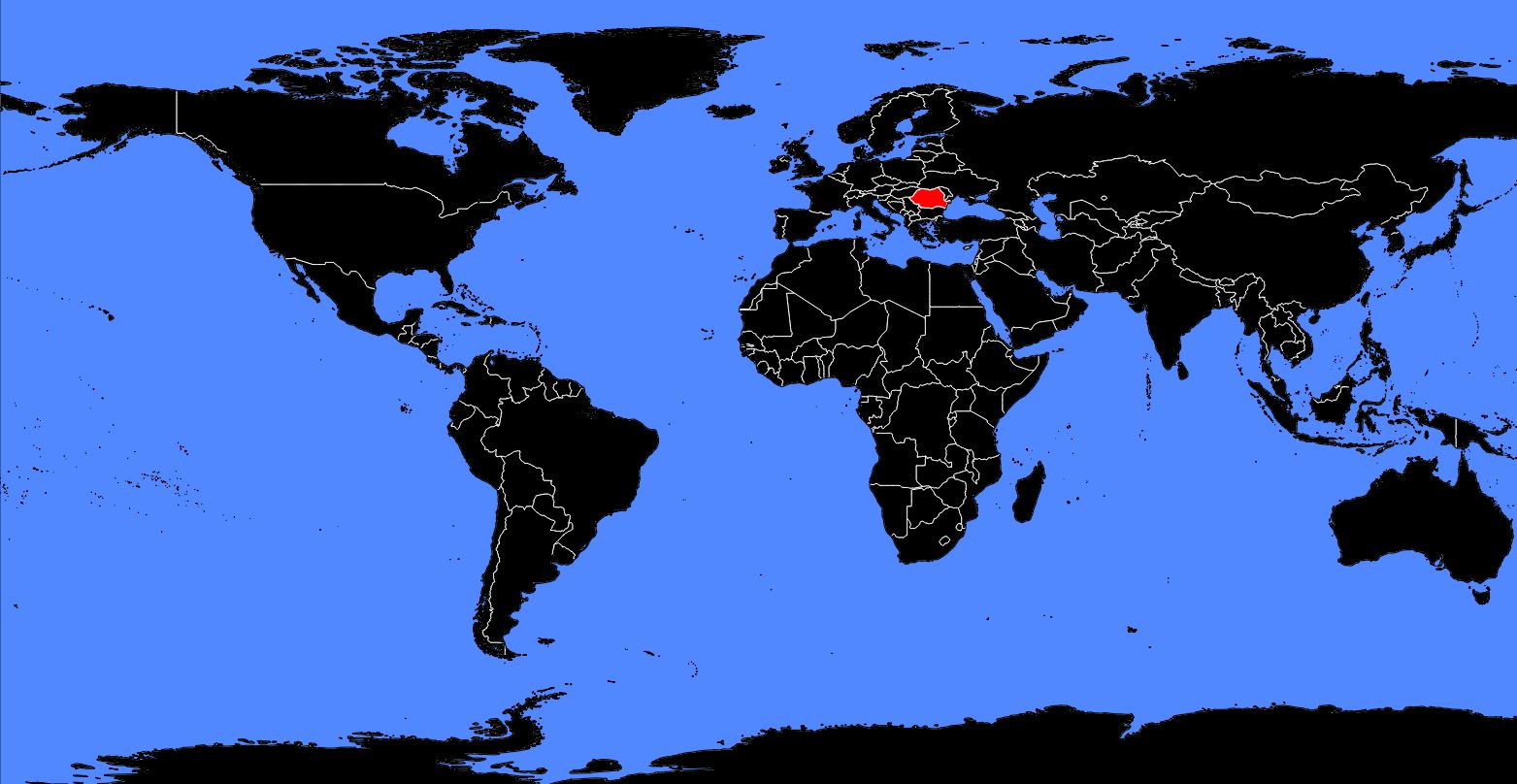
Romania on a world map – Credit Actualitix
Overall, the climate is favorable for agriculture. Bucharest (see location on the map of Romania), located on the Wallachian Plain, has an average summer temperature of 23.5°C. Average annual rainfall is about 58 cm.
Flora and fauna
About a quarter of the country is covered with forests, nearly 60% of which are located in the mountains. Wildlife includes animals such as chamois, bears, lynxes, deer, wolves, foxes, badgers, and wildcats. There are also many species of birds, as well as numerous freshwater and marine fish.